What to Pack for a Tortuga Island Boat Tour
An Isla Tortuga day puts you on an open deck, in salt water, and on a beach with no shop, no cash machine and a paid restroom. This is the gear audit that reflects those three facts.
Booking Choice: An island lunch, snorkeling equipment and a Negritos wildlife stop. Explore Puntarenas Island Day: Shared Or Private
Start: Puntarenas. Confirm age rules and extras before booking.
Price note: fixed dollar amounts and totals in the editorial examples below are planning illustrations, not current quotes. Prices, child rates and private/shared options must be checked for your date and full party. The provider calendars and booking pages carry current offers.
Provided, packed, or paid for in cash
The three lists are taken directly from the published inclusion and exclusion lists of the six Isla Tortuga tours on this site, and the crossing times from the same operators' route descriptions.
What actually goes in the bag for a Tortuga Island day?
Pack for three environments in one day: an open boat deck with no shade, several hours in salt water, and an uninhabited beach with no shop. The short version is sun protection applied before boarding, quick-dry clothing, a dry bag for a phone and cash, sandals you can lose without grief, and small notes for the paid restroom.
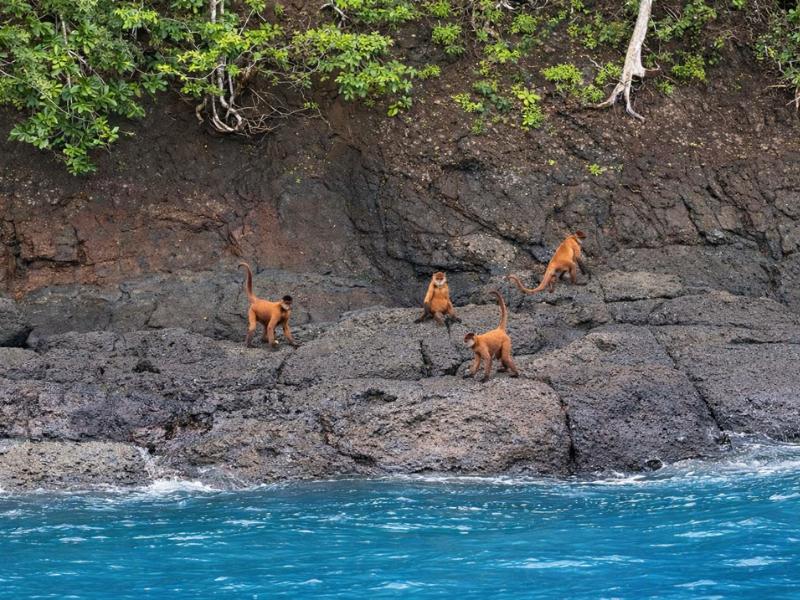
Isla Tortuga and the Negritos islands are separate places in the Gulf of Nicoya. Some tours pass Negritos for wildlife viewing before visiting Tortuga. The excursions recommended here return the same day and do not include accommodation. Related reading: Gulf of Nicoya
The second constraint is space. You are on a boat with a fixed number of seats and a fixed amount of dry storage. Every operator we work with tells clients the same thing at boarding: one small bag per person. The people who show up with a wheeled case and a full beach kit end up carrying it around the sand for five hours. The people who show up with a single dry bag and a towel have a better day.
The third constraint is water. Not just the sea. Spray comes over the bow of a speedboat on a normal gulf morning, so anything that lives in an outer pocket gets wet whether or not you go swimming. Plan for that up front and the rest of the list falls out of it.
| Item | Why it matters on this specific trip | Skip it if |
|---|---|---|
| Swimwear worn under your clothes | No changing rooms on the island; the boat is the changing room | Never skip this one |
| Rash guard or long-sleeve swim top | Snorkel sessions run 45 to 60 minutes with your back at the surface | You genuinely never burn, which almost nobody genuinely does |
| High-SPF water-resistant sunscreen | Applied before boarding, reapplied after the snorkel | Never |
| Wide-brim hat with a chin cord | A hat without a cord goes over the side on the crossing | You are wearing a hood or a buff instead |
| Polarised sunglasses plus a retainer strap | Glare off the gulf is constant, and unstrapped glasses sink | You have prescription glasses you cannot risk, in which case leave them in the dry bag |
| Quick-dry shorts and a light shirt | Cotton stays wet for the whole return crossing and gets cold | You are happy to sit in damp cotton for 90 minutes |
| Small dry bag, 5 to 10 litres | Phone, cash, keys, documents, medication | Your operator has a genuinely dry cabin locker, which most small boats do not |
| Microfibre towel | Packs to nothing and dries before the return boat | Your hotel lends beach towels and you accept the bulk |
| Reef-friendly sandals or water shoes | Wet landings, hot sand, and rock at the edges of the beach | Never; barefoot on midday sand is a real problem |
| Small notes in colones or dollars | Restroom fee of around $1 per use, vendors, tips | Never; there is no cash machine and no card terminal on the sand |
| Motion sickness tablets | Taken 30 to 60 minutes before boarding, not when you feel it | You have crossed open water repeatedly without trouble |
| Refillable water bottle | Drinks are included but the bottle saves queuing and waste | You are fine with the boat's supply and a cup |
| Your own mask, if you own one | Fit is the single biggest variable in snorkel enjoyment | You do not own one; the provided gear works for most people |
| Light rain shell | May to November afternoon showers on the return leg | You are travelling in the January to March dry stretch |
Why is sun the number one packing problem on this trip?
Isla Tortuga sits under ten degrees of latitude from the equator, and you spend the day surrounded by two reflective surfaces: white sand and open water. The boat deck usually has partial shade at best. Most people who get burned on this trip get burned during the crossing, before they have even reached the beach.
The mechanism is simple and people underestimate it every season. On the water you get direct overhead sun plus a second dose bounced off the surface, and the wind on a moving boat removes the heat signal your skin normally uses to tell you it is time to move. You feel cool and comfortable at 25 knots. You are still burning. The same applies during the snorkel: floating face down in 28-degree water feels pleasant right up until you get out and find your calves and the backs of your shoulders have taken an hour of unfiltered sun.
The gear that solves this is boring and it works. A rash guard removes the entire shoulder and back problem in one move, which matters because those are exactly the surfaces you cannot reach to reapply sunscreen on yourself. A hat with a cord stays on your head at speed. Sunglasses with a floating strap survive the moment when someone in the seat behind you swings a bag. None of this is expensive and all of it is easier to pack than to source in Puntarenas at seven in the morning.
Timing matters as much as the products. Apply sunscreen at the hotel, before you dress, at least 20 minutes before sun exposure. Applying it on a moving boat with sandy hands, in wind, over skin that is already damp, produces the patchy coverage that shows up as a stripe across the top of the foot two days later. The Costa Rica Tourism Board's own travel guidance makes the same point about the Pacific coast generally, and the gulf is no gentler than the open coast in this respect.
| Sun problem | When it bites | What fixes it | Common mistake |
|---|---|---|---|
| Shoulders and upper back | During the snorkel session, face down | Rash guard or long-sleeve swim top | Relying on sunscreen you cannot reapply mid-water |
| Face and ears | Whole crossing, both directions | Wide-brim hat with chin cord, SPF on ears | A cap that shades the face and leaves the ears exposed |
| Backs of legs and feet | Lying on the sand after lunch | Sunscreen on feet, or a sarong over the legs | Forgetting the tops of the feet entirely |
| Eyes and headache | Glare off the gulf at midday | Polarised lenses with a retainer | Non-polarised fashion sunglasses |
| Lips | Wind plus salt plus sun on the deck | SPF lip balm, reapplied after swimming | Treating lips as covered by face sunscreen |
| Scalp along the parting | Any hour you take the hat off | Spray SPF or keep the hat on | Assuming hair is protection |
Does reef-safe sunscreen actually matter around Isla Tortuga?
Yes, and for a specific reason: you snorkel directly over a shallow volcanic reef inside a protected reserve, in water where dozens of people are in at once. Mineral formulations based on non-nano zinc oxide or titanium dioxide are the practical choice. Apply them 20 minutes before you get in, so less washes straight off.
Two things are worth separating here, because marketing muddles them. The first is what the product contains. Reef-friendly generally means avoiding oxybenzone and octinoxate, the two ingredients most often flagged in coral studies, and choosing a mineral filter instead. The second is how you use it. Even a good mineral sunscreen sheds into the water if you apply it and jump straight in, so the 20-minute rule does as much work as the ingredient list.
Isla Tortuga and the Negritos islands are separate places in the Gulf of Nicoya. Some tours pass Negritos for wildlife viewing before visiting Tortuga. The excursions recommended here return the same day and do not include accommodation. Related reading: national protected-areas authority
A practical note on packing it: mineral sunscreens are thicker and take longer to rub in, which is another argument for applying at the hotel rather than on a rocking deck. Bring a small tube for reapplication rather than the full bottle, and keep it in an outer pocket, not the dry bag, so you are not opening the dry bag with wet hands.
What about clothing as sun protection?
Fabric beats lotion on any surface you can cover. A long-sleeve swim top handles arms, shoulders and back for the whole day with no reapplication and no cost per use. A sarong over the legs during the post-lunch hours does the same job for the part of you that is lying flat in the sun and least likely to be checked. This is the reason the packing table above front-loads clothing rather than products.
What should you wear on the boat versus on the beach?
Wear swimwear under quick-dry shorts and a light shirt for the crossing, then strip to swimwear plus a rash guard on the island. There are no changing facilities on Isla Tortuga. Some Puntarenas departures give you showers and changing rooms back at the dock, which changes what you wear home.
The reason the boat outfit and the beach outfit are different is that the two environments punish different things. On the boat you want wind protection, sun cover and something that will not flap loose. On the beach you want the least fabric compatible with not burning, because everything is going to get wet and sandy anyway. Trying to solve both with one outfit produces the classic mistake: a cotton t-shirt that is soaked by ten and still soaked at four.
Quick-dry matters more than people expect on the return leg. The gulf crossing back to the mainland runs 45 to 90 minutes depending on your departure point, often into a headwind, often late in the day. Damp cotton at 25 knots of apparent wind is genuinely cold, and the people shivering under a towel on the return are almost always the ones who wore cotton out.
The Puntarenas speedboat departure from the Las Playitas private dock is the exception that changes the calculation, because it includes access to showers and changing facilities on return. If you are booked on that one, pack a full dry change of clothes and use them; you get to travel home clean rather than salted. On the Santa Teresa, Montezuma and Jaco routes there is generally no such stop, so the dry layer you pack is what you wear.
| Leg of the day | What to wear | What fails here |
|---|---|---|
| Hotel pickup and road transfer | Swimwear underneath, light shirt and shorts on top, sunscreen already on | Changing at the dock; there is rarely anywhere to do it |
| Outbound crossing, open deck | Shirt, hat with cord, sunglasses on a strap | Loose hats, non-polarised lenses, bare shoulders |
| Snorkel session | Rash guard and swimwear, nothing loose | A t-shirt that balloons and drags in the water |
| Beach and lunch | Swimwear plus sarong or dry shirt, sandals for hot sand | Barefoot at midday; the sand gets genuinely painful |
| Return crossing | Dry quick-dry layer, towel over the shoulders | Wet cotton in the wind for 90 minutes |
| Back at the dock | Full change if your tour has showers, as the Puntarenas one does | Assuming every departure point offers facilities |
Do you really need a dry bag, and what needs protecting?
Yes, on a small boat. Spray comes over the bow on a normal gulf crossing whether or not it rains, and the deck bags of everyone around you are equally wet. A 5 to 10 litre roll-top handles the only four things that genuinely cannot get wet: phone, cash, documents and any medication.
Start with the honest inventory. Almost everything you bring is fine wet. Towels, swimwear, sunscreen, sandals, a hat, a water bottle: all of these shrug off salt water and dry in an hour on the sand. The dry bag exists for a very short list, and keeping that list short is what lets you carry a small bag instead of a large one.
- Phone. The single most common casualty. Salt water kills phones faster than fresh water, and the charging port is the usual entry point.
- Cash. Wet notes are still spendable but they are miserable to hand over, and the island vendors and restroom attendant deal in small notes.
- Passport or ID and hotel key card. Card keys demagnetise, and a soaked passport is a consular problem rather than an inconvenience.
- Medication and anything with a paper label. Includes seasickness tablets, which you want intact for the return leg.
A waterproof phone pouch on a lanyard is a different tool and solves a different problem. It lets you keep the phone with you on the beach and take photographs near the water. It is not a substitute for a dry bag during the crossing, because the pouches leak at the seal far more often than roll-tops do, especially once sand gets into the closure. If you carry a pouch, rinse the seal in fresh water before you trust it around salt.
One more thing about the crossing: hard cases and rigid coolers are awkward on small boats and crews will ask you to stow them. A soft roll-top squashes into a footwell. That is a real, practical difference on a boat where everybody is fitting their day into the same small amount of dry space.
What footwear survives a wet landing on sand?
Plan for a wet landing. Boats often ground on the sand rather than tying up at a pier, so you step off into ankle to shin-deep water. Bring sandals with a heel strap or water shoes you can walk in, and count on midday sand being too hot for bare feet.
The failure mode here is flip-flops. They come off in the surf, they float away, they slide on a wet fibreglass deck, and one of the more common minor injuries on beach boat trips is somebody going down on a wet step in flip-flops while holding a bag. A sandal with a heel strap costs nothing extra to pack and removes the whole category of problem.
Water shoes earn their place if you plan to swim from the rocky ends of the beach or walk out to the stone arch viewpoint. The centre of Playa Tortuga is soft powder sand with no hazards, but the edges have rock, shells and the occasional urchin in the shallows. Thin-soled reef shoes handle all of that and pack flat.
Once you are on the island, footwear becomes a heat problem rather than a grip problem. White sand at midday under equatorial sun reaches temperatures that make a 40-metre walk to the restroom genuinely unpleasant barefoot. Keep the sandals near your towel rather than back on the boat.
| Footwear | Wet landing | Hot sand | Boat deck grip | Verdict |
|---|---|---|---|---|
| Sport sandal with heel strap | Good | Good | Good | The default choice |
| Thin water shoes | Good | Good | Good | Best if you plan to snorkel from rocks |
| Flip-flops | Poor, they float off | Fine | Poor when wet | Fine at the hotel, weak on this trip |
| Trainers or sneakers | Poor, soaked all day | Fine but hot | Good | Only if you are on the Jaco road leg and change on the boat |
| Barefoot | Fine | Painful from about 11am | Fine | Workable only near the water line |
Should you bring your own mask when snorkel gear is provided?
Gear is included on every snorkel-focused tour to Isla Tortuga: mask, snorkel and fins, handed out on the boat. The provided kit is clean and functional. The one component worth bringing yourself is the mask, because fit is personal and a leaking mask ruins a 45-minute session that you cannot repeat.
Here is the honest split. Fins are bulky, they are sized generously, and the provided pairs are fine for a shallow reef swim where nobody is finning against current. Snorkels are commodity items. Masks are the exception, because a mask either seals against your face or it does not, and no amount of tightening fixes a shape mismatch. People with narrow faces, high cheekbones, deep-set eyes or facial hair are the ones who spend the session clearing water every ninety seconds.
If you own a mask you like, it packs into a shoe-sized space and it is the highest-return item on this entire list. If you do not own one, do not buy one for this trip on the assumption that the provided gear is poor. It is not. Just do the one thing that fixes most fit problems: before you get in the water, hold the mask to your face without the strap, breathe in gently through your nose, and see whether it holds on its own. If it does, it will seal. If it falls off, ask the crew for a different one while you are still on the boat rather than at the reef.
What about prescription lenses and contact lenses?
Remove contact lenses before swimming; prescription goggles or a prescription mask can be an alternative.
| Gear item | Provided on tour | Worth bringing your own | Reason |
|---|---|---|---|
| Mask | Yes | Yes, if you own one | Fit is individual and a leak ruins the session |
| Snorkel | Yes | Rarely | Commodity item, provided ones work |
| Fins | Yes | No | Bulky to pack, no performance need on a shallow reef |
| Wetsuit or shorty | No | No | Gulf water sits around 28 degrees; a rash guard is enough |
| Underwater camera | No | Yes if you own one | Reef is bright and shallow, good conditions for it |
| Float vest for weak swimmers | Life jackets are on board | Optional | Crews provide jackets; a snorkel vest is more comfortable to swim in |
How much cash should you carry, and in what notes?
Carry small notes, both colones and US dollars. The island has no cash machine and no card terminal. Budget for the restroom fee of around $1 per use, tips for the crew, and any of the extras that some tours charge for, such as WiFi access at around $5 or device charging at around $5.
This is the item most travellers get wrong, and it is the one that costs the least to get right. Costa Rica takes US dollars widely, but change is given in colones and nobody on a beach with no till wants to break a fifty. Small notes are the entire trick. Aim for a mix of one, five and ten dollar bills, or the equivalent in low-denomination colones, and keep them in the dry bag rather than a pocket.
The specific charges vary by operator, which is why the table below reads as a range rather than a fixed bill. The restroom fee of about a dollar per use appears on several tours, including the Puntarenas speedboat and the Santa Teresa departure. WiFi and device charging fees of about five dollars each are listed on the Santa Teresa tour. Beach chair rental is payable on the beach on some Puntarenas departures. Alcohol is excluded on every tour on this site and is sold separately.
| What you may pay for | Typical amount | Which tours list it | Notes to carry |
|---|---|---|---|
| Island restroom | Around $1 per use | Puntarenas speedboat, Santa Teresa departure | Singles and small colones |
| Device charging | Around $5 | Santa Teresa departure | A five-dollar note |
| WiFi access | Around $5 | Santa Teresa departure | A five-dollar note |
| Beach chair or umbrella rental | Payable on the beach, varies | Puntarenas speedboat, Jaco adventure | Small notes |
| Alcoholic drinks | Sold on board or on the beach | Excluded on all six tours | Small notes |
| Crew gratuity | Discretionary; allow $5 to $10 per person for a good day | Excluded on all six tours | Whatever you are comfortable with, in small notes |
| Island vendor purchases | Varies, cash only | Not part of any tour | Small notes |
One planning note that saves an awkward moment: the ground transport to the dock is not always included. The Jaco adventure tour lists the Jaco to Puntarenas transport as a separate charge of around $20. Read the inclusion list on the live listing before you leave the hotel, because that is a payment you make on the day.
What actually works for seasickness, and when do you take it?
Ask a pharmacist which motion-sickness remedy and timing are appropriate for you or your child, and follow its label. Do not assume one medicine or dosing schedule suits everyone.
The Gulf of Nicoya is mostly sheltered water and the crossings are not rough by open-ocean standards, but they are long enough to matter. Ninety minutes from the Puntarenas side, ninety from Jaco and Herradura, 45 from Montezuma. In the dry season from December to April the gulf is at its calmest, which is one of several reasons that stretch is peak season. In the green season, and particularly in the afternoon when the sea breeze has built, the return leg can be lumpier than the outbound one.
The practical protocol, in the order it matters:
- Timing beats product. Whatever you use, take it before you board. This is the single most common mistake.
- Book the morning departure. Mornings are calmer on the gulf as a rule, before the daytime sea breeze builds. The first boats also reach the island before the crowd.
- Position on the boat. Low and central, near the middle of the hull, where the vertical movement is smallest. The bow is the worst seat.
- Horizon, not phone. Reading or looking at a screen on a moving boat is the fastest route to trouble.
- Eat something light. An empty stomach is as bad as a full one; dry carbohydrate and a little water is the compromise.
- Air, not cabin. Stay on the open deck if there is a choice. Diesel smell in an enclosed space accelerates everything.
If you are travelling with someone who reacts badly to boats, the departure point is a real lever. Montezuma and Santa Teresa give you a 45-minute crossing along a sheltered coastline instead of a 90-minute open-gulf run, and the Curu evening departure is only 15 minutes on the water. Costa Rica's meteorological service publishes marine and coastal forecasts through the Instituto Meteorologico Nacional if you want to look at conditions the night before.
How do you keep a phone or camera alive for a ten-hour day?
Start fully charged, carry the phone in a roll-top dry bag during crossings, and treat a waterproof pouch as a beach tool rather than a crossing tool. Do not count on charging on board. Some tours, including the Santa Teresa departure, charge around $5 for device charging, and there is no power on the island at all.
The battery arithmetic is straightforward. A full-day tour from Jaco runs about ten hours door to door, and the San Jose tour runs up to eighteen hours door to door including the road transfer each way. Add heat, add a screen at full brightness because you are in bright sun, add photographs and video, and a phone that starts at 60 percent will be dead somewhere around the lunch break. A small power bank in the dry bag solves this for a couple of dollars of weight.
Heat is the underrated risk. A black phone lying on white sand in direct equatorial sun will throttle and then shut down to protect itself, and it does that before the battery is empty. Keep the phone in the bag in the shade rather than face up on the towel, and it will still be working when the boat departs.
For salt water, the order of operations is: dry bag on the boat, pouch on the beach, rinse in fresh water at the end. If a phone does take a dunking, rinse it in fresh water rather than leaving the salt to dry inside the port. Salt crystallises and keeps corroding long after the device looks dry.
Cameras and action cameras
The reef at Isla Tortuga is shallow, bright and close to shore, which is close to ideal for an action camera. If you bring one, bring a floating handle or a wrist strap; the number of cameras that end up on the seabed at snorkel sites is not small. A DSLR is a different question. It is heavy, it hates salt spray, and there is nowhere secure to leave it while you swim. Most people are better served leaving the big camera behind, which brings us neatly to the next section.
What should you deliberately leave at the hotel?
Leave jewellery, valuables, your passport if a copy will do, big cameras, hard cases, a full-size cooler and anything you would be upset to lose in salt water. There is nowhere lockable on the island, the boat has limited dry storage, and everything you carry you carry all day.
Isla Tortuga is a low-risk environment. The only people there are other tour passengers and crews, there are no residents and no vendors working the beach in numbers, and petty theft is rare. That is not the argument for travelling light. The argument is loss and damage: rings come off in cold water when fingers shrink, sunglasses go over the side, and phones go in the sea. The island does not have a lost property office.
| Leave behind | Why | What to do instead |
|---|---|---|
| Rings, watches, fine jewellery | Fingers shrink in water and rings slide off in the surf | Leave it in the hotel safe |
| Passport, if a copy is accepted | Salt water and paperwork do not mix | Carry a photo of the ID page and the hotel address |
| Large camera bodies and lenses | Spray, sand and nowhere secure to leave them | Phone plus an action camera on a strap |
| Hard-shell cases and wheeled bags | Awkward to stow on a small boat, crews will ask you to move them | One soft dry bag per person |
| Full-size cooler | Drinks and lunch are included on all full-day tours | A refillable water bottle |
| Large amounts of cash | Nothing on the island costs more than a few dollars | Small notes, roughly $20 to $30 per person |
| Drone | Protected reserve, other visitors, and no charging | Take the photograph from the boat on approach |
| Glass bottles | Bare feet, sand, and a protected beach | Anything not made of glass |
| Hair dryers, laptops, work kit | No power on the island, and the day is not that kind of day | Leave it, genuinely |
Does the packing list change by departure point?
The core list does not change, but four things do: how much road time you dress for, whether you get showers at the end, whether the day includes a land stop like the Tarcoles crocodile bridge, and whether you are on the water after dark on the Curu bioluminescence departure.
The San Jose full-day tour is the extreme case. It is listed at 18 hours door to door, with a pickup somewhere between 4am and 6am and roughly two hours of road each way. That is a genuinely long day, most of it not on the water, and it changes the packing question from beach kit to endurance kit: a layer for the air-conditioned coach, something to eat early on because breakfast is a roadside stop rather than an inclusion, and a phone charged for eighteen hours rather than eight.
The Jaco adventure tour adds the Tarcoles River bridge crocodile stop, which is a roadside stop on foot in full sun with no shade. Hat on before you get out of the van rather than after. The Puntarenas speedboat gives you showers and changing rooms back at the Las Playitas dock, which is the one departure where a full change of clothes genuinely pays. The Santa Teresa departure has the shortest crossing at 45 minutes and the longest list of small island charges, so it is the one where small notes matter most.
The Curu evening departure is a different day entirely. It starts with a wildlife walk in the refuge in the late afternoon, crosses to the island in 15 minutes for sunset, and finishes with a night swim in bioluminescent water. That means insect repellent for the forest walk, a dry towel for after dark when the air cools, and a torch is unnecessary because the crew carry light. Leave the camera; bioluminescence at the intensity you see with your own eyes does not photograph on a phone.
| Departure | Day length | Extra item to pack | What you can leave out |
|---|---|---|---|
| San Jose, full day | Up to 18 hours door to door | Warm layer for the coach, snacks, power bank | Nothing; this is the longest day on the list |
| Puntarenas speedboat, Las Playitas | 12 hours door to door | Full change of clothes for the showers at the dock | A large towel; you can shower and dress properly |
| Jaco adventure | 10 hours | Hat and sunscreen accessible for the Tarcoles bridge stop | Nothing specific |
| Puntarenas private charter, Guima Frost | 7 hours, 8:30am start | Nothing extra; private boats have more dry stowage | The very early alarm |
| Santa Teresa and Montezuma | 7 hours | Small notes for restroom, WiFi and charging fees | Heavy seasickness planning; the crossing is 45 minutes |
| Curu, bioluminescence evening | about 2½ hours for the evening tour | Insect repellent, dry towel for after dark | Full beach kit; this is not a beach day |
What does a fully packed bag look like on the morning of?
One small soft bag per person, sunscreen already applied, swimwear already on, and a dry bag inside holding phone, cash, keys and tablets. Everything else is a towel, a hat, sunglasses, a water bottle, sandals and a dry layer for the ride home. If it does not fit, you packed for a different trip.
Ask a pharmacist which motion-sickness remedy and timing are appropriate for you or your child, and follow its label. Do not assume one medicine or dosing schedule suits everyone. Related reading: seasickness
Dress before you leave. Swimwear underneath, quick-dry shorts and shirt over the top, sunscreen applied 20 minutes earlier, hat and sunglasses in hand rather than buried. The pickup on most of these tours is early enough that fumbling with a bag in the dark at the meeting point is the last thing you want to be doing.
Then stop. The instinct to pack for every eventuality is exactly what produces the person carrying a heavy bag around a hot beach for five hours. Isla Tortuga is a small island where the boat feeds you, lends you snorkel gear, and takes you home again. The things that improve the day are a mask that fits, sun cover you do not have to reapply, sandals that stay on your feet, and a dollar for the restroom. Everything past that is weight.