What Should You Eat Before a Boat Tour to Isla Tortuga?
The single biggest cause of a miserable Gulf of Nicoya crossing is not the sea. It is a skipped breakfast, three coffees, and a motion-sickness tablet swallowed after the queasiness started.
Booking Choice: An island lunch, snorkeling equipment and a Negritos wildlife stop. Explore Puntarenas Island Day: Shared Or Private
Start: Puntarenas. Confirm age rules and extras before booking.

The morning countdown
A pre-boarding countdown built from the published pickup times of the tours on this site and standard motion-sickness guidance to dose before travel rather than after symptoms.
What should you eat before a boat tour to Isla Tortuga?
Eat something light, dry and low in fat about 60 to 90 minutes before you board. Toast, a plain roll, banana, plain rice, oatmeal or crackers all work. Drink water. Skip the fried breakfast, go easy on coffee, and do not board on an empty stomach, which makes nausea worse rather than better.
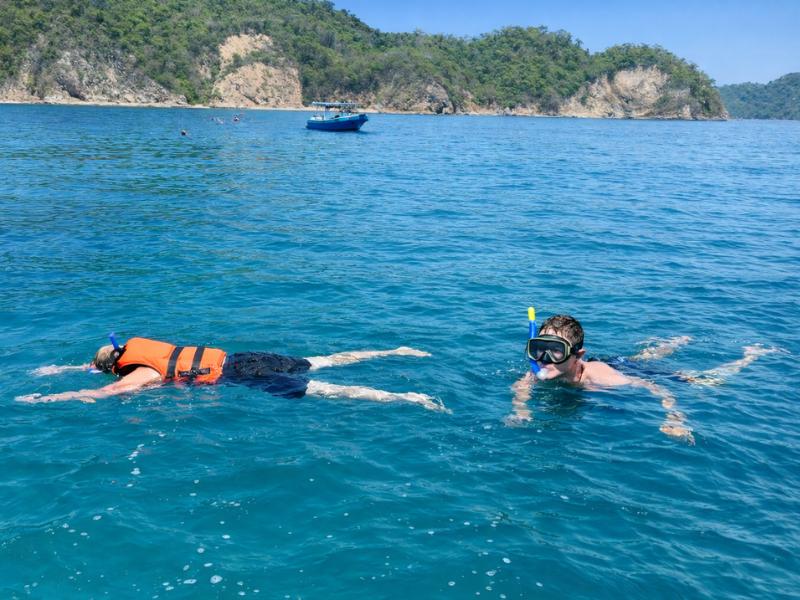
People get this backwards constantly. The instinct when you are worried about seasickness is to eat nothing, on the theory that an empty stomach has nothing to lose. In practice an empty stomach produces acid, low blood sugar and light-headedness, which is a decent recipe for feeling ill before the boat has even left the dock. A small amount of bland food in your system is the buffer.
The Isla Tortuga crossing makes this practical rather than theoretical. From the mainland the general figure is roughly 90 minutes on the water, and the Puntarenas speedboat runs around an hour. That is long enough for a bad decision at 6 AM to matter by 9. The good news is that the fix is cheap, takes ten minutes, and works for almost everyone.
Why does an empty stomach make seasickness worse?
Motion sickness comes from a mismatch between what your inner ear feels and what your eyes see. An empty stomach does not prevent that mismatch. It adds low blood sugar, gastric acid with nothing to act on, and dehydration, all of which amplify nausea and make the recovery slower once it starts.
There is a second-order problem too. If you feel sick with nothing in your stomach, retching produces nothing, which is more unpleasant and more exhausting than the alternative. Crews on the Gulf of Nicoya see this every week and their advice is consistent: eat a little, not a lot.
Blood sugar matters more than people credit. A 4 AM pickup for the San José full-day tour, no breakfast, a two-hour road transfer and then a boat is a long stretch without fuel, in heat, before anything has even started. By the time the boat pushes off you are already running low, and the first bit of swell tips you over. The tours know this: the San José departure specifically excludes breakfast but stops for cheap local food on the way, which exists precisely so nobody boards empty.
What should you actually eat, and what should you avoid?
Favour dry, bland, low-fat and low-acid: toast, plain bread, crackers, banana, plain rice, oatmeal, a small portion of plain gallo pinto without heavy sauce. Avoid greasy fried food, heavy dairy, very acidic juice, spicy food and anything you have not eaten before.
Fat slows gastric emptying, which means a fried breakfast is still sitting in your stomach when the boat starts moving. Acid, from orange juice, pineapple juice or a lot of citrus, aggravates reflux, and reflux plus swell is a bad combination. Spice does the same thing from a different direction. None of these are catastrophic if your stomach is bulletproof, but the whole point of eating strategically is that you are not sure whether yours is.
Portion matters as much as content. You want a small meal, not a hotel buffet. Something in the region of a light breakfast that leaves you comfortable rather than full. If you are still hungry at boarding, a couple of plain crackers in your pocket solves it, and crackers are also the single best thing to nibble on during a crossing if you start feeling delicate.
| Eat | Why it works | Avoid | Why it hurts |
|---|---|---|---|
| Toast, plain bread, crackers | Dry starch settles the stomach and buffers acid | Fried eggs, bacon, sausage, fried plantain | Fat slows digestion, food sits while the boat moves |
| Banana | Gentle sugar, potassium, easy to carry | Large glass of orange or pineapple juice | Acidity aggravates reflux on a moving boat |
| Plain rice or oatmeal | Slow release, no fat, no acid | Heavy dairy, milkshakes, cream sauces | Sits heavily and curdles the feeling of nausea |
| Small portion of plain gallo pinto | Local, familiar, low fat if not fried heavily | Spicy salsa or chilli at breakfast | Irritates the stomach lining before swell arrives |
| Water, or weak tea | Hydration without a caffeine spike | Three coffees on an empty stomach | Acid plus a jittery stomach plus a diuretic effect |
| Ginger tea, ginger chews | Long-standing anti-nausea remedy, harmless to try | Alcohol the night before | Dehydration and inner-ear disruption carry into the morning |
How much should you drink, and when?
Start drinking water when you wake up and keep going steadily. Dehydration makes nausea significantly worse and it arrives fast in a Costa Rican dry-season morning. Aim for a large glass on waking, another with food, and a bottle in your bag. Skip alcohol the night before and during the crossing.
Heat is doing work against you all day. You are on an open boat with reflection off the water, then on a white sand beach in direct sun, and the whole trip is 7 to 12 hours for most departures. Tours include water, iced tea, soft drinks and coffee, so the supply is not the problem. The problem is that people drink almost nothing until lunch and then wonder why they have a headache and a queasy stomach.
Alcohol deserves a specific mention. It is excluded from every tour listed on this site, sold separately on the beach or on board, and a beer at 11 AM in 30 degree heat is doing three unhelpful things at once: dehydrating you, affecting your inner ear, and lowering your judgement about sun exposure. If you want a cold beer, have it on the sand after the snorkel, not before the crossing.
The night before matters as much as the morning. A late night out in Jacó or Santa Teresa followed by a 7 AM pickup is the most reliable way to have a bad boat ride, and no ginger chew in the world fixes it.
How does the timing work with a very early pickup?
Work backwards from boarding, not from your alarm. Aim to finish eating 60 to 90 minutes before you step onto the boat, and take motion-sickness medication according to the label before boarding rather than at the dock. For a San José departure with a 4 AM to 6 AM pickup, that means eating at the roadside stop, not at 3:45 AM.
Departure times vary a lot by tour, and so does the gap between pickup and boarding. The Jacó tour picks up at 07:00 AM and stops at the Tarcoles River bridge before boarding. The private Puntarenas charter departs at 8:30 AM from Guima Frost, so a normal hotel breakfast is fine. The San José tour is the extreme case: pickup between 4 AM and 6 AM, a two-hour road transfer, then the boat, with the whole day running up to 18 hours door to door because most of it is road time.
That long road leg is actually an advantage. It gives you a natural window to eat properly at the scheduled stop, roughly two hours before you board, which is close to ideal. What does not work is loading up on pastries and coffee in the van 20 minutes before the boat.
| Departure | Typical start | When to eat | Notes |
|---|---|---|---|
| Tortuga Island full day from San José | Pickup 4:00 to 6:00 AM | At the breakfast stop on the road transfer | 18-hour door-to-door day, breakfast is not included but a stop is made |
| Isla Tortuga adventure from Jacó | Pickup 07:00 AM | Light breakfast at the hotel before pickup | Tarcoles bridge stop gives you 20 minutes before boarding |
| Puntarenas full-day speedboat | Morning dock departure | 60 to 90 minutes before dock time | Private Las Playitas dock, showers on return |
| Private Puntarenas escape | 8:30 AM from Guima Frost | Standard hotel breakfast, kept light | Ceviche appetiser and BBQ lunch on board later |
| Santa Teresa boat adventure | Morning pickup on the main road | Before the 45-minute van transfer | Open-water reef snorkel session, so board settled |
| Bioluminescence tour from Curú | Early afternoon arrival, 5 p.m. boat | Normal lunch, then nothing heavy after 3 p.m. | Only a 15-minute ride, snacks and fruit provided |
When should you take motion-sickness medication?
Before boarding, following the timing on the packet, which for most over-the-counter tablets means well ahead of departure rather than at the dock. Taken after symptoms begin, they work poorly, because a nauseated stomach absorbs medication badly. Prevention is the entire mechanism.
This is the single most common mistake on any boat trip. People carry the tablets, feel fine at the dock, decide to wait and see, and then take one at the first wave of nausea 30 minutes out. By then the drug has to be absorbed by a stomach that has effectively stopped working, and the crossing is half over anyway.
Read the label and follow it. Some products call for dosing an hour or more before travel; patches are applied further ahead still. Drowsiness is a common side effect of the older antihistamine types, which matters if you plan to snorkel, so try any new medication at home before you use it on a boat in a foreign country. If you take other medication or are pregnant, ask a pharmacist rather than a travel blog, including this one. Pharmacies in Costa Rica are easy to find and pharmacists are used to this exact question.
If you are genuinely prone to motion sickness, stack the deck rather than relying on one intervention: shorter crossing, light food, medication on schedule, a seat in the middle of the boat where the pitch is least, eyes on the horizon, fresh air rather than a cabin, and no reading or phone screens. Each one helps a little and together they usually settle it.
Does ginger actually help?
Ginger has a long history as an anti-nausea remedy and plenty of travellers swear by it. It is cheap, harmless for most people and easy to carry as chews, capsules, tea or crystallised pieces. Treat it as a useful supplement to preparation rather than a replacement for medication if you get seasick badly.
Ask a pharmacist which motion-sickness remedy and timing are appropriate for you or your child, and follow its label. Do not assume one medicine or dosing schedule suits everyone.
Acupressure wristbands fall into the same category: widely used, no risk, mixed evidence, and if it works for you then it works. What does not deserve the same benefit of the doubt is the advice to stare at your phone to distract yourself, which reliably makes motion sickness worse because it fixes your eyes on something that moves with the boat instead of something that stays still.
Fresh air is underrated and free. Standing at the rail in the breeze with the horizon in view beats sitting in the shade below. Cold water on your wrists and the back of the neck helps in heat. And if you do end up being sick, tell the crew. They have seen it, they have a bag, and they will move you to a better seat.
What is lunch on the tour, and how should you plan around it?
Lunch is a proper cooked meal served on the beach, typically grilled fish or chicken with rice, salad, plantains and fresh fruit, plus soft drinks, coffee and cookies. It usually lands in the middle of the island time, after the snorkel. Knowing that lets you keep breakfast small without spending the morning hungry.
The timing is the useful part. Most departures follow the same shape: crossing in the morning, snorkel on arrival, lunch around midday, free afternoon. So the gap you actually need to bridge with breakfast is roughly the crossing plus the first swim, not the whole day. That is another argument for eating light and early rather than heavy and late.
Snacks are generally included and generous. Fresh fruit, cookies, coffee, iced tea and soft drinks appear across the listings, and the Jacó tour specifies unlimited fruit and non-alcoholic drinks. The Curú evening tour is the exception: it provides fruit and soft drinks rather than a full dinner, so eat a proper lunch before it and do not expect a meal.
Dietary needs are handled if you declare them at booking. The San José departure lists vegan and vegetarian options, and vegetarian requests are routine across operators when made in advance. Serious allergies need a second mention to the guide on the morning, because the food is cooked by the crew on a beach rather than in a kitchen with labelled ingredients. That is also a reasonable point in the day to have a small backup snack of your own in the dry bag.