Visiting Tortuga Island with Kids: A Practical Guide
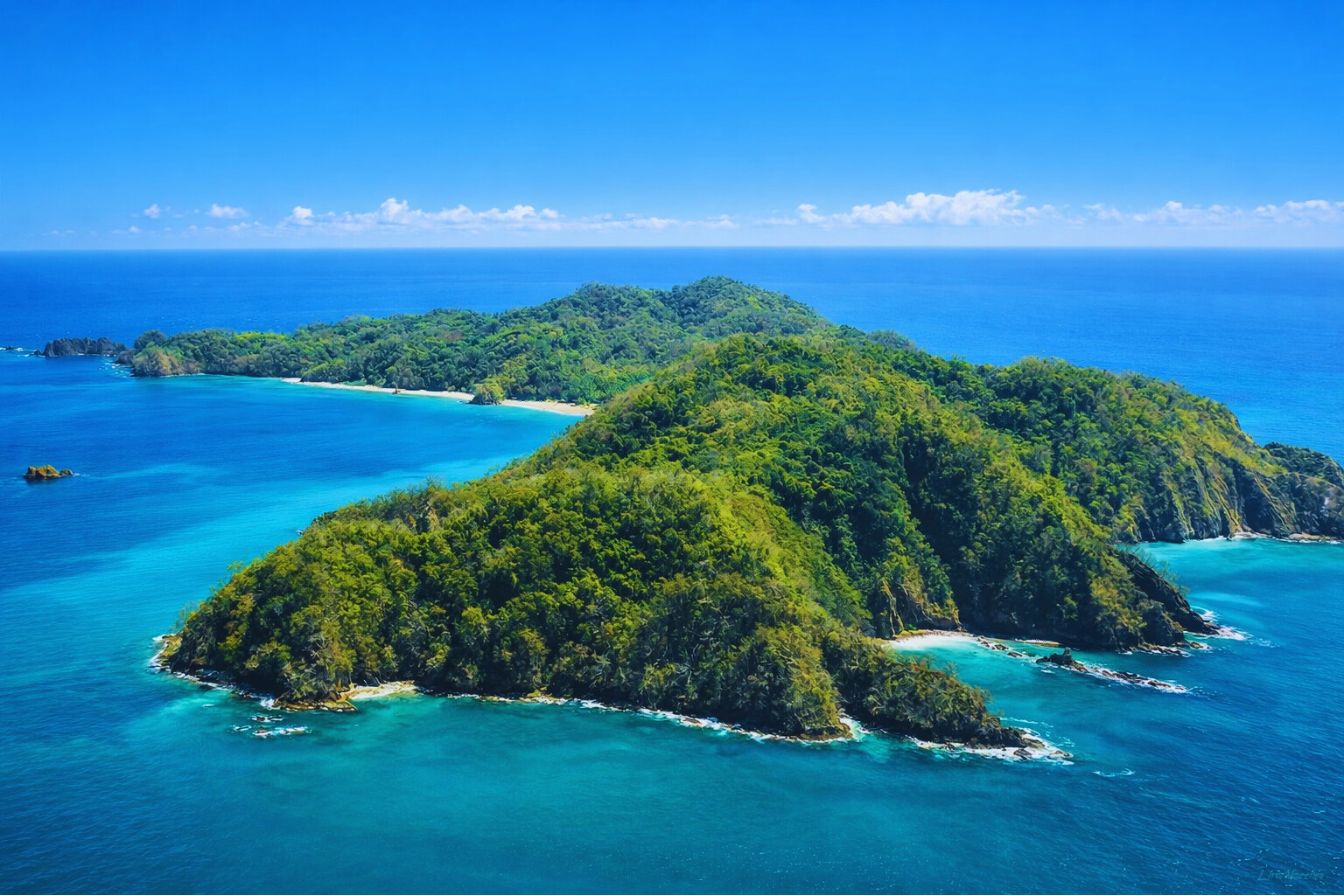
Shallow warm water, soft sand, fish you can see from the surface and no cars anywhere. Isla Tortuga is a genuinely good day with children. The part that goes wrong is almost always the schedule, not the island.
Booking Choice: A coastal boat ride from Montezuma, snorkeling equipment and a choice of island lunch. Explore Santa Teresa Island And Snorkel Day
Start: Santa Teresa. Confirm age rules and extras before booking.
Price note: fixed dollar amounts and totals in the editorial examples below are planning illustrations, not current quotes. Prices, child rates and private/shared options must be checked for your date and full party. The provider calendars and booking pages carry current offers.
Day length by departure, for family planning
Door-to-door day length as listed by each of the six operators, ordered shortest to longest, to show how much of the day is travel rather than beach.
Is Tortuga Island a good day out with children?
Yes, for most families. The beach is soft white sand, the water near shore is shallow and calm, there are no cars on the island, and lunch is cooked and served for you. The risk is not the destination. It is booking a 12 or 18-hour day for a child who needs to be home by seven.
Age rules differ by product. The Santa Teresa GetYourGuide listing currently excludes children under 10, while other operators publish different age bands. Enter every traveler’s age in the trip matcher and confirm life-jacket fit and activity participation directly with the operator. Related reading: life jackets
What makes or breaks the day is the shape of it. Isla Tortuga sits in the Gulf of Nicoya, reachable only by boat, and the tours that reach it span everything from a 2.3-hour evening trip out of Curú to an 18-hour marathon from San José. A five-year-old on the right one has a brilliant day. The same child on the wrong one falls apart on a dark bus somewhere past Orotina.
So the rest of this guide is mostly about matching the child to the departure, and then about the small practical things that make five hours on a tropical beach work rather than unravel.
Which tour suits which age?
Under fives do best on the shortest boat rides and the shortest days: a private charter or a peninsula departure. Six to eleven handle any of the full-day beach trips. Twelve and up can take the long San José run, the speedboat, and everything the island offers. Age matters less than day length.
| Age band | Boat crossing | Snorkelling | Best departures | Watch out for |
|---|---|---|---|---|
| Under 2 | Allowed with a child life jacket, but keep it short | No. Float in the shallows with a parent | Private Puntarenas charter, or a short peninsula boat | Sun exposure, nap timing, nowhere to change a nappy on the island |
| 2 to 4 | Fine on 15 to 45 minutes, tough on 90 | Not usually. Shallow beach play instead | Private charter, Santa Teresa via Montezuma | The midday heat window, and a return leg that runs past bedtime |
| 5 to 7 | Handles most crossings, may need a lap and shade | Beach-entry snorkelling if confident in water | Private charter, Santa Teresa, Jacó | Open-water reef snorkels are a big ask at this age |
| 8 to 11 | Usually enjoys it, including the speedboat bumps | Yes, with an adult alongside | Puntarenas speedboat, Jacó, Santa Teresa | Overconfidence in open water, and sunburn on the shoulders |
| 12 and up | No issue on any listed crossing | Yes, including guided reef sessions | Any, including San José if you want the capital pickup | Boredom on long road transfers. Bring headphones |
One note on the guided reef snorkel. The Santa Teresa and private Puntarenas tours describe open-water snorkelling over a volcanic reef rather than a wade-in from the beach. That is a different proposition for a child than paddling near the sand with a mask on. Good for a confident nine-year-old, a lot for a nervous six-year-old, and the crew will not push it either way.
How does the boat crossing go with young children?
Better than most parents fear, provided the crossing is short and taken in the morning. The Gulf of Nicoya is generally calm before the wind builds, life jackets are standard for everyone, and small children often fall asleep against a parent within twenty minutes. Long afternoon returns are the harder half.
The practical differences by departure point are large. From Curú the crossing is about 15 minutes. From Paquera or Tambor, 30 to 45. From Montezuma about 45. From the Puntarenas side, an hour or more. The San José tour lists a 45-minute crossing but wraps roughly two hours of road around each end of it.
| Departure | Boat time each way | Total day | Suits |
|---|---|---|---|
| Curú Wildlife Refuge | About 15 minutes | About 2.3 hours, evening | Older children who can stay up. Not a beach day |
| Private Puntarenas charter | Crossing plus a 25-minute Negritos stop | About 7 hours, from 8:30 AM | Age rules differ by product. The Santa Teresa GetYourGuide listing currently excludes children under 10, while other operators publish different age bands. Enter every traveler’s age in the trip matcher and confirm life-jacket fit and activity participation directly with the operator. |
| Santa Teresa via Montezuma | About 45 minutes, plus a 45-minute van transfer | About 7 hours | Ages 4 and up |
| Jacó | About an hour, after a 07:00 pickup and the Tarcoles stop | About 10 hours | Ages 6 and up |
| Puntarenas speedboat | About an hour, faster and bumpier | About 12 hours | Ages 8 and up, or confident younger kids |
| San José | About 45 minutes, plus roughly 2 hours of road each way | Up to 18 hours, pickup from 4:00 to 6:00 AM | Ages 10 and up realistically |
Seat your child low and central on the boat, facing forward, with air on their face. That is the calmest spot on any hull, and it also puts them where the crew can see them. Save the bow bench for teenagers who want the bounce.
What do you do about seasickness in children?
Book the shortest crossing you can, take the earliest departure, feed them something light beforehand, and keep their eyes on the horizon rather than on a screen. Children between roughly two and twelve are the most susceptible age group, and prevention is far more effective than anything you can do once it starts.
| What to do | When | Why it works |
|---|---|---|
| Choose a 15 to 45 minute crossing | At booking | Exposure time is the biggest single factor. A short hop rarely causes trouble |
| Take the morning departure | At booking | Wind chop builds through the day, so morning water is flatter |
| Ask a pharmacist before you travel | Before the trip | Child dosing and timing vary by product and by age. Get proper advice, not guesswork |
| Light breakfast, not an empty stomach | Morning of | Hunger makes nausea worse. So does a heavy greasy meal |
| No tablets or books on the crossing | During | Focusing on a fixed close object while the world moves is the fastest route to trouble |
| Low, central seat, air on the face | As you board | Least motion on the boat, and fresh air genuinely helps |
| Spare clothes in a dry bag | Packed | If it happens anyway, a dry t-shirt salvages the rest of the day |
If one of your children is a known sufferer, this alone should decide your departure point. A 45-minute run from Montezuma or a private charter that can slow down is a different experience from an hour of speedboat slam followed by two hours of winding coastal road.
How bad is the sun, and where is the shade?
Strong enough to be the main hazard of the day. Isla Tortuga sits near nine degrees north, the reflection off white sand and turquoise water roughly doubles the dose, and children burn while the water still feels cool. Palms line the beach and give real shade, but you have to actively use it.
Plan the day in blocks rather than trusting sunscreen alone. Rash guards do more work than any bottle, hats stay on better with a chin strap, and reapplication after every swim is the rule that actually gets broken.
| Time | Sun strength | What to do with children |
|---|---|---|
| Before boarding | Low | Full sunscreen application on dry skin, 20 minutes before exposure. Rash guards on |
| On the crossing | Moderate but reflected off the water | Hats and shade on deck. This is where people quietly burn |
| 9am to 11am on the island | Building | Best window for swimming and snorkelling. Water is clearest and the beach is emptiest |
| 11am to 2pm | Peak | Move under palms. Lunch, shade, quiet time. Reapply sunscreen twice |
| 2pm to 4pm | Easing but still strong | Back in the water, kayaks, banana boat, sandcastles |
| On the return | Low and falling | Dry clothes, a snack, and let them sleep |
Beach chairs and umbrellas are rentable on the island on several of these tours, payable on the beach. With small children that rental is one of the few extras genuinely worth paying for, because it gives you a fixed shaded base to keep coming back to instead of chasing a moving palm shadow all afternoon.
Will snorkel gear fit your child, and will they actually use it?
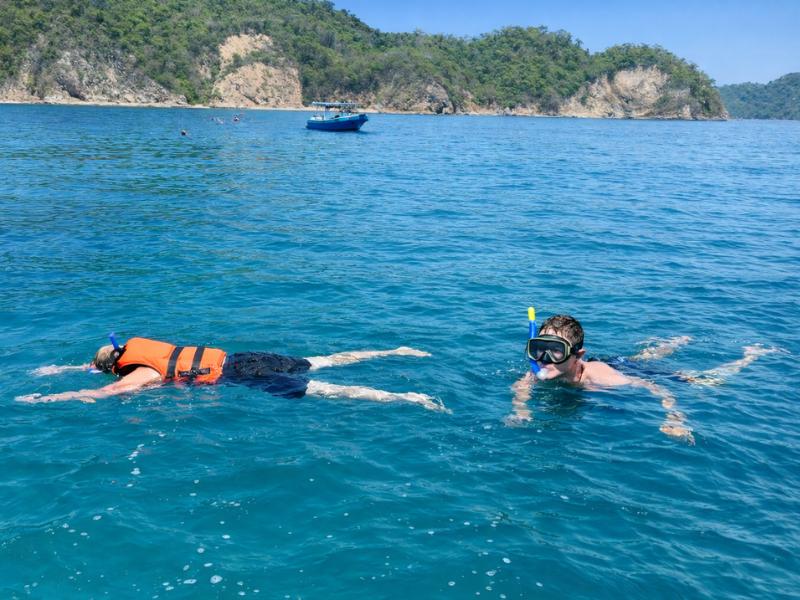
Snorkeling conditions and entry points vary. Boat-based reef stops involve open water; a life jacket does not replace swimming ability or individual supervision. Tell the operator about swimming confidence before booking, and choose beach time if the water activity is unsuitable.
The single best thing you can do is bring your own mask for any child who has snorkelled before and knows what fits. A mask that seals is the difference between forty minutes of wonder and four minutes of crying. Fins are less important, and for a small child in shallow water they are often more trouble than help.
| Age | Realistic snorkel setup | Where | Adult support needed |
|---|---|---|---|
| 3 to 4 | Life jacket and goggles, face in the water briefly | Shallows a few steps from the sand | One adult hands-on at all times |
| 5 to 7 | Child mask and snorkel, life jacket, no fins | Beach entry, waist-deep water | One adult within arm's reach |
| 8 to 11 | Full mask, snorkel and small fins | Beach entry, or the guided reef with a strong swimmer | One adult alongside in the water |
| 12 and up | Standard adult gear | Guided reef snorkel from the boat | Buddy system, guide supervision |
What they will see is genuinely good for a first snorkel: parrotfish, sergeant majors, angelfish, the occasional moray tucked into rock, eagle rays gliding past in deeper water, and sea turtles if the day is kind. Visibility is best in the morning, before other boats arrive and stir the sand. Go early and the reef delivers.
A word on confidence
Some children take to a mask instantly and some do not, and pushing rarely works. If yours is hesitant, let them watch from a life jacket for ten minutes first, then try. If it still does not land, the beach is right there, the sand is soft, and nobody has wasted anything. The reef will be there next holiday.
What else is there for kids to do on the island?
Beyond swimming and snorkelling, the island runs kayaks, paddleboards, a banana boat, hammocks between the palms and beach volleyball, plus a short walk to a stone arch viewpoint. Some of it is included and some is paid separately on the beach, which varies by tour.
- Banana boat. The reliable hit with kids from about eight upwards. Minimum ages are set on the beach by whoever runs it, so ask on arrival rather than promising in advance.
- Kayaks and paddleboards. Calm shallow water makes these easy. A double kayak with an adult works well from about five.
- Hammocks. First come, first served. Claim one early if you want a shaded base for a napping toddler.
- Beach volleyball and sandcastles. Free, endless, and the reason nobody notices you have been there four hours.
- Wildlife spotting. Iguanas on the rocks are near certain. Howler monkeys are often heard from the jungle edge. On the Negritos Island stop, spider monkeys are the draw, and the crew will point them out.
Wildlife sightings are never guaranteed and it is worth telling children that before you go. Deer and peccary live on the island but stay in the forest interior during the day when the beach is busy. Setting the expectation as "we might see monkeys" rather than "we will see monkeys" saves a small disappointment.
What about lunch, and what if your child will not eat it?
Lunch is included on every full-day tour and is a proper cooked meal: grilled fish or chicken with rice, beans, salad, plantains and fresh fruit, served on the beach. Vegetarian options are available on request. It is delicious and it is also unfamiliar, which is a real issue for a picky seven-year-old.
The fruit and rice usually rescue the situation. Bring a backup anyway, because there is no shop on the island and hunger on a boat home is a long afternoon for everyone. A couple of cereal bars and a bag of crackers in a dry bag costs nothing and solves it.
| Tour | Lunch as listed | Drinks included | Family notes |
|---|---|---|---|
| Puntarenas speedboat, $80 | Full lunch and fresh seasonal fruit | Unlimited iced tea, coffee and cookies | Cookies are a useful bargaining chip |
| Jacó full day, $115 | Traditional local lunch | Unlimited fruit, soft drinks, coffee, tea and snacks | Snacks run through the day, which helps |
| San José full day, $115 | Lunch with fish, chicken or vegetarian and vegan options | Soda, iced tea, coffee, cookies, fresh fruit | Most flexible menu of the six. Breakfast is not included |
| Private Puntarenas, $125 | Ceviche starter then BBQ fish or chicken | Afternoon coffee and cookies | Ceviche is a hard sell for young children. Ask about a plain option |
| Santa Teresa, $152 | Grilled BBQ lunch with vegetables, potatoes and fruit | Refreshments on the beach | Potatoes and fruit are the safe bet for fussy eaters |
| Curú bioluminescence, $60 | Fruit and snacks only, no full dinner | Soft drinks | Feed everyone properly before this one |
What is the restroom and changing situation?
Basic. There are restrooms on the island but several listings charge around a dollar per use, and there is no accommodation or developed facility block. The Puntarenas speedboat tour has showers and changing rooms back at the dock, and Curú lists bathroom access at the refuge. Carry small notes.
Practical consequences for families. Use the facilities at the dock or the boat before you leave. Take small bills, ideally dollar notes or small colón notes, because nobody wants to be working out change with a five-year-old hopping. Bring wipes and a nappy sack if you have a toddler, because there is no bin infrastructure worth relying on and whatever you carry in you carry out.
Changing children is done on the beach with a towel, which is entirely normal there and nobody blinks. A large towel or a cheap changing poncho makes it easy. The dock showers on the Puntarenas speedboat return are a genuine benefit at the end of a salty day, and if you have a long drive afterwards they are worth choosing the tour for.
How do naps and bedtimes survive a 10 to 18-hour day?
They do not, on the longest options. The San José tour picks up between 4:00 and 6:00 AM and runs up to 18 hours door to door. That is a full night's sleep removed at one end and a late return at the other. For children under about ten, it is the single most common way a family day at Tortuga goes wrong.
| Tour | Start | Total day | Nap opportunity | Verdict for under-8s |
|---|---|---|---|---|
| Private Puntarenas, $125 | 8:30 AM at the marina | About 7 hours | On the island, in shade, at your own pace | The best structure of the six |
| Santa Teresa, $152 | Hotel pickup in Santa Teresa | About 7 hours | On the 45-minute crossing and on the beach | Works well if you are already on the peninsula |
| Jacó, $115 | 07:00 pickup | About 10 hours | On the boat legs and the transfer | Manageable from about six upwards |
| Puntarenas speedboat, $80 | Morning at the Las Playitas dock | About 12 hours | Limited, the speedboat is not a sleeping platform | Better from about eight upwards |
| San José, $115 | 4:00 to 6:00 AM pickup | Up to 18 hours | Long road legs, but a dark bus home is a rough end | Ten and up, realistically |
| Curú bioluminescence, $60 | Early afternoon at the refuge | About 2.3 hours on the water portion | Not applicable, it ends after dark | Older children only, and a late night |
The maths is simple and unglamorous. A seven-hour day starting at 8:30 AM gets everyone home mid-afternoon with the evening intact. An 18-hour day starting at 4:00 AM does not. Both cost roughly the same per person and both deliver the same island.
Why do peninsula departures and private charters work better for families?
Private service gives your party its own boat only when the private booking option is selected. Departure and return times, route changes and special assistance must be agreed with the operator; they are not guaranteed by the word “private”.
The private full-day escape from Puntarenas departs at 8:30 AM from Guima Frost marina with the boat dedicated to your group. It includes a 25-minute Negritos Island stop looking for spider monkeys, a private beach spot in front of the water, a one-hour guided snorkel, a ceviche starter and a BBQ lunch, and a visit to the stone arch viewpoint that standard tours often skip. It holds the highest rating in this set at 4.8 across more than 1,100 bookings, and it lists at $125 per person.
Run the numbers for a family of four and the case gets stronger. Four seats on a $115 shared tour with a $20 per-person transport supplement is $540 before a single extra. Four on the private charter is $500 with no supplement, and if child rates apply it drops further. You are not paying a luxury premium. You are often paying less for a shorter, calmer, more flexible day.
The Santa Teresa departure makes a similar case from the other side of the peninsula: a 45-minute crossing rather than an hour and a half, a bilingual guide and captain, and a route through water where dolphins, manta rays, turtles and, between July and November, humpback whales genuinely turn up. Costa Rica's tourism board covers the wider region at visitcostarica.com if you are building a longer Nicoya Peninsula itinerary around it.
What should you pack for children?
Sun protection first, then dry clothes, then food insurance. Everything else is optional. Boat space is limited, so one shared dry bag per family beats four small bags, and anything that cannot get wet should be assumed to get wet.
- Rash guards, long sleeved. The single most effective piece of kit for the whole day.
- Wide-brim hats with chin straps. Ordinary caps blow off a moving boat within minutes.
- High-SPF waterproof sunscreen, applied before boarding and reapplied after every swim.
- A large towel per child plus one spare for changing behind.
- A full change of dry clothes sealed in a bag for the journey home.
- Water shoes or sturdy sandals. Boat decks are slippery and there are rocks at the edges of the beach.
- Your own snorkel mask for any child who already knows what fits them.
- Snacks in a sealed bag, because there is no shop on the island.
- Small notes in cash for the restroom, chair rental and crew tips.
- A dry bag for phones, which will otherwise meet salt spray on the crossing.
- Motion sickness remedy if anyone is prone, with dosing checked before you travel.
- Insect repellent for shaded areas at the beach edge.
Leave behind anything valuable, anything electronic that is not in a dry bag, and the inflatable pool toys. The boat has limited space, the crew will not thank you, and the island supplies everything a child actually needs: warm shallow water, soft sand, fish, and an entire afternoon with nowhere else to be.