Is Tortuga Island Safe to Visit?
Isla Tortuga is an uninhabited island reached only by boat, with no clinic, no lifeguard and no shop. That shapes the whole safety picture, and none of it should stop you going.
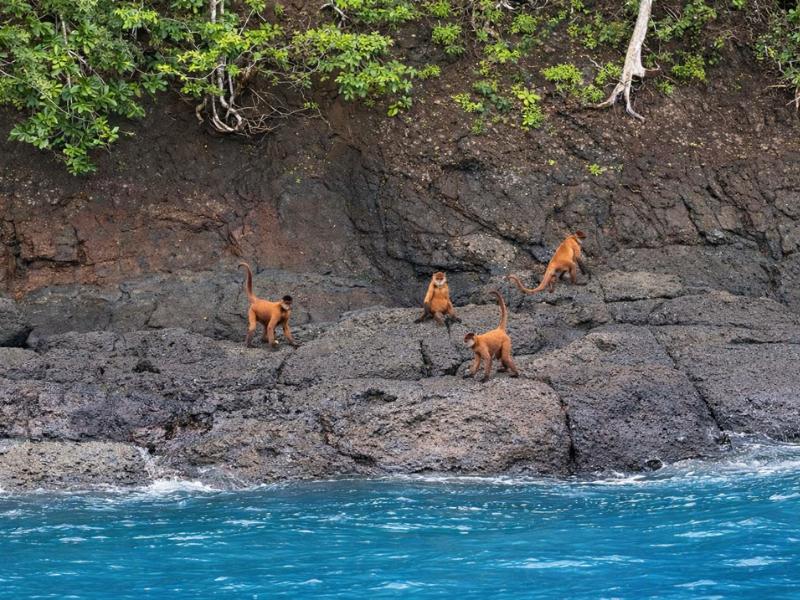
Booking Choice: An island lunch, snorkeling equipment and a Negritos wildlife stop. Explore Puntarenas Island Day: Shared Or Private
Start: Puntarenas. Confirm age rules and extras before booking.
Time on the water by departure point
Approximate one-way boat times to Isla Tortuga from each departure point, taken from the crossing times published for the tours listed on this site.
Is Tortuga Island safe to visit?
Yes. A day trip to Isla Tortuga sits at the low-risk end of Costa Rican excursions. The island is uninhabited, the main beach is sheltered, and licensed operators carry life jackets and a first-aid kit on board. The genuine risks are sunburn, dehydration, seasickness on the crossing, and distance from medical help.
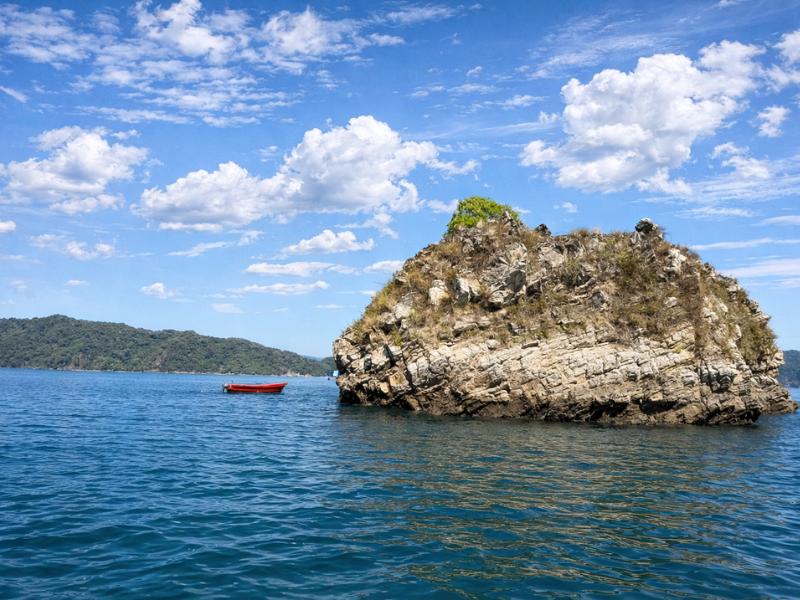
The honest version is less dramatic than most safety articles want it to be. There is no crime problem on an island with no residents, no roads and no bars. Nobody is going to hassle you. The things that actually spoil people's days on the Gulf of Nicoya are mundane: they skip breakfast and feel sick on an hour-long crossing, they burn through a shoulder by noon, they leave a phone loose on a boat bench, or they arrive with a medical condition and no medication because the day looked casual.
That distinction matters when you are deciding whether to book. Treat the trip as a beach day and you will probably be fine. Treat it as a beach day with the correct preparation for open water, strong equatorial sun and a location roughly 12 kilometres from the mainland, and you remove almost every failure mode that exists.
How safe is the boat crossing to Isla Tortuga?
The crossing is the part of the day with real, though small, exposure. Tour boats run under Costa Rican maritime rules with life jackets for every passenger, including child sizes, plus a captain and crew who make the run daily. The main variable is not the boat, it is the sea state and how long you are on it.
Departure point changes the exposure more than anything else. From the Nicoya Peninsula side, Montezuma sits about 45 minutes out and Curú only about 15. From the mainland the general figure is closer to a 90-minute crossing, and Puntarenas speedboats run roughly an hour to the island. More minutes on the water means more chance of a lumpy stretch, more sun and more opportunity for motion sickness, which is why what you eat before a boat tour is a legitimate planning question rather than a fussy one.
Wear the life jacket if you are told to. Sit toward the middle and rear of the hull if you are prone to nausea, keep your eyes on the horizon rather than a phone, and stay seated when the boat is moving. Wet fibreglass decks and swell are the most common cause of a bruised shin on these trips, not anything more exotic. The Gulf of Nicoya is a large, semi-enclosed body of water, generally calmer than the open Pacific outside it, which is exactly why this day trip works at all.
| Departure point | Approx. time on the water each way | Exposure profile | Best for |
|---|---|---|---|
| Curú Wildlife Refuge | About 15 minutes | Shortest run, sheltered inshore water | Anyone nervous about boats or prone to seasickness |
| Montezuma / Santa Teresa side | About 45 minutes | Coastal cruise along the peninsula | Scenery, whales in season, moderate confidence |
| Puntarenas | Around an hour by speedboat | Open gulf crossing, faster hull | Efficiency, cheapest full-day format |
| Mainland average | Roughly 90 minutes | Longest continuous stretch afloat | Travellers comfortable on boats |
| San José full-day | Road transfer plus the boat leg | Mostly road, a long door-to-door day | Visitors without a car, who do not mind an 18-hour day |
When do operators cancel a Tortuga trip for weather?
Boats stop running when swell, wind or a squall makes the crossing unsafe, and that judgement sits with the captain, not with you. Cancellations cluster in the wetter months from May to November, when afternoon storms and choppier gulf conditions are more frequent. Dry season, December to April, cancels rarely.
A cancellation is a safety feature and should be read that way. Operators who take a full boat out into conditions they do not like are the ones to avoid. If your captain moves the departure earlier, shortens the island time, or calls the day off, that is the system working. The practical consequence is scheduling: do not put your Tortuga day on the last morning before an international flight, because a weather call leaves you with no second attempt.
The seasonal pattern is worth planning around. December to April gives the calmest gulf and the clearest water, at the cost of demand and midday crowds. May to June and September to October bring more availability and lower prices, along with a higher chance of an afternoon shower and a bumpier ride. Costa Rica's national weather service, the Instituto Meteorológico Nacional, publishes the daily marine and rainfall outlook if you want to check the pattern before your travel window rather than the morning of.
Check the cancellation terms when you book. Most listed options carry free cancellation up to 24 hours ahead, which protects you against changing your own mind. Weather cancellations by the operator are normally rebooked or refunded, but that policy is on the listing, not folklore, so read it.
Is swimming and snorkelling at Playa Tortuga safe?
Playa Tortuga is calm and sheltered compared with the surf beaches on the mainland. There is no dumping shorebreak and no rip current running off the main swimming area on a normal day. There is also no lifeguard, no rescue boat on standby, and nobody counting heads except your own crew.
That last point is the one people underestimate. Mainland Pacific beaches like Jacó have serious rip currents and a genuine drowning statistic behind them. Tortuga does not have that reputation, and the shallow, protected water off the beach is one of the reasons the island became a day-trip staple. But it is still open ocean. Water depth increases as you move out toward the reef, boats move in and out of the anchorage, and the person responsible for you is you.
Practical habits that cost nothing: snorkel with a buddy and agree a turnaround point before you enter, keep the boat and the beach in your peripheral vision, and take a life jacket or a float vest if you are anything less than confident. Crews hand them out freely and nobody thinks less of you. If a guided snorkel session is offered, join it rather than swimming off alone, because the guide is watching the group and knows where the current runs on that day.
Visibility is best in the morning before several boats have landed and stirred the sand. Clear water is a safety factor as much as a photography one, since you can see the bottom, see other swimmers, and see where the rock gives way to sand.
What marine life do you actually need to think about?
Nothing around Isla Tortuga is out to hurt you. The reef holds parrotfish, angelfish, sergeant majors, moray eels, eagle rays and the occasional sea turtle. The only two realistic contact injuries are stepping on a ray resting in the sand shallows and putting a bare foot or hand onto a sea urchin.
Rays rest half-buried in soft sand in shallow water. They are not aggressive and they leave when they feel you coming, so shuffle your feet rather than striding into the water. That single habit removes almost the whole risk. Eagle rays and manta rays out over the reef are simply things to watch, not things to avoid, and most people count them as a highlight of the day.
Sea urchins live on the rocky sections rather than the sand. Do not stand on rock to adjust a mask, do not grab a rock to steady yourself, and wear something on your feet if you are moving between the sand and the rocky edges. Moray eels look alarming and are entirely harmless if you keep your hands out of crevices, which is standard reef etiquette anyway.
Humpback whales pass through the gulf between July and November. Sightings on the crossing are genuinely possible rather than a marketing claim, and they happen at a distance the captain controls. There are no crocodiles at the island; the crocodiles people photograph on Jacó departures are at the Tarcoles River bridge stop on the drive, from a bridge, which is the only place you will see them.
What happens if you get ill or injured on an uninhabited island?
There is no clinic, no pharmacy and no permanent staff on Isla Tortuga. Boats carry a first-aid kit and the crew handle minor cuts, stings and scrapes. Anything beyond that means a boat ride back to the mainland, which is 15 to 90 minutes depending on where you departed from, then road transport.
Plan for that gap rather than worrying about it. If you carry an EpiPen, an inhaler, insulin or heart medication, it goes in your day bag on the boat, not in the hotel room, and you tell a crew member it exists and where it is. If you have a severe food allergy, declare it at booking and again to the guide on the morning, because lunch is cooked and served on the beach by the boat crew and the menu is grilled fish or chicken with rice, salad and fruit.
Bring your own small kit: plasters for the inevitable rock scrape, antihistamine, any personal medication, and rehydration sachets if you are prone to heat problems. The island has no shop selling any of it. Restrooms on the beach cost around a dollar per use on some tours, so carry small notes for that as well.
| Risk | Realistic likelihood | What removes most of it |
|---|---|---|
| Sunburn | High, the single most common problem | Reef-safe SPF 50 applied before boarding and again after every swim, rash guard, wide-brim hat |
| Dehydration and heat fatigue | Moderate to high on a 30 degree day | Drink steadily from the boat's water supply, sit in shade between swims, skip the mid-morning beer |
| Seasickness | Moderate on 60 to 90 minute crossings | Light food beforehand, medication taken before boarding, eyes on the horizon, mid-boat seat |
| Stepping on a ray or urchin | Low | Shuffle your feet in the shallows, stay off the rocks barefoot |
| Tired swimmer out of depth | Low | Life jacket, buddy system, join the guided snorkel rather than going alone |
| Losing a phone, wallet or passport | Low but expensive | Dry bag, leave the passport in the hotel safe, carry only the cash you need |
| Medical event far from a clinic | Very low | Carry your own medication on the boat, tell the crew, hold travel insurance |
Are your belongings safe on the boat and the beach?
Petty theft is rare on Tortuga because the only people there are your fellow passengers and the crews. The bigger threats to your valuables are salt water, sand and gravity: phones go over the side of a boat, wallets get soaked, and sunglasses vanish under a towel that gets shaken out.
Use a dry bag. Not a plastic bag, an actual roll-top dry bag, and clip it to something. Boats bounce, spray comes over the bow, and a phone on a bench slides. On the beach, keep the bag with your group rather than leaving it at one end of the sand while everyone snorkels at the other. Nobody is stalking the beach for it, but a bag alone under a palm for two hours is a bag nobody is watching.
Leave your passport in the hotel safe. You do not need it for a domestic day trip, and replacing one from Costa Rica is a far worse day than any sunburn. Carry small denomination notes in colones or dollars for the restroom fee, optional beach chair rental, drinks and crew tips, and leave the rest behind. Some Puntarenas departures return to a private dock with showers and changing facilities, which is a good place to keep a dry change of clothes rather than dragging it onto the sand.
Do you need travel insurance for a Tortuga Island day trip?
Yes, and note that international travel insurance is explicitly excluded from every tour listed on this site. The tour price covers the boat, the guide, the gear and the lunch. It does not cover a medical evacuation, a hospital bill, a cancelled flight or a stolen camera.
Costa Rica has good private hospitals, mostly in and around San José, and they charge accordingly for foreigners. Check that your policy covers boat excursions and recreational snorkelling, since a minority of budget policies carve out water activities. If you plan to add the optional discovery dive available on some departures, check scuba cover specifically, because that is a different category on most policies.
Two other clauses matter for this trip. First, weather disruption: if the operator cancels and your rebooked date does not exist because you fly home, a policy with trip-interruption cover is the difference between annoyance and a lost fare. Second, medical repatriation, which is the expensive line item nobody thinks about and the reason to hold a policy at all. General destination guidance from the Costa Rica Tourism Board is a reasonable starting point for the country-level picture before you match it against your own policy wording.
A short note on who should pick their departure carefully rather than skip the day. Severe motion sickness points you at the shortest crossings from the peninsula side instead of the 90-minute mainland run. Limited mobility points you at a private charter, where boarding happens at a controlled pace rather than behind 40 other passengers. Heat sensitivity points you at an early departure with a shaded beach chair, or at the evening bioluminescence tour from Curú, which puts you on the water at 5 p.m. rather than at noon.