Snorkeling at Tortuga Island: What You Will Actually See
Isla Tortuga is not a coral garden and the honest guides say so. It is volcanic rock, dropping into clear Pacific water, holding more fish than most first-timers expect. Here is what actually turns up.
Booking Choice: A coastal boat ride from Montezuma, snorkeling equipment and a choice of island lunch. Explore Santa Teresa Island And Snorkel Day
Start: Santa Teresa. Confirm age rules and extras before booking.
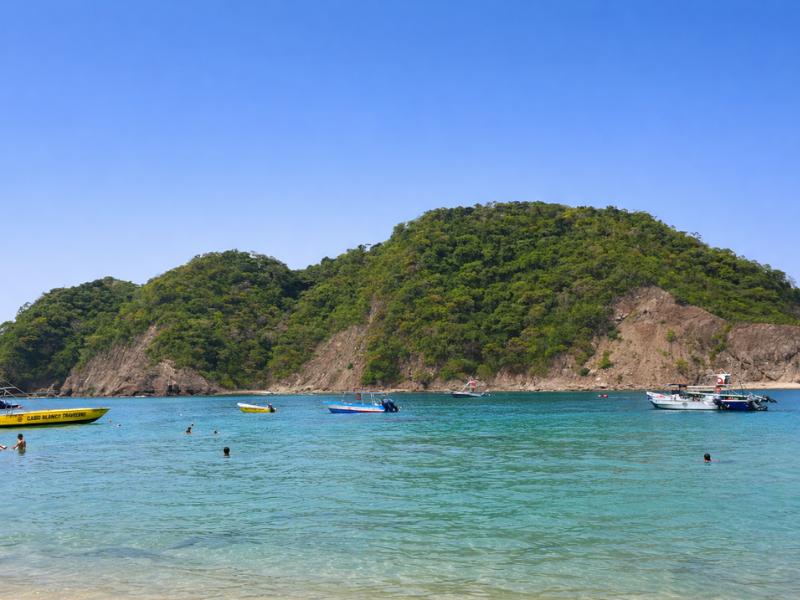
What the water gives you
Visibility bands reflect the 10 to 20 metre range reported around the island across dry and green seasons; encounter frequencies reflect what operators working these volcanic reefs report on guided sessions.
Is Tortuga Island actually good for snorkeling?
Yes, for what it is: a warm, calm, easy-access Pacific reef with high fish density and forgiving conditions. It is genuinely good for beginners and casual snorkellers, and it is not a Caribbean coral destination. The rock is volcanic, the coral cover is patchy rather than continuous, and the fish do the heavy lifting.
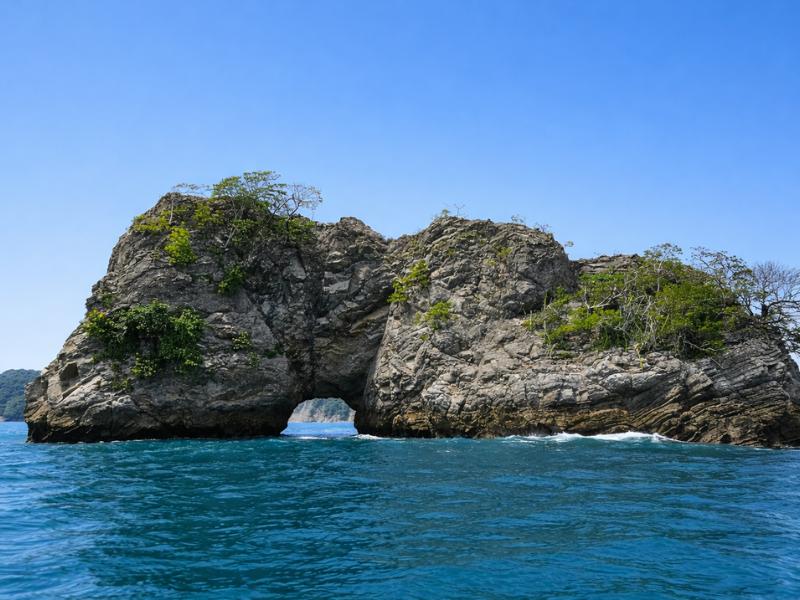
That distinction sounds pedantic until you are floating over it. People arrive at Isla Tortuga expecting the brochure version of a reef, which in most heads means Caribbean-style hard coral in every direction. What is actually underneath you is volcanic rock structure: boulders, ledges, walls and crevices formed by the same geology that built the islands themselves, with coral, sponges and algae growing across it. That structure creates hiding places, and hiding places create fish.
The result is a reef that photographs less spectacularly than Bonaire or Cozumel and often holds more visible life per minute in the water than a first-timer expects. Parrotfish grazing loudly enough to hear. Angelfish working the ledges. Morays with their heads out of crevices. Eagle rays crossing below you in open water. Occasional sea turtles. That is the honest inventory, and it is a good one.
| What people expect | What Isla Tortuga delivers | Honest verdict |
|---|---|---|
| Continuous hard-coral garden | Volcanic rock reef with patchy coral, sponge and algae growth | Below expectation if coral is the goal |
| Dense, varied reef fish | Strong. Parrotfish, angelfish, sergeant majors and wrasse in numbers | Meets or beats expectation |
| Crystal visibility | 15 to 20 metres on good dry-season days, less after rain | Meets expectation from December to April |
| Big animals | Eagle rays, manta rays, occasional turtles, morays on most sessions | Beats expectation for a day-trip reef |
| Easy, calm entry | Snorkeling conditions and entry points vary. Boat-based reef stops involve open water; a life jacket does not replace swimming ability or individual supervision. Tell the operator about swimming confidence before booking, and choose beach time if the water activity is unsuitable. | Beats expectation, this is a genuinely gentle site |
| Long unhurried sessions | Guided sessions run roughly 45 minutes to an hour | Below expectation for dedicated snorkellers |
If that last row is the one that bothers you, read the section on session length below. It is the most fixable of the limitations, and the fix is choosing the right tour rather than hoping.
What kind of reef is this, and why does the rock type matter?
Isla Tortuga sits on volcanic rock in the Gulf of Nicoya, and the reef is that rock colonised by marine growth rather than a coral platform built from the seabed up. Structure comes from geology, not from coral architecture. That gives you vertical relief, overhangs and crevices, which is exactly what reef fish and morays want.
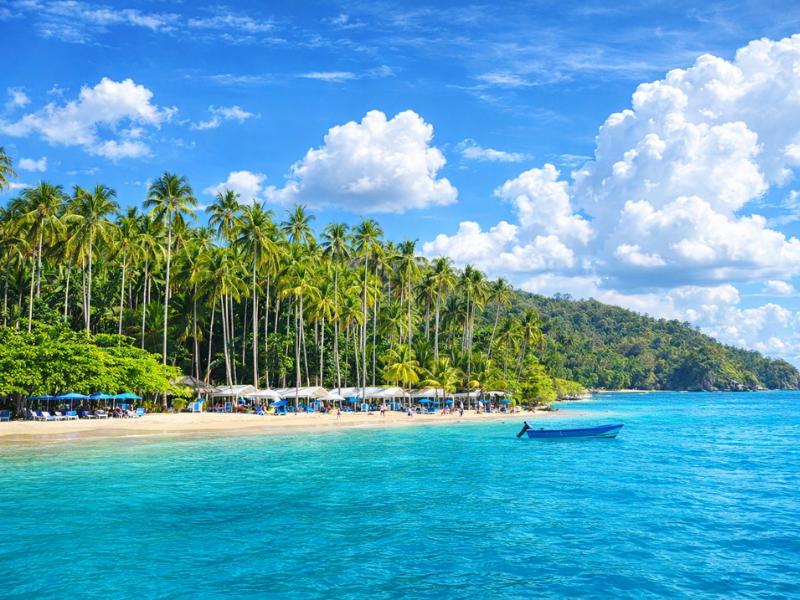
Costa Rica's Pacific coast in general is not a hard-coral coast the way the western Caribbean is. Nutrient-rich, seasonally turbid water suits fish and invertebrates more than it suits the clear-water, low-nutrient conditions that build big coral reefs. That is a geographic fact rather than a failure of any particular site, and it shapes what a Pacific snorkel looks like everywhere from the Gulf of Nicoya south to the Osa.
What that means underwater
- Look at the rock, not across the sand. The life concentrates on structure. Drifting over open sand is how people conclude there was nothing to see, ten metres from a wall covered in it.
- Look into holes. Morays, small octopus, lobster antennae and juvenile fish live in the crevices rather than out in the water column.
- Look up occasionally. Rays and larger schooling fish pass above and behind you, and a snorkeller staring straight down misses them constantly.
- Follow the guide. The guides know which sections of rock hold what. On the guided sessions they enter the water with the group and point out things you would swim straight past, which is worth more here than at a site where the reef is obvious.
Check the departure and cancellation terms for your actual travel date before arranging connecting transport. The product listings do not establish a guaranteed early landing, a fixed island-wide boat cap or how often a departure sells out. Related reading: SINAC
What will you genuinely see underwater?
On a decent session expect parrotfish, angelfish, sergeant majors and wrasse in real numbers, at least one moray, and a fair chance of eagle rays. Manta rays and sea turtles appear often enough to be a legitimate hope rather than a guarantee. Dolphins happen on the crossing, not the snorkel.
The list below reflects what the operators working these reefs report seeing regularly. Nothing on it is guaranteed on any single session, because this is wild water and not an aquarium. What is reliable is that you will see plenty of fish.
| Species | Where on the site | How often | What gives it away |
|---|---|---|---|
| Parrotfish | Grazing across rock and coral patches | Almost every session | Bright colour and an audible crunching sound as they scrape the rock |
| Angelfish | Ledges and vertical rock faces | Very common | Deep flat body, unhurried, tends to hold near structure |
| Sergeant majors and wrasse | Shallow water and around the boat | Constant | Small striped schools that follow snorkellers |
| Moray eels | Crevices and overhangs | Common on guided sessions | A head protruding from a hole, mouth opening rhythmically to breathe |
| Eagle rays | Open water below and beyond the reef edge | Regular | Spotted wings, unmistakable flapping glide |
| Manta rays | Deeper open water on boat-based sessions | Occasional | Large, dark, wide; usually passing rather than lingering |
| Sea turtles | Shallows and reef edge | Occasional, better in clear water | Surfacing to breathe is often the first clue |
| Pufferfish and boxfish | Slow water near rock | Fairly common | Awkward hovering swimmers that barely react to you |
| Small octopus | Tucked in crevices | Rare without a guide pointing | Texture that does not match the rock around it |
A word on what you will not see: this is not a shark site, not a big-schooling-pelagic site, and not a place where you drift a wall for an hour. Anyone whose reference points are dive destinations will find the range narrow. Anyone whose reference point is a hotel-beach snorkel will find it dense.
Open-water reef session or beach entry: which one are you getting?
Two different snorkels happen at Isla Tortuga and tours are not always clear about which they run. One is an open-water session from the boat over a volcanic rock reef, in deeper water, guided. The other is beach-entry snorkelling off the sand in shallow water. The boat-based session is the better reef; the beach entry is the easier experience.
Tours out of Santa Teresa and Montezuma explicitly run the open-water version: the boat stops at the rock reef and the group enters from the vessel rather than wading in. The Jaco departure takes its group to a secluded reef location deliberately away from where the main tour boats concentrate. The private Puntarenas charter runs a guided hour at a nearby volcanic reef. The beach-entry option exists on essentially every tour, because after lunch you can simply put a mask on and swim out from the sand.
| Open-water reef session from the boat | Beach entry off the sand | |
|---|---|---|
| Depth under you | Deeper, with visible structure and relief | Shallow sand shelf sloping gently out |
| What you see | The real reef: rock walls, crevices, larger fish, rays | Shallow fish, sand-dwellers, occasional passing ray |
| Visibility | Better, further from the stirred-up sand shelf | Degrades as more people enter the water |
| Comfort for weak swimmers | Needs a float or life jacket, guide present, no standing | Easy, you can stand up, exit whenever you want |
| Guiding | Guide in the water with the group, pointing out life | Unguided, you find what you find |
| Timing | Fixed, usually before or shortly after arrival | Whenever you want, usually after lunch |
The practical advice: do both. Take the guided boat session for the reef, then go back in off the beach later in the afternoon at your own pace, when you already know what you are looking for. The second swim is almost always more relaxed and often more rewarding than the first, because you have stopped concentrating on your breathing.
How long does a snorkel session actually last?
Guided sessions run roughly 45 minutes to an hour, in the water, once. That is the honest number and it surprises people who assumed a full-day tour meant a full day of snorkelling. The rest of the day is crossing, beach time, lunch and free swimming, which you can spend snorkelling if you want to.
Tour durations quoted on listings can mislead here. An 18-hour or 12-hour figure is door-to-door time including road transfer and hotel pickup, not water time. Nobody is in the sea for twelve hours. Use the table below to work out what your actual reef exposure looks like on each option.
| Tour | Guided snorkel | Type | Extra water time | Total day |
|---|---|---|---|---|
| From Santa Teresa full-day boat adventure | Open-water session at a volcanic rock reef | Boat entry, guided, optional discovery dive available | Free afternoon for swimming and beach entry | 7 hours |
| Private all-inclusive from Puntarenas | About 1 hour, guided | Boat entry at a nearby volcanic reef, private group | Beach time and stone arch viewpoint | 7 hours |
| Isla Tortuga adventure from Jaco | Session at a secluded reef away from the main boats | Boat entry, gear provided | Beach swimming after lunch | 10 hours door to door |
| Full day from San Jose | About 45 minutes, guided | Boat-based reef session | Roughly 5 hours of beach time | 18 hours door to door |
| Puntarenas speedboat full day | Snorkelling session, weather permitting | Reef session with gear provided | About 5 hours free on the island | 12 hours door to door |
| Bioluminescence evening from Curu | Not a reef snorkel | Night swim in bioluminescent water, gear included | Sunset beach stop | About 2 hours on the water |
If snorkelling is the entire reason you are going, the private charter and the Santa Teresa departure are the two that treat it as the main event rather than an item on a schedule. Both give you a guided hour on real reef structure and both put you in the water before the midday convergence of other boats.
How good is the visibility, and when is it best?
Visibility around Isla Tortuga is widely described as 10 to 20 metres, reaching the top of that range on flat dry-season mornings and dropping after heavy rain. Two variables control it: river sediment carried into the Gulf of Nicoya, and wind chop lifting sand off the shallow shelf. Both are lowest early in the morning from December to April.
| Period | Typical clarity | Main limiting factor | Snorkel verdict |
|---|---|---|---|
| January to April, before 10am | Best of the year, 15 to 20 metres on good days | Nothing much | The conditions people photograph |
| January to April, midday | Still good, reduced near the beach | Multiple boats and swimmers stirring the sand shelf | Fine on the reef, murkier off the sand |
| May, June and November | Good on dry runs, patchy after showers | Afternoon rain from the day before | Book the early boat and it is usually excellent |
| July and August | Variable week to week | Rain events and occasional chop | Worth doing, manage expectations |
| September and October | Weakest of the year after heavy rain | Sediment load in the gulf | Go for the empty beach, not the visibility |
The rule that beats every seasonal generalisation: be in the water early. A September morning after three dry days can be clearer than a February midday after fifty people have kicked their way across the shallows. Wind on the gulf builds through the day almost every day of the year, and clarity tracks it downward. Costa Rica's Instituto Meteorológico Nacional publishes the regional forecasts if you want to time a green-season trip around a dry run.
What gear do you get, and should you bring your own?
Mask, snorkel and fins are provided on every snorkel-focused Tortuga tour and included in the price. The gear is clean and functional rather than premium. If you own a mask that fits your face properly, bring it; a leaking rental mask is the single most common reason people cut a session short.
| Item | Provided? | Bring your own? | Why |
|---|---|---|---|
| Mask | Yes | Strongly recommended if you have one | Fit is personal. A mask that leaks turns an hour into fifteen minutes |
| Snorkel | Yes | Optional | Rental snorkels are fine. A dry-top valve is a comfort upgrade, not a necessity |
| Fins | Yes | Usually not worth the luggage | Sizes are stocked, and fins take up a lot of bag space for a day trip |
| Life jacket or float vest | Yes, mandatory on the boat | No | Also usable in the water if you want buoyancy help during the session |
| Rash guard | No | Yes | An hour face-down in equatorial sun burns backs and shoulders badly |
| Reef-safe sunscreen | No | Yes, applied before boarding | Protected marine area. Apply early so it binds before you enter the water |
| Water shoes or sandals | No | Yes | Boat decks and beach rock are slippery. Flip-flops are the wrong tool |
| Underwater camera | No | Optional | Works well here in good visibility. See the note on cameras below |
| Prescription mask | No | Yes if you need one | Remove contact lenses before swimming; prescription goggles or a prescription mask can be an alternative. |
One under-appreciated tip: defog your mask before you get on the boat, not while treading water. Rental masks are often fresh out of a rinse bucket and fog immediately. A drop of baby shampoo or the classic spit-and-rinse works, and doing it on dry land takes ten seconds instead of two minutes of frustration.
Can weak swimmers and children snorkel here?
Snorkeling conditions and entry points vary. Boat-based reef stops involve open water; a life jacket does not replace swimming ability or individual supervision. Tell the operator about swimming confidence before booking, and choose beach time if the water activity is unsuitable. Related reading: life jackets
Snorkeling conditions and entry points vary. Boat-based reef stops involve open water; a life jacket does not replace swimming ability or individual supervision. Tell the operator about swimming confidence before booking, and choose beach time if the water activity is unsuitable. Related reading: nervous swimmer
A workable progression for someone anxious in water
- Start in the shallows off the beach, standing depth, before the boat session. Get the mask sealed and the breathing rhythm working where you can put your feet down.
- Wear the jacket for the boat session. There is no prize for not wearing one and nobody on the boat will notice or care.
- Tell the guide. They allocate attention deliberately. A guide who knows you are unsure will position themselves accordingly.
- Keep your head down and your breathing slow. Most panic in snorkelling comes from lifting the head, taking water in the snorkel and then breathing fast.
- Get out when you want. On a boat session the vessel is right there. Sessions are not endurance tests.
Age rules differ by product. The Santa Teresa GetYourGuide listing currently excludes children under 10, while other operators publish different age bands. Enter every traveler’s age in the trip matcher and confirm life-jacket fit and activity participation directly with the operator.
How does it honestly compare with Caribbean coral destinations?
Tortuga loses on coral coverage and macro variety, holds its own on fish density, and wins on ease and accessibility. Compared with Bonaire, Cozumel or the Great Barrier Reef it is a lesser reef. Compared with the realistic alternative, which is a mainland Costa Rican beach swim, it is far better.
| Measure | Isla Tortuga | Classic Caribbean coral site | Who should care |
|---|---|---|---|
| Coral cover | Patchy growth on volcanic rock | Continuous hard and soft coral | Photographers and coral-focused snorkellers |
| Fish density | High around structure | High to very high | Most casual snorkellers, who will be satisfied here |
| Visibility | 10 to 20 metres, seasonal | Often 20 metres plus year round | Anyone booking specifically for underwater photography |
| Big animals | Eagle rays, mantas, turtles, occasional | Turtles common, rays variable | Wildlife-motivated visitors, who do well here |
| Conditions and difficulty | Snorkeling conditions and entry points vary. Boat-based reef stops involve open water; a life jacket does not replace swimming ability or individual supervision. Tell the operator about swimming confidence before booking, and choose beach time if the water activity is unsuitable. | Variable, some sites need real ability | Beginners, families, nervous swimmers |
| Time in the water | Roughly one guided session, plus free swimming | Often multiple long sessions or shore access all day | Dedicated snorkellers who want volume |
The fair conclusion is that Isla Tortuga is a very good snorkel inside a very good beach day, rather than a snorkelling pilgrimage. Nobody should build a Costa Rica itinerary around this reef alone. Anyone already coming for the beach, the boat, the crossing and the wildlife should absolutely get in the water, and will probably rate it as one of the better parts of the day.
What ruins a snorkel session here, and how do you avoid it?
Four things wreck a session here, and all four are free to fix: a mask that leaks, arriving in the 11am to 2pm window when several boats converge, drifting over open sand instead of staying above the rock structure, and treating an action camera as more important than actually looking at anything.
- A mask that leaks. Test the seal on the boat before you enter, hair fully out from under the skirt. Suck in gently through your nose; the mask should stick to your face without the strap. If it does not, swap it before you get in.
- Arriving between 11am and 2pm. That is when boats from several departure points converge. More swimmers means more stirred-up sand in the shallows and a busier reef. Book the earliest departure your operator offers.
- Swimming over sand. The single most common mistake. If you can only see rippled bottom, turn and swim toward the rock. Life concentrates on structure.
- Camera tunnel vision. An action camera works well in this visibility, but people who film everything see nothing. Give the first ten minutes to your eyes.
- Sunburn. Not a session-ruiner, a holiday-ruiner. An hour face-down means an hour of direct sun on your back with cooling water hiding the damage. Rash guard, not just sunscreen.
- Touching things. The reef is inside a protected reserve. Standing on rock, grabbing coral or chasing a turtle damages the site and is exactly what the reserve status exists to prevent. Look, do not handle.
One more, less obvious: eat lightly before the boat leaves. The crossing from mainland ports takes roughly 90 minutes, and a heavy breakfast plus a lively gulf is how people spend their snorkel session lying on the deck instead.
What does a snorkeller's version of the island day look like?
Front-load it. Get in the water on the guided session, eat, then go back in off the beach in the early afternoon once the first wave of boats has left. Most people do it the other way round, spend the clearest hour drying off on the sand, and then wonder why the water looked murky at two o'clock.
The standard day trip is structured around a morning crossing, a guided snorkel, lunch and free time. That structure is fixed by the boat schedule, but how you spend the free time is entirely yours, and it is where the difference between a decent snorkel and a good one lives.
| Time | What the tour is doing | What a snorkeller should do |
|---|---|---|
| On the boat, before arrival | Crossing the gulf, gear handed out, safety briefing | Fit and defog your mask now. Test the seal. Swap it if it leaks |
| Arrival, roughly 9 to 10am | Landing, gear distribution, group organising | Be one of the first in the water. This is the clearest it gets |
| Guided session, 45 to 60 minutes | Boat-based reef snorkel with a guide in the water | Stay over rock, look into crevices, follow the guide's pointing |
| Late morning | Free beach time, kayaks and paddleboards available | Rinse, hydrate, get out of the sun. Put the rash guard back on |
| Around midday to 1pm | Grilled lunch served on the beach | Eat lightly if you plan a second swim, and give it half an hour |
| Early afternoon | Free time, other boats beginning to board | Second swim, beach entry, at your own pace with nobody rushing you |
| Mid afternoon | Boarding for the return crossing | Rinse gear, return it, check nothing is left on the sand |
Two details make that plan work. First, get your gear sorted on the boat rather than on the beach; the people who spend ten minutes fighting a strap are the people who join the session last. Second, do not skip the second swim because you already did one. The afternoon beach entry is shallower and easier, you already know what to look for, and the water has usually settled again once the midday boats pull away. It also costs nothing extra, which is not true of much else on a Costa Rican itinerary.
If your tour includes optional activities like kayaking, paddleboarding or the banana boat, slot them into the block between the guided snorkel and lunch. That is the window where the water is busiest with swimmers anyway, so you lose the least by being out of it.
Which tour gives you the best snorkeling at Tortuga Island?
For pure reef quality, the private all-inclusive from Puntarenas and the full-day boat adventure from Santa Teresa lead, because both run a guided open-water session on volcanic reef rather than a shallow beach swim. The Jaco departure is the strongest of the group options, snorkelling a secluded spot away from the main boats.
Choosing well is mostly a matter of matching the tour to what you want from the water rather than to the price.
- You want the best reef and the fewest people: the private charter from Puntarenas. It departs at 8:30am from Guima Frost marina, runs a full guided hour on a volcanic reef, and the boat is yours, so the group is not waiting on twenty strangers to get their fins on.
- You want reef plus a genuine chance of big animals: the Santa Teresa and Montezuma departure. The 45-minute crossing runs through productive marine corridors, humpbacks pass between July and November, and the snorkel is an open-water session rather than beach entry. An optional discovery dive is available for anyone who wants to go deeper.
- You want wildlife woven through the whole day: the full-day adventure from Jaco, which adds the Tarcoles River crocodile stop and the Negritos Island spider monkeys before the secluded reef snorkel.
- You want the lowest price with snorkelling included: the Puntarenas speedboat day. Gear is provided, the snorkel runs weather permitting, and the dock has showers and changing rooms for the return.
- You want something completely different in the water: the bioluminescence evening from Curu Wildlife Refuge, where the swim is at night in glowing water rather than over a reef. Different product, different reason to get wet.
Whichever you pick, the same two habits raise the quality of the session more than the tour choice does. Get in the water early, and spend your time over rock. Everything else about snorkelling Isla Tortuga takes care of itself.