How to Get to Tortuga Island: Every Route Explained
Isla Tortuga has no road, no airstrip and no scheduled boat service. Getting there means picking a departure point and a crossing, and the one you choose decides how much of your day survives the transfer.
Booking Choice: A small-group island trip with snorkeling equipment, lunch and drinks. Explore Paquera Island And Snorkel Day
Start: Paquera. Confirm age rules and extras before booking.
Price note: fixed dollar amounts and totals in the editorial examples below are planning illustrations, not current quotes. Prices, child rates and private/shared options must be checked for your date and full party. The provider calendars and booking pages carry current offers.
Crossing times to Isla Tortuga
The bars show one-way boat crossing times to Isla Tortuga from each departure point, drawn from the published durations on the six live tour listings.
What is the fastest way to get to Tortuga Island?
The fastest crossings leave from the southern Nicoya Peninsula: 15 minutes from Curu Wildlife Refuge on the evening tour, and 45 minutes from Montezuma and Santa Teresa. From the mainland side, allow 60 to 90 minutes from Puntarenas and about 90 minutes from Jaco or Herradura.
Isla Tortuga sits about 12 kilometres off the southeastern tip of the Nicoya Peninsula in the Gulf of Nicoya. That geography is the whole story. Departure points on the peninsula side are close and the crossing is short. Departure points on the mainland side involve a longer run across open gulf, and San Jose adds a substantial road leg before any of it starts.
Here is the full comparison, which is the table most people actually need.
| Departure point | Dock or meeting point | Crossing time | Total listed day | Price from | Road access |
|---|---|---|---|---|---|
| Curu Wildlife Refuge | Refuge boat landing | 15 minutes | About 2 hours on the water, evening | $60 | Road from Paquera, short drive |
| Montezuma and Santa Teresa | Montezuma beach launch, with van pickup from Santa Teresa | 45 minutes | 7 hours | $152 | Via the Paquera ferry, then a peninsula road |
| Puntarenas, group tour | Private dock, Las Playitas neighbourhood | 60 to 90 minutes | 12 hours door to door | $80 | About 1.5 hours by road from SJO |
| Puntarenas, private charter | Guima Frost marina, 8:30am | 60 to 90 minutes | 7 hours | $125 | Same road access as above |
| Jaco and Herradura | Herradura marina, with hotel pickup in Jaco | About 90 minutes | 10 hours | $115 | About 1.5 to 2 hours by road from SJO |
| San Jose | Hotel pickup, 4am to 6am, then the coast | 60 to 90 minutes on the water | 18 hours door to door | $115 | Roughly 2 hours of road each way |
| Paquera and Tambor | Local docks, used by peninsula-based operators | Short peninsula crossings | Varies by operator | Varies | Paquera is the ferry terminus; Tambor has an airstrip |
One clarification on the numbers, because two of them are frequently misread. The 18 hours on the San Jose tour and the 12 hours on the Puntarenas speedboat are total door-to-door figures including road transfer and waiting, not time on the water. The actual crossing in both cases is the same gulf run of roughly an hour to ninety minutes.
How do you get to Tortuga Island from Puntarenas?
Puntarenas is the main mainland gateway. Group tours leave from a private dock in the Las Playitas neighbourhood, and the private charter departs at 8:30am from Guima Frost marina. The crossing runs 60 to 90 minutes depending on the vessel, and the Las Playitas operator provides showers and changing rooms on return.
Puntarenas is a long, thin working port city built on a sand spit reaching into the gulf, and it is the most straightforward mainland base for this trip. Roughly 1.5 hours by road from San Jose and easily reached by bus or car, it also hosts the ferry terminal for the Nicoya Peninsula, which means the town handles a lot of maritime traffic that has nothing to do with Tortuga. Knowing which dock you want matters.
The two docks used by the tours on this site are distinct:
- Las Playitas private dock. Used by the $80 full-day speedboat tour. It is a neighbourhood dock rather than the main ferry terminal, so put the operator's exact meeting point into your maps app rather than searching for the ferry pier. The return includes access to showers and changing facilities, which is a genuine advantage after a salty day.
- Guima Frost marina. Used by the private all-inclusive charter, with a fixed 8:30am departure. This is a marina rather than a public dock, and the boat is dedicated to your group.
| Puntarenas departure point | Which tour uses it | Departure | What is there on return |
|---|---|---|---|
| Las Playitas private dock | Full-day speedboat tour, from $80 | Morning, first sailing of the day | Showers and changing rooms |
| Guima Frost marina | Private all-inclusive charter, from $125 | 8:30am, fixed | Marina facilities, private boat |
| Puntarenas ferry terminal | None of the island tours | Scheduled sailings through the day | Peninsula road network at Paquera |
| San Jose pickup points | Full-day tour from the capital, from $115 | Hotel pickup, 4am to 6am | Return drop-off at your hotel |
| Herradura marina | Jaco adventure full-day tour, from $115 | Boarding around 8:30am | Transfer back to your Jaco hotel |
Ground transport to the Puntarenas docks is not included on the group speedboat listing, so build it into your plan. From San Jose that means a bus or a car and about 1.5 hours. From Jaco it is roughly an hour up the coast road. Note also that the Jaco adventure tour lists a Jaco to Puntarenas transfer as a $20 add-on, which tells you the two towns are close enough for operators to shuttle between them routinely.
Parking exists near both dock areas but is not guaranteed at any particular spot, so if you are driving yourself, arrive with margin rather than exactly at the boarding time. The first boats of the day are the ones you want, and they do not wait.
How do you get to Tortuga Island from Jaco or Herradura?
Jaco tours collect you from your hotel around 7:30am, stop at the Tarcoles River bridge for crocodile viewing, then board at Herradura marina around 8:30am. The crossing takes about 90 minutes, and the full day runs roughly 10 hours. Herradura is a few minutes north of Jaco by road.
The Jaco route is the one where the journey is part of the product. The Tarcoles River bridge sits on the coastal highway between the Central Valley and Jaco, and the river below holds one of the highest concentrations of American crocodiles in Central America. The stop takes about fifteen to twenty minutes and you look straight down at animals on the banks, some of them very large. It is a strange, effective way to open a beach day.
Herradura, not Jaco itself, is where the boats leave from. The marina there is the departure point, and the operator handles the short transfer. If you are staying in Jaco, that means your morning starts with a pickup rather than a walk to a dock.
The trade-off is water time. Herradura to Tortuga is a longer, more exposed run than the peninsula crossings, at roughly 90 minutes each way. On a calm dry-season morning that is a pleasant cruise with dolphin sightings likely. On a choppier wet-season day it is a real crossing, and anyone prone to seasickness should medicate before boarding rather than after the first swell.
Driving to Jaco yourself is straightforward. From San Jose it is about 1.5 to 2 hours on the Ruta 27 toll road and then the coastal highway, traffic dependent, and the same road passes the Tarcoles bridge if you want to see the crocodiles independently on a different day.
How do you get to Tortuga Island from Santa Teresa or Montezuma?
This is the shortest and most scenic route. Tours pick up on the main road in Santa Teresa, transfer about 45 minutes by van across the peninsula to Montezuma, and then run 45 minutes by boat along the Nicoya coastline to the island. Total day length is around 7 hours.
Geographically this is the best way to reach Isla Tortuga, and the pricing reflects it at $152. You spend less time in transit than on any other full-day option, you land earlier relative to the mid-morning convergence, and the boat route follows a coastline of jungle, cliffs and beaches rather than open water.
The wildlife argument is real on this route. The stretch between Montezuma and the island passes through good marine corridor water, where dolphins, manta rays and turtles turn up regularly, and where humpback whales move through between July and November. Crews scan for them as a matter of course.
The complication is getting to Santa Teresa or Montezuma in the first place, because these towns sit at the far southern tip of the Nicoya Peninsula. From San Jose or the Central Valley the standard route is:
- Drive or bus to Puntarenas, about 1.5 hours from San Jose.
- Take the Puntarenas to Paquera ferry across the gulf, roughly an hour.
- Drive from Paquera south to Tambor, Montezuma or Santa Teresa, another hour or so depending on the destination and road conditions.
| Leg | Mode | Approximate time | Notes |
|---|---|---|---|
| San Jose to Puntarenas | Car or bus | About 1.5 hours | Ruta 27 toll road, traffic dependent |
| Puntarenas to Paquera | Ferry | About 1 hour | Carries vehicles; arrive early at busy times |
| Paquera to Tambor | Road | Around 30 minutes | Tambor bay, small domestic airstrip nearby |
| Paquera to Montezuma | Road | Around 1 hour | The boat launch point for the island crossing |
| Santa Teresa to Montezuma | Van transfer, included | About 45 minutes | Pickup on the main road in Santa Teresa |
| Montezuma to Isla Tortuga | Boat | 45 minutes | Coastal route through good wildlife water |
That is a half-day journey in its own right, which is why this departure point makes sense only if you are already staying on the southern peninsula. If you are, book it. If you are not, the arithmetic sends you back to Puntarenas or Jaco.
How do you get there from Paquera, Tambor or Curu?
All three sit on the eastern side of the southern Nicoya Peninsula, close to the island. Paquera is the ferry terminus and a common departure point for peninsula-based operators. Tambor has a small domestic airstrip and a calm bay. Curu Wildlife Refuge is the closest of all, at a 15-minute crossing, and serves the evening bioluminescence tour.
These are the local departure points, used mostly by travellers already on the peninsula rather than by visitors arriving from the mainland the same morning.
Paquera
Paquera is where the Puntarenas ferry lands, which makes it the peninsula's main road gateway. It is close to the island, and first boats from this side typically depart around 8 to 9am, which is the arrival window you want. If you are driving south from the ferry towards Tambor or Montezuma, Paquera is your first town.
Tambor
Tambor sits on a calm, sheltered bay about half an hour south of Paquera, and has a small domestic airstrip. For travellers who would rather not do the Puntarenas ferry and the peninsula road, a short domestic flight into Tambor is the alternative approach to this side of the gulf. The bay itself is calm enough that boat departures from here are among the smoothest available. Check current schedules directly with the domestic carriers, since routes and frequencies change by season.
Curu Wildlife Refuge
Curu is the closest departure point to the island at a 15-minute crossing, and it is the base for the evening bioluminescence tour. That trip is a different shape from a beach day: you arrive early afternoon for a self-guided refuge visit through the refuge, where monkeys, deer, coatis and iguanas are routine sightings, board a motorboat around 5pm, watch the sunset from the island's beach with fruit and soft drinks, and then swim after dark in water that may glow with movement when conditions cooperate. The bioluminescence comes from plankton disturbed by motion, and the effect depends on being in the water with a small enough group that the light is not constantly diffused.
Curu is reached by road from Paquera in a short drive, and the operator provides on-site parking and bathroom access, which is not a given on this coast.
How do you get to Tortuga Island from San Jose?
By road and then boat, on a single organised day tour. Pickup runs between 4am and 6am, followed by roughly two hours of road to the Puntarenas area, the gulf crossing, about five hours on the island, and the same journey in reverse. The listing is 18 hours door to door and costs from $115.
San Jose is not near Isla Tortuga, and no arrangement changes that. What the tour buys is the removal of every decision: hotel pickup, air-conditioned transport, the boat connection, snorkel gear, lunch, and the return. There is no rental car, no ferry timetable and no dock to find. That is why this is the most-booked Tortuga tour by a wide margin, with around 6,090 bookings, despite being the longest day on the ladder.
The alternatives from the capital, if you would rather not commit eighteen hours in one block, are:
- Move to the coast the night before. Sleep in Puntarenas or Jaco and take the local departure in the morning. This converts a brutal day into a normal one and usually costs less in tour price too.
- Drive yourself to Puntarenas. About 1.5 hours via Ruta 27 in normal traffic, then join a Puntarenas departure. You still need to be at the dock early.
- Base on the Nicoya Peninsula for a few nights. If Santa Teresa, Montezuma or Tambor is already on your itinerary, do Tortuga from there and skip the mainland routes entirely.
If you do take the San Jose tour, confirm your pickup point and time in writing the day before. A 4am collection leaves no room for a hotel front desk misremembering the arrangement, and the bus does not circle back.
How does the Puntarenas ferry fit into all this?
The Puntarenas to Paquera ferry crosses the Gulf of Nicoya in about an hour and carries vehicles and foot passengers. It does not go to Isla Tortuga. It is the standard way to reach the southern Nicoya Peninsula by road, which matters if your plan is to reach Montezuma, Tambor or Santa Teresa and depart from there.
This causes more confusion than any other logistics point, so it is worth stating plainly: no ferry serves the island. The ferry is peninsula transport. Tour boats are island transport. They leave from different docks and do different jobs.
| Service | Route | Duration | Carries vehicles? | Goes to Isla Tortuga? |
|---|---|---|---|---|
| Puntarenas to Paquera ferry | Mainland to eastern Nicoya Peninsula | About 1 hour | Yes | No |
| Tour boat, Las Playitas dock | Puntarenas to the island | 60 to 90 minutes | No | Yes |
| Tour boat, Herradura marina | Jaco area to the island | About 90 minutes | No | Yes |
| Tour boat, Montezuma | Southern peninsula to the island | 45 minutes | No | Yes |
| Tour boat, Curu | Refuge landing to the island | 15 minutes | No | Yes |
Practical ferry notes if your route involves it. Sailings run through the day rather than continuously, so check the current timetable before committing to a same-day connection, and arrive early if you are taking a vehicle across, because vehicle space fills first at busy times. Budget the crossing at an hour plus loading and unloading. On the Paquera side you come off into the peninsula road network, and the drive south to Tambor, Montezuma or Santa Teresa follows.
Can you get to Tortuga Island independently?
Yes, physically you can, and a few travellers do. There is no road and no scheduled public boat, but you can take the ferry to Paquera and privately hire a local boat from the dock. What you give up is time, gear, lunch and any safety framework, which is why almost everyone still books a tour.
People ask this because independent travel works almost everywhere else in Costa Rica, and because the ferry to Paquera does genuinely get you close. The route exists: bus or drive to Paquera, take the ferry, then negotiate a local panga at the dock for the short run out to the island and an agreed pickup time. Backpackers and Costa Ricans do it, and it costs a fraction of a tour.
The catch is what the saving actually buys you. Assembling it yourself means four to six hours of connections each way from the San Jose area, a boat you have hired informally rather than through a licensed operator, and an island with no shop, no drinking water and no way to solve a problem once you are standing on it. Here is what you are trading:
- No scheduled service. Nothing runs to the island on a timetable you can plan around, so an independent crossing means privately hiring a boat and agreeing a pickup time by word of mouth.
- Protected status. The islands sit within the Islas Negritos Biological Reserve, so landings are managed and there is no development ashore. Check current access rules before planning an informal trip, because protected-area conditions change.
- No facilities to fall back on. No shop, no accommodation, no drinking water supply, no way to sort out a problem once you are there. If your return arrangement fails, you have no fallback.
- No gear and no lunch. Snorkel equipment, food and drinking water all come with the tour. Arranged separately, the cost gap narrows fast.
- Informal hires are unregulated. Any privately negotiated boat is outside the safety framework the licensed operators work within, which matters on a gulf crossing.
| What you need | On an organised tour | Assembling it yourself |
|---|---|---|
| A boat to the island | Included, with a licensed operator and a fixed return | Hired informally at the Paquera dock, negotiated on the day |
| A scheduled crossing | Fixed morning departure, fixed return | No public service, so timing rests on a verbal arrangement |
| Snorkel gear | Mask, snorkel and fins provided | Buy or rent on the mainland and carry it |
| Food and drinking water | Cooked lunch, fruit, soft drinks, coffee | Nothing on the island; carry everything |
| Safety cover | Licensed operator, life jackets, briefed crew | Informal hires sit outside that framework |
| A guaranteed way back | The boat waits and leaves with you on it | Depends entirely on a verbal pickup arrangement |
| Total cost | From $80 for the full day, everything included | Boat, gear, food and transport priced separately |
Once you add the boat hire, gear, food and the transport to reach Paquera in the first place, the gap against an $80 organised day that already includes all of it narrows a long way. The independent route makes sense if you are already staying on the peninsula, you have a full day to spend on connections and you are comfortable negotiating in Spanish. For most visitors flying in for a week, the better question is not how to avoid a tour but which departure point gives you the shortest transfer, which is what the comparison table at the top of this page answers.
How do you connect from the airport?
Juan Santamaria International Airport (SJO) near San Jose is the main gateway, roughly 1.5 hours by road from Puntarenas and about 1.5 to 2 hours from Jaco. Tambor's small domestic airstrip is the alternative if you are heading straight to the southern Nicoya Peninsula.
Do not try to fly in and reach the island the same day. The earliest departures leave the docks between 8 and 9am, which means a same-day connection from an international arrival is not realistic unless you land the previous evening.
| From SJO to | Approximate road time | What it puts you next to | Sensible plan |
|---|---|---|---|
| Puntarenas | About 1.5 hours | Las Playitas dock and Guima Frost marina | Sleep in Puntarenas, take the first boat |
| Jaco and Herradura | About 1.5 to 2 hours | Herradura marina, Tarcoles bridge en route | Sleep in Jaco, 7:30am pickup |
| San Jose city hotels | Around 30 minutes | The 4am to 6am tour pickup points | Only if you accept an 18-hour day |
| Paquera, via the ferry | 1.5 hours plus a 1-hour ferry | The eastern Nicoya Peninsula road network | Half a day of travel; plan an overnight |
| Tambor, by domestic flight | Short hop, schedules vary | Tambor bay, near Curu and Montezuma | The fast way onto the southern peninsula |
The Tambor airstrip is small and served by domestic carriers whose schedules change seasonally, so confirm directly rather than assuming a flight will be there. It exists mainly to serve the Tambor and Montezuma resort area, and it removes the ferry and the peninsula drive from your itinerary, which is a meaningful saving if you are heading for the 45-minute crossing.
For broader travel planning across the country, the Costa Rica Tourism Board maintains the official destination information, and background on the port city itself is on the Puntarenas entry.
How long is each crossing, and how much slack should you build in?
Crossings run from 15 minutes at Curu to about 90 minutes from Jaco and Puntarenas. Build in at least 30 minutes of margin at the dock, more if you are driving yourself, and an extra hour on the return leg if you have onward travel the same evening.
The crossing times themselves are stable in the dry season and more variable from May to November, when a choppier gulf can slow a boat down. Nobody misses the island because of weather, but return times can drift.
| Leg | Time | Notes |
|---|---|---|
| Curu to Isla Tortuga | 15 minutes | Shortest crossing of all, used by the evening tour |
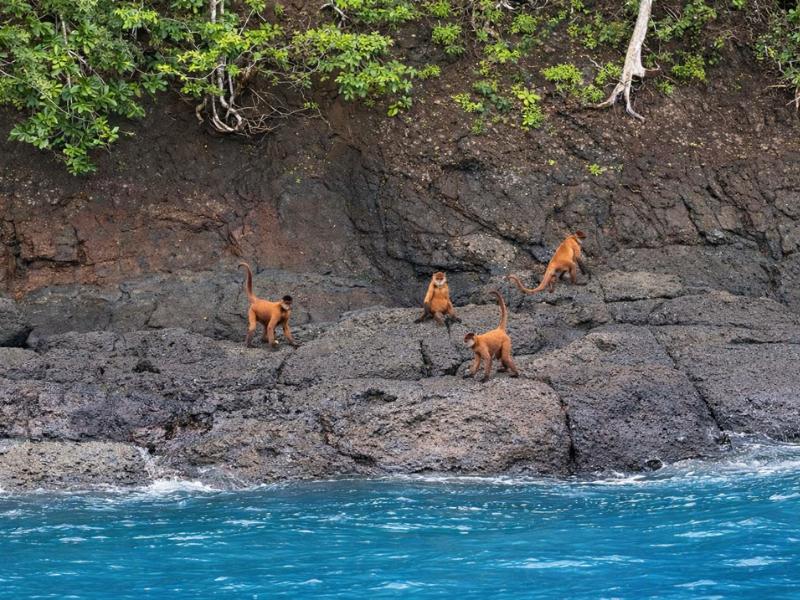
| Puntarenas side to the Negritos stop | About 25 minutes | Spider monkey viewing before the island |
| Montezuma to Isla Tortuga | 45 minutes | Coastal route, good marine wildlife water |
| Puntarenas to Isla Tortuga | 60 to 90 minutes | Faster on a speedboat, slower on a larger vessel |
| Herradura to Isla Tortuga | About 90 minutes | More open water than the peninsula routes |
| Santa Teresa to Montezuma, by road | About 45 minutes | Van transfer included on that tour |
| San Jose to the coast, by road | About 2 hours each way | Ruta 27 and the coastal highway, traffic dependent |
Three things that actually cause people to miss boats, none of them exotic. Driving into Puntarenas or Jaco on a Friday afternoon and hitting weekend traffic out of the Central Valley. Searching maps for the wrong dock, since Puntarenas has a ferry terminal and several private docks and they are not near each other. And underestimating a hotel pickup, because 4am collections happen on time and the vehicle does not wait.
Book the earliest departure your operator offers, since it lands you on the beach before the midday convergence, then plan your arrival at the dock around that boat rather than the other way around. Once you have the route settled, the complete Tortuga Island travel guide covers what the day itself involves, and our honest assessment of whether Tortuga Island is worth visiting works through the trade-offs by departure point.