Catamaran or Speedboat to Tortuga Island? How to Choose
Two boats leave the same dock for the same island. One gets you there in an hour with wind in your face, the other takes its time and gives you a shaded deck. The gap matters more than most booking pages admit.
Booking Choice: An island lunch, snorkeling equipment and a Negritos wildlife stop. Explore Puntarenas Island Day: Shared Or Private
Start: Puntarenas. Confirm age rules and extras before booking.
Price note: fixed dollar amounts and totals in the editorial examples below are planning illustrations, not current quotes. Prices, child rates and private/shared options must be checked for your date and full party. The provider calendars and booking pages carry current offers.

Boat crossing time by departure point
One-way boat time from each departure point used by the tours on this site, drawn from the operators' own listed itineraries and the site's departure-point guidance.
What actually changes when you swap a catamaran for a speedboat?
The hull changes three things: how long the crossing takes, how much the boat moves under you, and how much of it you can actually use. A speedboat crosses the Gulf of Nicoya faster and buys extra beach hours. A catamaran rides flatter on two hulls, carries more shade and deck, and makes the crossing part of the day.
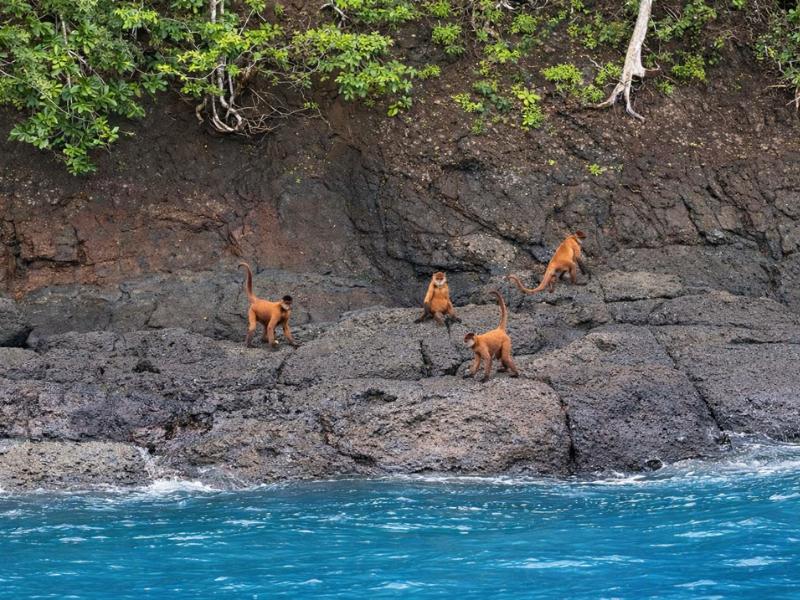
Isla Tortuga and the Negritos islands are separate places in the Gulf of Nicoya. Some tours pass Negritos for wildlife viewing before visiting Tortuga. The excursions recommended here return the same day and do not include accommodation. Related reading: Gulf of Nicoya
So the choice is not about the destination. It is about the roughly two to three hours of your day that you spend on the water, and what those hours do to you. Some people want that time compressed to nothing. Other people booked the trip partly for the boat.
One honest note before the tables. The listings on this site do not all name a specific hull. The Puntarenas departure is explicitly a speedboat leaving a private dock in the Las Playitas neighbourhood. The others use motor vessels of various sizes, and catamaran day sailings run in the Gulf too. Read the vessel described on the live listing before you commit, because the operator's own page is the only place that tells you exactly what is tied up at the dock on your date.
| Factor | Speedboat / fast motor launch | Catamaran | Private charter |
|---|---|---|---|
| Crossing from the Puntarenas side | Roughly an hour, sometimes less | Closer to 90 minutes, often more under sail | Whatever the captain and your group agree |
| Motion in chop | Sharp, repeated slamming over short swell | Wide beam damps roll, motion is slower and rounder | Depends on hull, but the captain can slow down for you |
| Wind and spray | High. Expect to arrive salty | Low to moderate. Spray mostly stays off the deck | Adjustable, the boat runs at your pace |
| Deck space per person | Tight, mostly bench seating | Generous, trampolines, shaded saloon, sun deck | The whole boat, however few of you there are |
| Shade | A canopy over part of the seating at best | Real covered areas you can retreat into | Whatever the vessel carries, all of it yours |
| Time on the island | Highest. The saved crossing time lands on the beach | Lower. The cruise takes a bite out of beach hours | Private service gives your party its own boat only when the private booking option is selected. Departure and return times, route changes and special assistance must be agreed with the operator; they are not guaranteed by the word “private”. |
| Group size on board | Usually small, 10 to 30 depending on the boat | Often larger, the deck absorbs more people | Your party only |
| Seasickness risk | Higher in chop, but the exposure is short | Lower motion, longer exposure | Lowest, because pace and route are negotiable |
| Photography | Hard. Vibration, spray, nowhere to brace | Easy. Stable platform, room to move for angles | Easy, and the captain will hold position |
| Boarding | Step down into a low boat, sometimes a wet landing | Wider, steadier boarding platform | Depends on vessel, usually the calmest option |
| Price band on this site | From $80 per person | Varies by operator, check the live listing | From $125 per person on the private Puntarenas escape |
Read that matrix twice and the pattern shows up. The speedboat trades comfort for beach time. The catamaran trades beach time for comfort. The private charter refuses the trade and charges you for the privilege, which is a fair deal for some groups and a waste of money for others.
How much island time does each boat actually buy you?
On a fixed departure and return, every minute saved on the crossing lands on the sand. A 60-minute speedboat run each way from Puntarenas gives you about an hour more on the island than a 90-minute cruise on the same schedule. Over a round trip that difference is close to a full extra hour of beach.
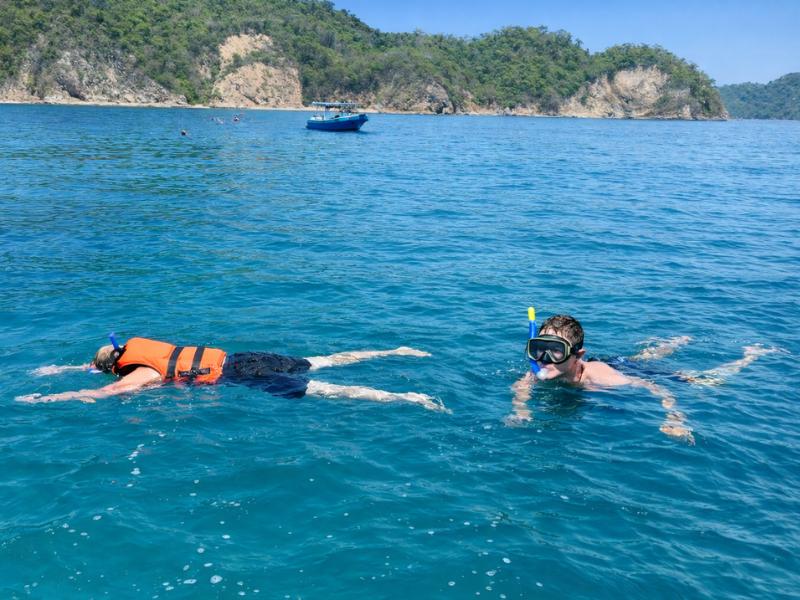
That sounds obvious until you look at how the day is actually built. Tours do not extend the return time because your boat was slow. The captain has a slot, the beach has a finite number of authorised landings, and the boat leaves when it leaves. So the crossing eats the beach, not the schedule.
Departure point matters far more than hull, though. A boat leaving Curú reaches the island in about 15 minutes. A boat leaving Montezuma takes about 45. From the Puntarenas side you are looking at an hour or more, and the San José departure wraps a two-hour road transfer around each end of that. Here is how the real departure points compare.
| Departure point | Boat time each way | Road time each way | Door to door | What that leaves for the island |
|---|---|---|---|---|
| Curú Wildlife Refuge | About 15 minutes | Self drive or local transfer | Around 2.3 hours (evening tour) | Sunset on the beach plus a night swim, not a beach day |
| Paquera or Tambor | About 30 to 45 minutes | Short, you are already on the peninsula | Half day upwards | Most of the day on sand |
| Santa Teresa via Montezuma | About 45 minutes | 45-minute van transfer to the boat | About 7 hours | A long island stretch with a scenic coastal run |
| Puntarenas (Las Playitas dock) | About 60 to 90 minutes | You make your own way to the dock | About 12 hours as listed | Around 5 hours of free time on the island |
| Jacó | About 60 to 90 minutes | Pickup at 07:00, plus the Tarcoles bridge stop | About 10 hours | Beach time after a crocodile stop and a Negritos monkey stop |
| San José | About 45 minutes on the listed crossing | Roughly 2 hours each way by road | Up to 18 hours | Approximately 5 hours of beach time |
The San José figure is the one that catches people out. Eighteen hours is not eighteen hours of tropical island. It is a 4am to 6am pickup, a long road transfer, a crossing, roughly five hours of beach, and the whole thing again in reverse after dark. The tour is popular for a reason, with more than 6,000 bookings behind it, and for anyone based in the capital without a rental car it solves a real problem. Just book it knowing what the number means.
Which boat handles the Gulf of Nicoya's chop better?
A catamaran, almost always. Two hulls and a wide beam turn short steep chop into a slower, gentler motion, while a planing speedboat hits each wave face and transmits it straight through the seat. In flat dry-season water the difference shrinks to almost nothing. In a windy afternoon it is the whole story.
The Gulf is a semi-enclosed body of water, which helps. It is not open Pacific swell out there. What you get instead is wind chop that builds through the day as the land heats, which is why morning crossings feel noticeably flatter than afternoon returns almost year round. The Instituto Meteorológico Nacional publishes the marine and rainfall picture if you want to check conditions in the week before you travel.
| Months | Typical gulf conditions | On a speedboat | On a catamaran | Booking note |
|---|---|---|---|---|
| December to February | Dry season, generally calm, good visibility | Fast and mostly smooth, some afternoon chop on the return | Very comfortable, sometimes too little wind to sail properly | Check the departure and cancellation terms for your actual travel date before arranging connecting transport. The product listings do not establish a guaranteed early landing, a fixed island-wide boat cap or how often a departure sells out. |
| March to April | The flattest, clearest stretch of the year | The speedboat at its best, minimal penalty | Lovely, but you are paying comfort for conditions that do not need it | March is the standout month, book early |
| May to June | Green season starting, mostly dry mornings, afternoon showers | Fine in the morning, occasionally lumpy coming back | Handles the return chop noticeably better | More availability, lower prices, quieter beach |
| July to August | Wetter, more wind, humpback whales moving through | Bumpier, and you will get wet from spray as well as rain | The obvious pick, and better for whale watching too | Whale season runs July to November |
| September to October | Wettest stretch, sediment after heavy rain, occasional cancellations | Least pleasant, though crossings still run | More forgiving, and the deck shelter earns its keep | Lowest prices, emptiest island, accept some weather risk |
| November | Transition back towards dry, improving week by week | Improving fast, good value | Comfortable, whale sightings still possible early in the month | Underrated window before the December rush |
None of that means a speedboat is a bad idea in October. It means you should not book the fastest, hardest-riding option in the wettest, windiest month and then be surprised. Match the boat to the month and the trade goes away.
Who should book the speedboat?
Book the speedboat if the island is the point and the boat is transport. It suits confident sea travellers, people with a single free day who want maximum sand, budget-minded couples, and anyone based on the Central Pacific coast who can reach a Puntarenas dock without a long drive.
The Puntarenas speedboat departs a private dock in Las Playitas, crosses the Gulf watching for dolphins, and drops you into roughly five hours of free time on the island. Snorkelling runs weather permitting, lunch and fresh fruit are included, iced tea and coffee with cookies flow all day, and the dock has showers and changing rooms for the end of the trip. At $80 it is the lowest-price full day in this set and it carries a 4.5 rating over more than 1,600 bookings.
Those showers matter more than they sound. A speedboat crossing leaves you salt-crusted, and being able to rinse before a drive back to San José or Jacó changes the last two hours of your day.
- You want the most beach hours per dollar and you do not get seasick.
- You like the ride. Wind in the face at speed across turquoise water is a genuine pleasure for a lot of people.
- You are travelling light, with no camera gear you would hate to soak.
- You are on the Puntarenas or Jacó side already and the dock is a short hop.
Who should book the catamaran instead?
Book the catamaran if you want the crossing to be part of the holiday rather than a commute. It suits people who feel queasy on small boats, mixed-age groups, anyone who wants to sit in shade with a drink and watch the coast go by, and photographers who need a steady deck.
The pitch is simple. On a catamaran you can move around. There is a shaded saloon or covered deck to duck into when the sun gets punishing, room to stretch out on a trampoline or a sun bed, a proper head rather than a cramped compartment, and space to stand up and take a picture without bracing against a bulkhead. The boat becomes somewhere you want to spend two hours rather than somewhere you endure them.
The cost is beach time. A slower crossing on a fixed schedule means fewer hours on the sand, and if the whole reason for your trip is a long lazy afternoon under a palm tree, that is a real loss. There is also a group-size effect. Bigger decks carry more people, so a catamaran day trip can feel more like a floating party and less like a small boat with a captain who knows everyone's name by lunch.
The shade question nobody asks until it is too late
Isla Tortuga sits at about nine degrees north. The sun there does not behave like sun at home. On a speedboat with a partial canopy, the crossing is roughly an hour of direct exposure on the water, where reflection off the surface adds to the dose. On a catamaran, you can be in shade for the entire crossing if you want to be. For fair-skinned travellers, for children, and for anyone who has already caught too much sun earlier in the trip, that is worth more than an extra 45 minutes on the beach.
When does a private charter beat both formats?
A private charter wins when your group is four or more, when someone in the party has a real constraint, or when you want snorkel sites chosen for water clarity rather than for wherever the group boats happen to gather. It stops being a luxury and starts being basic arithmetic once you divide the cost across enough people.
The private full-day escape from Puntarenas departs at 8:30 AM from Guima Frost marina, takes the whole boat for your group alone, stops for about 25 minutes at Negritos Island to look for spider monkeys, runs a one-hour guided snorkel at a volcanic reef, and includes a ceviche starter, a BBQ lunch of fish or chicken, and afternoon coffee and cookies. It carries the highest rating in this set at 4.8 across more than 1,100 bookings, and it lists at $125 per person for a roughly seven-hour day.
| What you are buying | Group boat | Private charter |
|---|---|---|
| Departure time | Fixed, usually a single morning slot | Set at 8:30 AM from the marina, ahead of most group traffic |
| Snorkel location | Where the fleet concentrates, near the main beach | Reef sections picked for clarity on the day |
| Guide attention | Shared across the whole boat | Focused on your party |
| Pace on the island | Set by the group and the return schedule | Negotiable with the captain within the day's limits |
| Stone arch viewpoint | Frequently skipped on standard runs | Included on the private itinerary |
| Noise and crowding on board | Whatever the manifest gives you | Your people only |
| Cost per head at four people | $80 to $152 depending on departure | Compare current quotes for the same date, party and inclusions. Add transport and optional extras to both totals before deciding whether private service is worth the difference. Weather can affect any departure. |
The honest counter-argument: if you are two people who enjoy meeting other travellers, a group boat is more fun and cheaper, and the crew banter is half the experience. Private is not automatically better. It is better for specific parties with specific needs.
What should you do about seasickness?
Pick the calmer hull, take the morning departure, sit low and central, keep your eyes on the horizon, and treat prevention as something you start the night before rather than the moment you feel unwell. Once nausea has begun on a boat, options narrow quickly and the crossing still has to happen.
The single largest lever is timing, not medication. Morning crossings are consistently flatter than afternoon returns because wind chop builds with the day. If your party includes someone who suffers badly, an early departure from the peninsula side is a far better plan than a late departure with a full pharmacy on board.
| Measure | When | Best for | Notes |
|---|---|---|---|
| Choose the shorter crossing | At booking | Everyone who suffers | Ask a pharmacist which motion-sickness remedy and timing are appropriate for you or your child, and follow its label. Do not assume one medicine or dosing schedule suits everyone. |
| Choose the catamaran or a larger vessel | At booking | Moderate to severe sufferers | Slower motion, and you can move to where it moves least |
| Take the earliest departure offered | At booking | Everyone | Calmest water and an emptier beach, at the same price |
| Over-the-counter medication | Ask a pharmacist which motion-sickness remedy and timing are appropriate for you or your child, and follow its label. Do not assume one medicine or dosing schedule suits everyone. | Known sufferers | Ask a pharmacist about timing and drowsiness before you travel |
| Seat position | As you board | Everyone | Low, central, facing forward, outside air on your face |
| Eat something light beforehand | Morning of | Most people | An empty stomach is not protective. A heavy greasy one is worse |
| Skip the heavy night before | Evening before | Everyone | Dehydration and a hangover make a bumpy crossing far worse |
| Stay on deck, watch the horizon | During the crossing | Everyone | Reading or staring at a phone below deck is the fastest route to trouble |
One more thing worth saying plainly. If a member of your group is genuinely prone to motion sickness, the 18-hour San José day is the worst combination available: a long road transfer on winding coastal roads, then a boat, then both again in reverse. A short peninsula departure exists for a reason.
Which boat works better with families?
For families with young children, the calmer and shorter option wins nearly every time. A catamaran or a private charter gives you shade, room to move, somewhere to put a bag, and a captain who can adjust. A speedboat is fine for confident kids over about eight who treat the bumps as a fairground ride.
Child life jackets are standard equipment and mandatory on board for everyone. Child rates are common on these tours, often a meaningful discount for ages roughly three to twelve, with infants either free or nominal, though the exact policy is set per listing and should be confirmed when you book rather than assumed.
What actually separates a good family day from a difficult one is not the price. It is whether there is somewhere for a tired four-year-old to lie down in shade, whether the crossing is 45 minutes or 90, and whether the boat is leaving at 8am or getting you home at midnight. Those three variables decide the day.
| Family profile | Better format | Reasoning |
|---|---|---|
| Toddlers and preschoolers | Private charter from Puntarenas, or a short peninsula boat | Shortest exposure, flexible pace, space to nap, no fixed group rhythm |
| Primary-school kids, confident in water | Speedboat or catamaran, either works | They usually enjoy the ride. Prioritise beach hours and snorkelling |
| Teenagers | Speedboat from Puntarenas | Fast crossing, banana boat and kayaks on the island, lowest cost |
| Three generations travelling together | Catamaran or private charter | Shade, seating, an accessible head and a steadier boarding platform |
| One adult prone to seasickness | Catamaran, shortest available crossing | The whole trip is judged by that person's afternoon |
Which boat gives you better photographs?
The catamaran, comfortably. A stable wide deck lets you stand, brace, change angle and keep a lens dry. A speedboat at cruising speed vibrates constantly, throws salt spray across everything, and gives you nowhere safe to set a camera down. Phones survive it in a dry bag. Real cameras often do not.
If photography matters to you, there is a second argument for the slower boat. Dolphins are a common enough sight on the Gulf crossing that crews scan for them routinely and slow when a pod appears, and between July and November humpback whales move through on migration. A stable deck with room to move to the right rail is the difference between a picture and a blur. From a bouncing speedboat bench with six other people leaning the same way, you get the blur.
Practical notes either way: bring a dry bag rather than a plastic sleeve, put a polarising filter on if you have one because the reflection off the Gulf is brutal, and shoot the island in the morning. By midday the light is directly overhead, the water loses its depth, and the beach has four boats worth of towels on it.
What do the real options cost, side by side?
The six departures on this site run from $60 for the Curú bioluminescence evening to $152 for the Santa Teresa full day. Price tracks departure logistics far more than boat quality, because the island, the reef and the lunch barely change between them.
| Tour | Departs from | Format | Door to door | From | Rating |
|---|---|---|---|---|---|
| Bioluminescence Tour from Curú Wildlife Refuge | Curú, Nicoya Peninsula | Evening motorboat, 15-minute crossing | About 2.3 hours | $60 | 4.3 across 434 bookings |
| Puntarenas to Isla Tortuga Full-Day Speedboat Tour | Las Playitas private dock, Puntarenas | Speedboat | About 12 hours | $80 | 4.5 across 1,669 bookings |
| Isla Tortuga Adventure Full-Day Tour from Jacó | Jacó, with a Tarcoles bridge stop | Group motor vessel | About 10 hours | $115 | 4.5 across 1,462 bookings |
| Tortuga Island Tour from San José | San José hotels | Road transfer plus group boat | Up to 18 hours | $115 | 4.5 across 6,090 bookings |
| From Puntarenas Private Isla Tortuga Escape | Guima Frost marina | Private boat, your group only | About 7 hours | $125 | 4.8 across 1,179 bookings |
| From Santa Teresa Tortuga Island Boat Adventure | Santa Teresa, boarding at Montezuma | Group boat, 45-minute crossing | About 7 hours | $152 | 4.6 across 985 bookings |
Look at the pattern rather than the individual numbers. The cheapest full day and the most expensive full day differ by $72, and almost all of that gap is geography: how far you are from the island when the day starts, and how much road or transfer has to be bought to close the distance. Nobody is charging you $152 for a better beach.
How do you decide in under five minutes?
Answer one question: is the boat transport or is it part of the experience? If it is transport, take the fastest crossing from the closest dock. If it is part of the experience, take the steadier boat and accept fewer hours on the sand. If your group has a constraint, go private and stop optimising.
| If this is true for you | Book | Because |
|---|---|---|
| You want the most beach time for the least money | The Puntarenas speedboat at $80 | Fastest crossing on the mainland side, roughly five hours of island free time |
| Someone in your party gets seasick | A catamaran, or the 45-minute Montezuma crossing | Less motion, or far less time exposed to it |
| You are four or more, or travelling with small children | The private Puntarenas charter at $125 | Private service gives your party its own boat only when the private booking option is selected. Departure and return times, route changes and special assistance must be agreed with the operator; they are not guaranteed by the word “private”. |
| You are based in San José with no car | The San José full day at $115 | It solves the logistics, as long as you accept the road hours |
| You are staying in Santa Teresa or Montezuma | The Santa Teresa departure at $152 | Short scenic crossing through good wildlife water, whales July to November |
| You have already done a daytime island trip | The Curú bioluminescence evening at $60 | A completely different experience for the lowest price on the list |
Check the departure and cancellation terms for your actual travel date before arranging connecting transport. The product listings do not establish a guaranteed early landing, a fixed island-wide boat cap or how often a departure sells out. Related reading: visitcostarica.com · SINAC