Where to Snorkel Near Jacó and Puntarenas: An Honest Regional Guide
Most visitors arrive on Costa Rica's Central Pacific expecting to walk into the sea with a mask and find fish. That is not how this coastline works. Here is where the clear water actually is, and why.
Booking Choice: A Tortuga reef session, lunch and wildlife stops on a day from Jacó. Explore Jacó Island Day And Wildlife Stops
Start: Jaco. Confirm age rules and extras before booking.
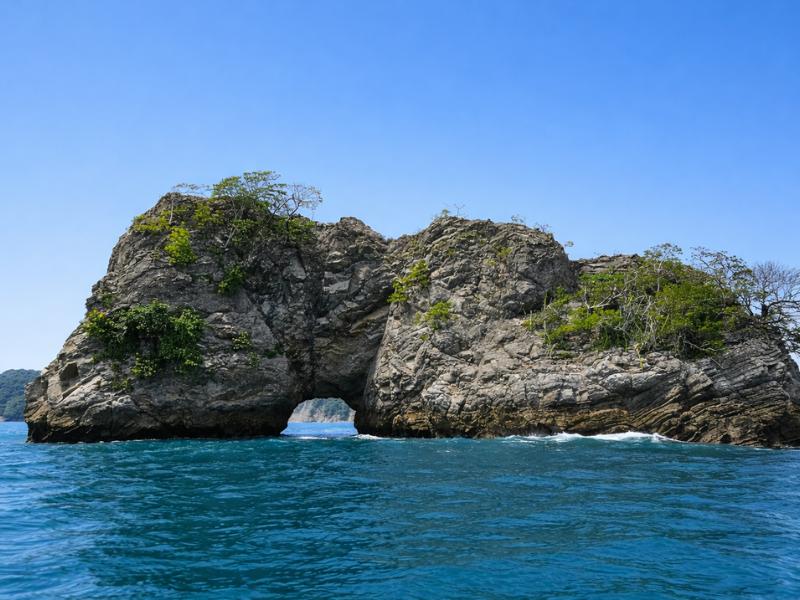
Stand on the sand at Playa Jacó with a mask in your hand and the problem announces itself before you get wet. The water is the colour of weak coffee, the shore break is loud, and the sand under your feet is grey rather than white. Twenty kilometres of that coastline behaves the same way. This is not bad luck or a bad week: it is what a surf coast fed by big rivers does, year round, by design of the landscape rather than by accident.
That single fact is the whole reason boat trips out to Isla Tortuga exist as the region's snorkelling answer. The reefs sit far enough offshore, in the sheltered water of the Gulf of Nicoya, that the sediment plume from the mainland never reaches them properly. This guide covers what actually drives visibility on this stretch of Costa Rica, when the water clears, what lives on those reefs, and how to pick a day that gives you a real snorkel rather than a swim in soup.
Snorkel conditions by month, Gulf of Nicoya
A relative 1 to 5 score for snorkelling conditions by month, built from the dry-season and green-season patterns described in this guide, including river discharge, sea state and reported visibility. It is a planning aid, not a measured dataset.
Is the snorkelling off the Jacó and Puntarenas beaches worth your time?
Generally no. The mainland beaches of the Central Pacific are poor snorkelling ground on almost any day of the year. River outflow, constant surf, suspended sediment and dark volcanic sand combine to keep visibility low and the seabed featureless. There is no reef structure close to shore worth swimming out to.
This is the part most guides skip, because a flat no reads badly next to photographs of turquoise water. But it saves you a wasted morning. Jacó, Herradura, Playa Hermosa, Esterillos and the Puntarenas town beach are all beaches with a purpose: surfing, sunset, seafood, a boat departure. Snorkelling is not on that list. You can float there and see your own hands, occasionally a mullet, and very little else.
Puntarenas is stranger still. The town sits on a long sandspit inside the gulf, with the Tempisque estuary system draining a large agricultural basin into the same body of water. The gulf's inner reaches carry a permanent load of fine sediment. It is biologically rich water, which is exactly why the fishing fleet is there, but rich and clear are different qualities and this coast has chosen one of them.
None of that makes the region a snorkelling write-off. It relocates the snorkelling. Everything worth putting a mask on for sits offshore, past the sediment line, around the small volcanic islands at the mouth of the gulf.
What exactly makes the mainland water so murky?
Four things stack up: river discharge carrying silt from inland watersheds, persistent Pacific swell that keeps the shallows churned, fine grey volcanic sand that stays suspended far longer than coral sand, and the shallow, gently shelving seabed that gives waves plenty of bottom to stir.
Take them one at a time. The rivers matter most. The Tárcoles drains a huge inland catchment including the Central Valley, and it meets the sea just north of Jacó. Its outflow carries suspended clay and organic matter that spreads along the coast on the prevailing current. Even in the dry months the discharge never stops entirely, and after a single heavy night of rain the plume is visible from the road bridge where the tours stop to look at crocodiles.
Swell is the second factor. The Central Pacific is a surf destination because it receives consistent southwest groundswell, and that same energy keeps the bottom three metres of water permanently agitated. A reef needs calm to be visible from the surface. A surf beach never gets it.
Then the sand itself. Costa Rica's Pacific beaches are largely volcanic in origin, which produces fine dark grains rather than the coarse white carbonate sand of a coral coastline. Fine grains stay in the water column much longer after being lifted. Dark grains also absorb rather than reflect light, so the water reads murky even when the particle load is modest.
Finally, geometry. A gradual sandy shelf means breaking waves work on the seabed across a wide band. There is no sudden drop into calm, clear depth within swimming range.
Where can you actually snorkel within a day of Jacó or Puntarenas?
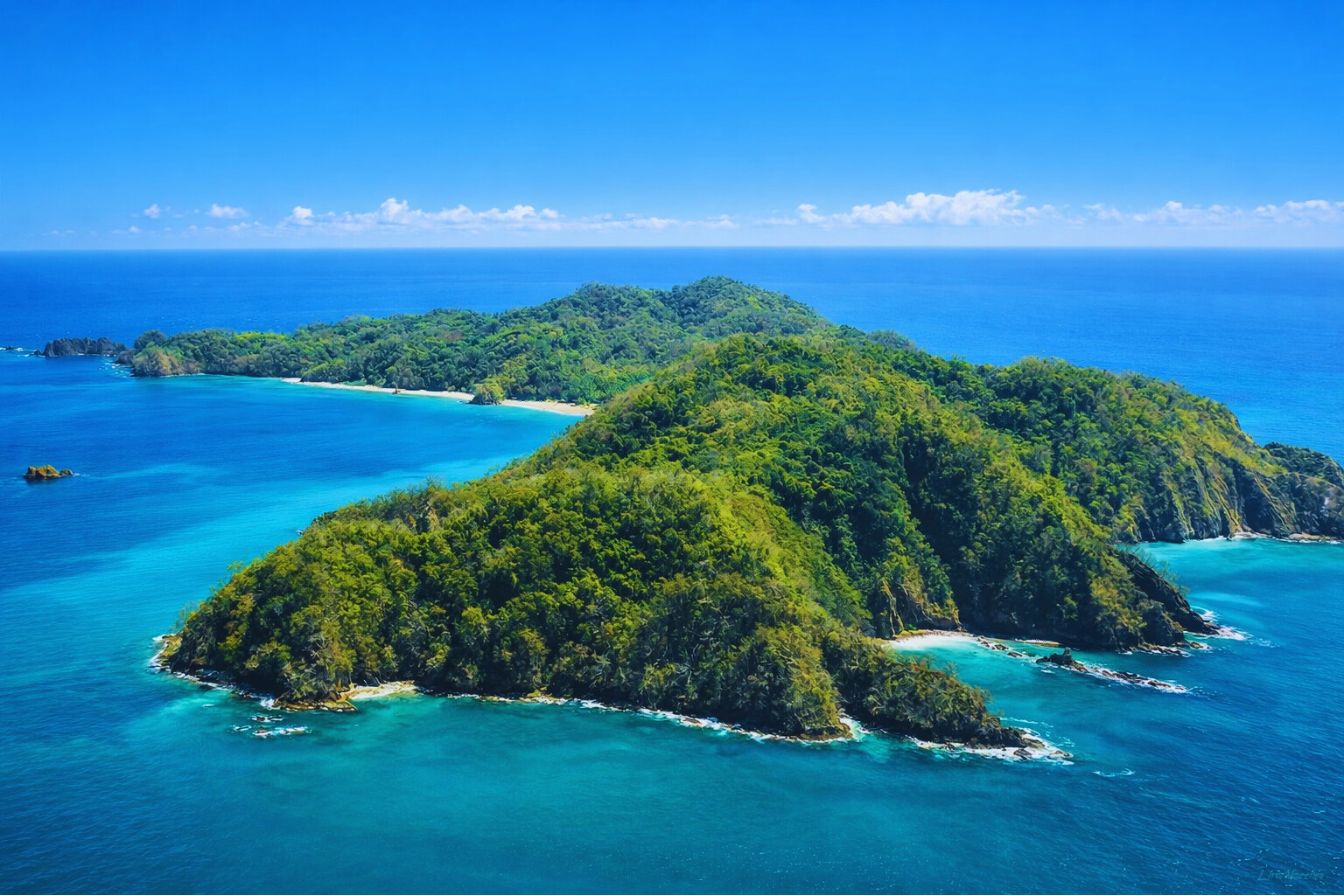
One realistic option dominates: a boat trip out to Isla Tortuga and the neighbouring Negritos islands in the Gulf of Nicoya. Everything else in day-trip range is either a beach that does not snorkel, or a long drive to a different region entirely. That is why every snorkel tour sold in Jacó and Puntarenas is a boat tour.
| Option | Access from Jacó or Puntarenas | Water character | Honest snorkel verdict |
|---|---|---|---|
| Playa Jacó, Playa Hermosa, Esterillos | Walk or short drive | Surf-driven, silt-loaded, grey sand | Not snorkelling water. Swim or surf instead. |
| Playa Herradura and the marina bay | 10 to 15 minutes by road from Jacó | Calmer bay, still turbid, boat traffic | Calmer than Jacó, but nothing to look at. |
| Puntarenas town beach and Las Playitas | In town | Inner gulf, estuarine, working port | A departure point, not a swim site. |
| Isla Tortuga reefs, Gulf of Nicoya | Boat day trip, roughly a 90-minute crossing | Offshore, sheltered, volcanic rock reef | The region's real snorkelling. Visibility to 10 to 20 m on calm days. |
| Islas Negritos reef edges | Boat, usually a stop en route | Protected reserve waters, rockier | Good structure, viewed mostly from the boat as a wildlife stop. |
| Caño Island area, far south Pacific | Long transfer, separate trip base | Open Pacific, offshore | Excellent by reputation, but not a Jacó day trip. |
The Isla Tortuga day trip therefore does two jobs at once. It gets you past the sediment line, and it delivers you to a beach that is genuinely worth the crossing even on the rare day when the underwater conditions disappoint. Departures run from Jacó, from the Las Playitas dock in Puntarenas, from San José as a long road-plus-boat day, and from Santa Teresa and Montezuma on the far side of the gulf.
What actually controls visibility on any given day?
Season sets the baseline, rainfall in the previous 48 hours sets the daily variation, and tide plus time of day set the hour-by-hour swing. Wind matters more than most people expect, because an afternoon chop stirs the shallow reef edges and scatters the light before it reaches the bottom.
| Factor | What it does to the water | How much it moves the needle | What you can do about it |
|---|---|---|---|
| Season (dry vs green) | Sets the background sediment load across the whole gulf | Largest single factor | Travel December to April if the choice is open |
| Rain in the last 48 hours | River plumes push turbid water offshore for a day or two | Large, and it overrides a good month | Check the forecast at Costa Rica's national weather service the night before |
| Time of day | Morning water is calm and undisturbed by other groups | Moderate to large | Book the earliest departure your operator offers |
| Wind and chop | Surface texture scatters light, chop lifts fine sediment off the reef | Moderate | Mornings again, before the sea breeze builds |
| Tide state | Big exchanges move water and sediment through the gulf channels | Modest at the island, larger inshore | Not usually worth planning around on a fixed tour schedule |
| Other boats and swimmers | Fins over a sandy patch cloud a shallow site quickly | Modest but very local | Be in the water before the midday boats land |
The practical takeaway is that two of the three biggest levers cost nothing. Pick your month if you can, and pick an early boat. The third lever, recent rainfall, is out of your hands, but a two-day weather check before you book a specific date is worth the five minutes.
Which months give you the clearest water?
December through April is the clear-water window, with March the standout month: flat gulf, minimal river discharge, and visibility around the reef reaching 15 to 20 metres on good days. May through November brings more rain, more sediment after showers, and choppier crossings, though the island stays beautiful and the crowds thin out.
| Period | Rain pattern | Typical gulf state | Snorkel visibility | Crowds and pricing |
|---|---|---|---|---|
| December to February | Dry, occasional breezy spells | Calm, sometimes windy in the afternoon | Consistently good | Peak demand, best boats book out days ahead |
| March | Driest stretch of the year | Flat, warm, stable | Best of the year, 15 to 20 m on good days | Busy but short of the holiday peaks |
| April | Dry until late in the month | Calm, hotter | Still very good | Semana Santa is the busiest week of all |
| May to June | Afternoon showers begin | Mostly calm mornings | Good on a dry run of days, patchy after rain | Availability opens up, prices ease |
| July to August | Wet, with a drier interval some years | More swell and chop | Variable, often reduced after storms | Quieter island, humpback whale season begins |
| September to October | Wettest months | Choppiest crossings, some cancellations | Weakest of the year | Fewest boats, lowest prices, greenest coast |
| November | Rain tapering off | Improving week by week | Recovering, good by late November | Quiet shoulder before the December rush |
Do not read the wet months as a ban. Tours run through them, and the reefs do not vanish. What changes is reliability. A March booking made three months out will almost certainly deliver the clear turquoise you imagined. A September booking is a coin toss on the day, weighted by whether the previous night was dry.
If you are travelling in the green season and snorkelling is the point of the day, build in a spare date. Operators handle weather cancellations, but a fixed single-day window with a flight the next morning gives you no second attempt.
Why does a morning boat beat an afternoon one?
Three separate effects line up in the morning. The gulf is at its calmest before the sea breeze builds, the reef sediment has had all night to settle, and the first boats arrive before other groups have finned across the shallow sections. Light angle helps too: mid-morning sun penetrates the water better than a low afternoon sun.
The first boats leave around 8 to 9am from the Nicoya Peninsula side and reach the island while it is close to empty. Crowds peak between 11am and 2pm, when arrivals from several departure points converge. Landing at 11am can mean four other tour boats are already on the beach, with the snorkel zone worked over by a hundred pairs of fins.
There is a second, less obvious reason to go early. Fish activity is higher in the first hours of daylight. Parrotfish grazing, wrasse working cleaning stations, rays moving over sand: these behaviours are more visible in the morning than during the flat midday heat when much of the reef life sits still in the shade.
The awkward exception is a departure from San José. That tour runs as an 18-hour door-to-door day with a pickup as early as 4am, and it still reaches the island mid-morning because the road transfer eats the difference. It is convenient, it is popular, and it does not get you there before the Puntarenas boats. If the snorkel specifically is what you care about, a departure closer to the coast is the better structure.
What are the reefs around Isla Tortuga and the Negritos actually like?
These are volcanic rock reefs, not tropical coral gardens. Basalt outcrops, boulder fields and ledges hold encrusting corals, sponges and algae, and the fish congregate around that structure. The shape is different from a Caribbean reef but the fish density around the good sections is high.
The island group is located near the Islas Negritos Biological Reserve, part of the national protected-areas system administered by SINAC. Alcatraz and Tolinga, the two islands people collectively call Isla Tortuga, are uninhabited and no overnight stays are permitted. That protection is a large part of why the fish are still there in numbers.
The shallow beach-adjacent zone
Off the main stretch of Playa Tortuga the bottom is a mix of sand patches and low rock. It is shallow, warm and calm, with easy entry straight off the beach. This is where nervous swimmers and children go. Fish density is moderate, and it clouds up fastest once a crowd arrives.
The volcanic reef sections
Guided snorkel stops are usually run at a rock reef away from the main beach, entered from the boat in water deeper than you can stand in. The structure is more dramatic: vertical faces, overhangs, and the drop-offs where the bigger animals move through. This is where the eagle rays and the larger schools show up.
The Negritos edges
The Negritos stop is more often a wildlife stop than a swim, roughly 25 minutes out from the Puntarenas side, where boats slow along the shoreline to look for spider monkeys in the trees. The water there is rockier and generally viewed from the deck rather than snorkelled.
What will you realistically see underwater?
Expect reef fish in good numbers on every reasonable snorkel: parrotfish, angelfish, sergeant majors and wrasse are near-certain. Morays are common in the rock crevices if you look. Eagle rays, sea turtles and manta rays are genuine possibilities rather than guarantees, and none of them can be promised on a schedule.
| Species | Where you see it | Realistic likelihood | Notes |
|---|---|---|---|
| Parrotfish | Rock reef and shallow rubble | Very likely on any snorkel | Often audible scraping algae off the rock |
| Angelfish | Reef ledges and overhangs | Very likely | Usually in pairs, holding to structure |
| Sergeant majors and wrasse | Everywhere, including the beach shallows | Near certain | The first fish most people notice |
| Moray eels | Crevices in the volcanic rock | Common if a guide points them out | Easy to swim past without seeing one |
| Eagle rays | Sand and reef margins, deeper sections | Occasional | Better odds on the boat-entry reef stop |
| Sea turtles | Passing through, feeding on the reef edge | Occasional | Green turtles are the usual sighting |
| Manta rays | Open water near the islands | Uncommon | More often seen from the boat than in the water |
| Dolphins and humpback whales | The crossing, not the snorkel | Dolphins common, whales July to November | A boat-deck sighting, never an in-water one |
Be sceptical of any listing that treats turtles or mantas as an itinerary item. They are wild animals in a large body of water. The honest framing is that the reef fish are the reliable show, and the bigger animals are the days you remember.
Open-water reef snorkel or easy beach entry: which do you want?
The boat-entry reef snorkel gives better structure, better visibility and better odds on large animals, but it means getting into deep water from a moving platform. The beach entry off Playa Tortuga is shallow, calm and forgiving, with less to see. Most full-day tours give you access to both.
| Aspect | Open-water reef snorkel from the boat | Beach-entry snorkel off Playa Tortuga |
|---|---|---|
| Entry | Ladder or step off the boat into water over your head | Walk in from the sand, stand up any time |
| Depth | Typically several metres, with deeper sections nearby | Shallow, waist to chest deep in the good bits |
| Visibility | Better, away from beach traffic and stirred sand | Fine early, degrades as groups arrive |
| Marine life | Denser fish, better odds on rays and turtles | Reef fish and sand-flat species |
| Duration | Often a set 45 to 60 minute guided session | As long as you like within your beach time |
| Suits | Confident swimmers, anyone wanting the real reef | Children, nervous swimmers, casual floating |
| Life jacket use | Normal and offered without fuss | Available, rarely needed |
Tour structures vary in how they weight these. The Santa Teresa and Montezuma departure runs an open-water session on a volcanic rock reef as the core of the day, with a 45-minute crossing rather than the longer haul from the mainland. The Jacó day builds in a snorkel at a secluded reef away from the main beach before the island time starts. The Puntarenas speedboat runs its snorkel weather permitting and then hands you five hours of beach.
What gear is provided, and what should you bring yourself?
Mask, snorkel and fins come with every snorkel-focused tour at no extra cost. The gear is clean and functional rather than premium. The one item genuinely worth bringing from home is your own mask, because fit determines whether you spend the session looking at fish or clearing water out of your face.
| Item | Provided? | Bring your own? | Why it matters here |
|---|---|---|---|
| Mask | Yes | Strongly worth it | Face shape varies; a leaking rental ruins the session |
| Snorkel | Yes | Optional | Comes with your own mask anyway if you pack one |
| Fins | Yes | Rarely worth the luggage | Sizing is usually adequate and they are bulky to pack |
| Life jacket | Yes, mandatory on board | No | Also usable as flotation while snorkelling |
| Rash guard or T-shirt | No | Yes | Your back is under equatorial sun for the whole session |
| Reef-safe sunscreen | No | Yes, apply before boarding | Reflected light off water burns faster than people expect |
| Dry bag or waterproof phone case | No | Yes | Spray on the crossing, sand on the beach |
| Small bills in cash | No | Yes | Island restrooms run about a dollar per use on some tours |
| Motion sickness tablets | No | If you are prone | The open-gulf section can be bumpy outside dry season |
A mask packs into a corner of a daypack and costs less than an hour of your holiday. If you snorkel more than once a year, it is the single upgrade that changes the experience most, and it works on every other trip you take.
Can you do this if you are a weak swimmer?
Yes, with sensible choices. Life jackets are on every boat and crews hand them out without comment for snorkelling as well as for the crossing. Weaker swimmers should take the beach-entry option in the shallow zone, stay within standing depth, and skip the deep boat-entry reef session if it feels wrong.
A few practical points. Snorkelling in a life jacket works fine as long as you accept that duck-diving is off the table; you float face down and look. Many people find this more relaxing than treading water anyway, because it removes the effort entirely and lets you concentrate on what is underneath.
Fins are the other equaliser. Someone who swims poorly with bare feet often moves competently with fins, because the propulsion no longer depends on technique. If you are unsure, put them on in the shallows and get used to the kick before the guided session.
Tell the crew. This is the advice people skip out of embarrassment and it is the one that matters. Guides on these boats run snorkel groups every day and they position themselves differently when they know who needs an eye kept on them. Children snorkel on these tours routinely, usually from about age five upward with a parent alongside, and the same logic applies to any adult who is not confident.
Finally, the honest caveat: on a choppy green-season day, an open-water reef session in swell is not the time to discover your limits. There is no obligation to get in. The beach is there, the reef will be there next time, and the lunch is the same either way.
How does this compare with Costa Rica's better-known snorkel regions?
Costa Rica has three regions with stronger snorkelling reputations than the Gulf of Nicoya: the southern Caribbean, the Guanacaste coast, and the offshore waters of the far south Pacific around Caño Island. Each involves relocating your trip. The Gulf of Nicoya wins on accessibility from the Central Pacific, not on absolute quality.
| Region | Reef character | Best window | Access from Jacó or Puntarenas | Honest comparison |
|---|---|---|---|---|
| Gulf of Nicoya, Isla Tortuga | Volcanic rock reef, protected reserve | December to April, mornings | Day trip by boat | The only true day-trip option from this coast |
| Southern Caribbean coast | Genuine coral reef systems | Its own drier windows, different rain pattern | Cross-country transfer, separate base | Better coral, an entirely different trip |
| Guanacaste, north Pacific | Rocky points and bays, some clear coves | Dry season | Several hours north by road | Comparable in kind, requires a base change |
| Far south Pacific, Caño Island area | Offshore, high-visibility, protected | Dry season and calm spells | Long transfer plus a boat from a southern base | Strongest Pacific reputation, hardest to reach |
Put plainly: if snorkelling is the single reason for your Costa Rica trip, you would plan your itinerary around one of the other three regions and accept the travel. Read the national tourism board material on regional differences before you commit a week to a base.
If snorkelling is one good day inside a broader trip, and you are already on the Central Pacific, the Isla Tortuga boat day is the right answer and it is not a consolation prize. Clear water, a rock reef with real fish on it, a white-sand beach that is the visual opposite of the mainland shore, and a crossing where dolphins show up often enough that the crew watches for them by habit.
How do you put together the best possible snorkel day here?
Book a dry-season date, take the earliest departure offered, choose a tour that runs a guided open-water reef session rather than only beach time, bring your own mask, and check the previous 48 hours of rainfall. Those five decisions account for most of the difference between a great day and a flat one.
Departure point is the first structural choice. From Santa Teresa or Montezuma the crossing is about 45 minutes, which means less time in transit and an earlier arrival on the reef. From Puntarenas the speedboat from the Las Playitas dock runs roughly an hour across the gulf, with showers and changing facilities on return. From Jacó the day is longer and includes the Tárcoles River bridge crocodile stop, which is a genuinely good addition even though it adds road time. From San José the whole thing is an 18-hour door-to-door day, mostly road.
Check the departure and cancellation terms for your actual travel date before arranging connecting transport. The product listings do not establish a guaranteed early landing, a fixed island-wide boat cap or how often a departure sells out.
Last thought on expectation setting. Nobody should sell you the Gulf of Nicoya as a world-ranking snorkel site, and nobody honest does. What it is: reliably clear offshore water within a day trip of a coastline that has none, over rock reefs that hold a surprising density of fish, reached on a boat ride that is half the pleasure of the day. Calibrate to that and this coast delivers more than the beaches in front of your hotel ever suggested it could.
If this has convinced you the boat day is the move, three pages take it further. The snorkelling guide goes deeper on the reefs themselves and what you realistically see, the best time to visit Tortuga Island explains how visibility shifts month by month, and the full price breakdown shows what each departure costs. Weaker swimmers should also read the notes for nervous swimmers before choosing between an open-water reef session and a beach entry.