Do You Need Your Passport for an Isla Tortuga Day Trip?
The short answer is that the trip never leaves Costa Rica, so there is no border check to clear. The longer answer is about identification at check-in, what water and sand do to a passport, and where you should actually leave the original.
Booking Choice: An island lunch, snorkeling equipment and a Negritos wildlife stop. Explore Puntarenas Island Day: Shared Or Private
Start: Puntarenas. Confirm age rules and extras before booking.
Where each document belongs
The split shown reflects the standard approach for a domestic Costa Rican boat day where no border crossing applies; operator check-in policies and official identification requirements can change, so confirm both before you travel.
Do you need a passport for an Isla Tortuga day trip?
No border crossing is involved. Isla Tortuga sits in the Gulf of Nicoya, inside Costa Rican waters, and every departure point runs from Costa Rican soil. There is no immigration desk, no exit stamp and no customs. What operators care about is that the person boarding matches the person on the booking.
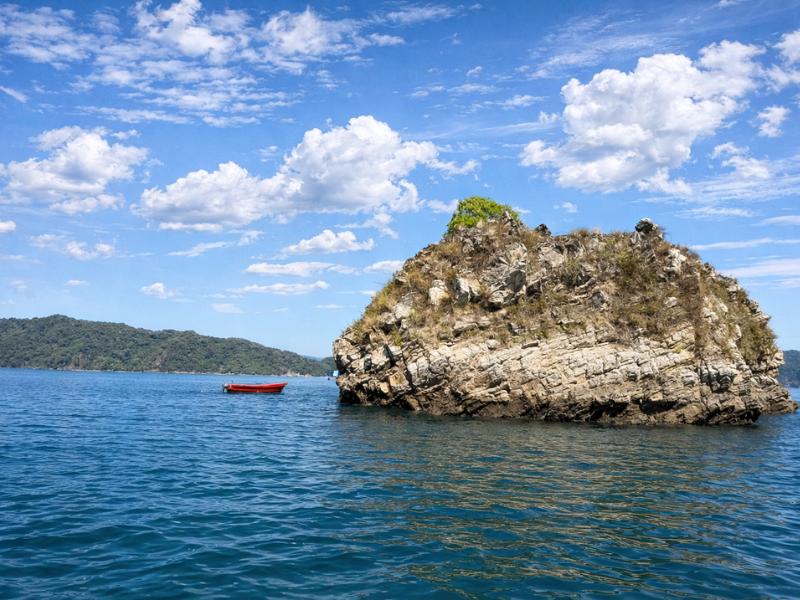
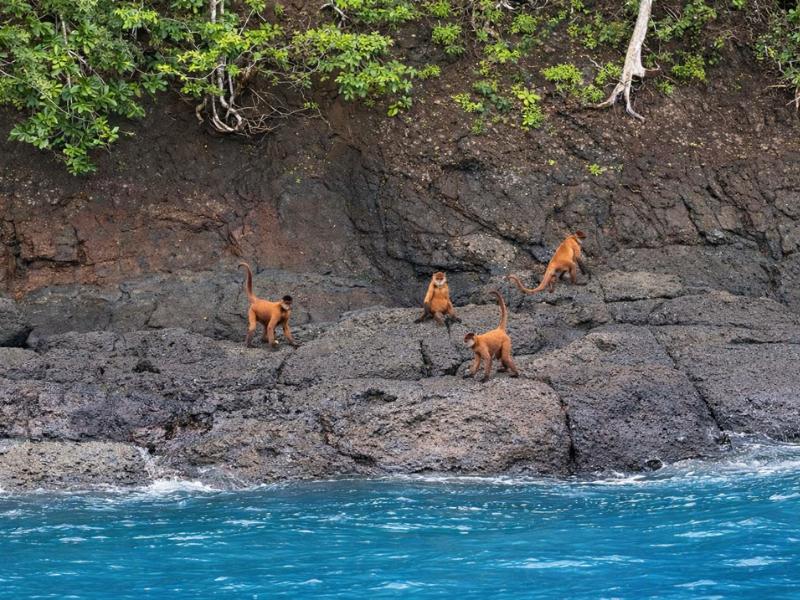
This trips people up because a boat is involved, and boats in other parts of the world often mean borders. Not here. The island lies roughly twelve kilometres off the southeastern tip of the Nicoya Peninsula, and the whole day happens within one country. You board at Puntarenas, Jacó, Paquera, Tambor, Montezuma or Santa Teresa, you land on an uninhabited protected island, you come back the same afternoon.
So the real question is not whether you need the passport as a travel document. It is whether you need to carry it as identification, and where the safest place for it is while you are standing waist deep in salt water four hours from your hotel.
One caveat before anything else: this article is general planning guidance from a team that books these trips, not legal or immigration advice. Requirements change, and operators set their own check-in policies. The tour listing you book and the official tourism board at visitcostarica.com are the authority, along with your own embassy for anything about your specific nationality.
What do operators actually ask for at booking and check-in?
At booking, a lead traveller name, contact details and a pickup point. At check-in, a name that matches the reservation, and sometimes a photo ID to confirm it. Full passport details are rarely requested for a domestic day boat, though some operators ask for them when a manifest is required.
The name match is the part that genuinely matters. Bookings get made in a partner's name, a nickname, or a shortened version, and then somebody at the dock is holding a list that does not obviously include you. Book in the name that appears on your ID and the problem disappears.
Beyond that, expect the check-in conversation to cover practical ground rather than paperwork:
- Pickup location and time, which is the single most common source of confusion on tours that collect from hotels.
- Number of passengers and any children, since child life jackets are sized and counted in advance.
- Dietary requirements for the beach lunch, which is easier to solve at booking than at the grill.
- Anything medical the crew should know about before you are on the water.
- Emergency contact details on some operators' forms.
Some boats keep a passenger manifest, which is normal practice and a reason a photo ID may be checked. If your listing asks for a document number at the time of booking, provide it then, at your keyboard, rather than trying to read it off a passport on a wet dock.
Why is carrying the original passport onto the boat a bad idea?
Because an Isla Tortuga day is water, sand, sun and an uninhabited island with no facilities. Passports do not survive spray, a leaking dry bag, or a bag left on a towel while you snorkel. Replacing one from a beach town on the Nicoya Peninsula ruins several days of a trip.
Think about the actual sequence of the day. You get on a boat that throws spray. You transfer to a beach where bags sit on sand under palms while everyone is in the water. There is no locker, no reception desk and no secure storage on the island, because nobody lives there. It is protected land inside the Islas Negritos reserve, overseen within the national protected-area system run by SINAC, and it has no infrastructure by design.
The three failure modes we see, in order of how often they happen:
- Water. A splash on the boat, a bag set down in the shallows, a phone case that was not as sealed as advertised. Salt water on a passport is worse than fresh, and a warped, stained document invites questions later at an airport.
- Sand and heat. Grit works into the binding, and hours in a hot bag on a beach do laminate no favours.
- Loss and opportunistic theft. Petty theft on the island itself is rare, since everyone there arrived on a tour boat. The realistic risks sit at the edges of the day: a hotel lobby, a shuttle, a busy dock, a parked car.
A lost phone is annoying. A lost passport means an embassy appointment, a replacement fee, possibly a trip to San José, and a rearranged flight. The downside is wildly out of proportion to the convenience of carrying it.
What should you carry instead?
The common approach among experienced travellers is simple: leave the original in the hotel safe, carry a colour photocopy in a sealed bag, and keep a clear photo of the photo page and entry stamp on your phone, plus one copy stored in the cloud so it survives losing the phone too.
That gives you three layers. The paper copy works when a phone is dead or soaked. The phone photo works when the paper copy is in a bag you left somewhere. The cloud copy works when everything else has gone wrong at once.
| Item | Bring on the boat | Leave in the hotel safe | Note |
|---|---|---|---|
| Original passport | No | Yes | Water, sand and no secure storage on the island |
| Colour copy of photo page | Yes | Spare copy if you have one | Keep it in a sealed bag inside a dry bag |
| Phone photo of passport and entry stamp | Yes | Also save one to cloud storage | Screenshot works offline when signal drops |
| Driving licence or national ID card | Yes if you have one | Optional | Easier to replace than a passport |
| Booking confirmation | Yes, screenshot it | No | Signal is poor on the water |
| Travel insurance policy number | Yes | Printed policy is fine to leave | Save the emergency assistance number offline |
| Cash in small notes | Small amount only | The bulk of it | Island restrooms can cost around a dollar per use on some tours |
| Bank cards | One at most | The rest | There is nowhere on the island to use them |
| Jewellery and valuables | No | Yes | Nothing on the island needs them |
If your accommodation has no safe, ask whether reception can hold documents, and get a receipt if they do. Failing that, a sealed dry bag kept physically on you, not in a beach bag, is the least bad option.
Can Costa Rican authorities ask you for identification?
Yes, officers can ask a foreign visitor to identify themselves, and this happens most often at road checkpoints rather than on a beach. Being able to produce something is the practical goal. What is formally acceptable is a matter for the authorities, not for a tour operator or a travel site.
In everyday terms, the situation you are most likely to meet is a routine traffic or transit check on the road to the coast, particularly if you have rented a car. Drivers should also be carrying their licence and the vehicle documents, which is a separate matter from the passport question.
Many travellers move around Costa Rica day to day with a copy rather than the original and never have an issue. We cannot tell you that a copy will satisfy every officer in every situation, because that is not ours to promise. If you want certainty on the point, check current official guidance through visitcostarica.com or your embassy before you travel, and take their answer over anyone else's.
What is entirely within your control is the quality of the copy. A dark, half-cropped phone snap of a photo page is not much use to anybody. A clean colour scan of the photo page plus the entry stamp, readable at a glance, is.
What changes if you fly to the Tambor airstrip?
A domestic flight adds a check-in process, so carry photo identification for that leg. Small aircraft also enforce strict baggage weight limits and, on some services, a passenger weight declaration. Confirm the current requirements with the airline directly, since domestic rules differ from the boat tour entirely.
Some travellers reach the southern Nicoya Peninsula by air rather than by road and ferry, landing at the small airstrip near Tambor and joining an island tour from that side of the gulf. It is a genuine time saver. It also means one more counter where somebody wants to match your face to a name.
| Leg of the trip | What is usually checked | Where the original passport should be |
|---|---|---|
| International arrival at SJO | Passport and entry formalities | On you, obviously |
| Domestic flight to the Tambor airstrip | Photo identification at check-in, baggage weight | On you, in a carried bag |
| Road transfer or rental car to the coast | Possible checkpoint, licence and vehicle papers | Copy is the common approach |
| Puntarenas to Paquera ferry | Ticket, vehicle details if driving | Copy is the common approach |
| Isla Tortuga boat and beach day | Name matching the booking, sometimes photo ID | Hotel safe |
Read that table as the shape of a typical trip rather than a rulebook. Airlines, ferry operators and tour operators each set their own policies and change them without telling travel sites.
What about travel insurance and medical documentation?
Travel insurance is excluded from every tour listing on this site, so it is yours to arrange. Carry the policy number and the emergency assistance phone number saved offline on your phone, since mobile signal on the Gulf of Nicoya is unreliable and a screenshot works when a webpage will not load.
Two details are worth getting right before you leave home. First, check that your policy covers boat trips and snorkelling, since some travel policies treat water activities separately. Second, save the assistance number in a form you can reach without data, because the moment you need it is the moment you are least likely to have a signal.
If you carry medication or have a condition the crew should know about, tell the operator at booking rather than at the dock. A short note in the booking form reaches the person planning the day. A comment shouted over an engine does not. The same goes for allergies affecting the beach lunch, which is usually grilled fish or chicken with rice, salad and fruit.
Keep any medical information card in the same sealed bag as your document copy. It is the one piece of paper genuinely worth having on the island, where there are no facilities and the nearest help is a boat ride away.
What does a sensible document plan look like on the day?
Photograph your documents the night before, seal a paper copy in a bag, lock the originals away, carry one card and a small amount of cash, and screenshot your booking. That takes about ten minutes and removes the entire category of problem from your day.
Work through it in this order the evening before your tour:
- Photograph the passport photo page and entry stamp in good light. Save one copy to your phone's album and one to cloud storage.
- Print or write out the booking reference, the operator's phone number and the pickup time. Screenshot the same details.
- Put the original passport, spare cards, spare cash and anything valuable in the safe.
- Pack the copy, one card, small notes for the island restroom and any tip, and your insurance details into a sealed bag inside your dry bag.
- Confirm the pickup point and time with the operator if anything about it is ambiguous. This is the failure that actually ruins mornings.
Then stop thinking about it. The rest of the day is a boat across the Gulf of Nicoya, a reef, a beach lunch and an afternoon in the shade, which is what you came for.
Two related questions usually come up in the same breath. Whether you need to speak Spanish on the boat is the common one, and the answer is no on the tours we list. The other is what to pack, which matters here because a dry bag is the difference between a document problem and a non-event.