What Is Tortuga Island Known For? The Honest Version
Isla Tortuga has a reputation built on one beach, one reef and one absence: nobody lives there. Here is what the island is genuinely known for, what is seasonal, and what it is repeatedly mistaken for.
Booking Choice: An island lunch, snorkeling equipment and a Negritos wildlife stop. Explore Puntarenas Island Day: Shared Or Private
Start: Puntarenas. Confirm age rules and extras before booking.
Price note: fixed dollar amounts and totals in the editorial examples below are planning illustrations, not current quotes. Prices, child rates and private/shared options must be checked for your date and full party. The provider calendars and booking pages carry current offers.
What the island reliably delivers
The ladder ranks the island's best-known features by how consistently visitors encounter them, based on what the six tours listed on this site describe as included, seasonal or route-dependent.
What is Isla Tortuga actually known for?
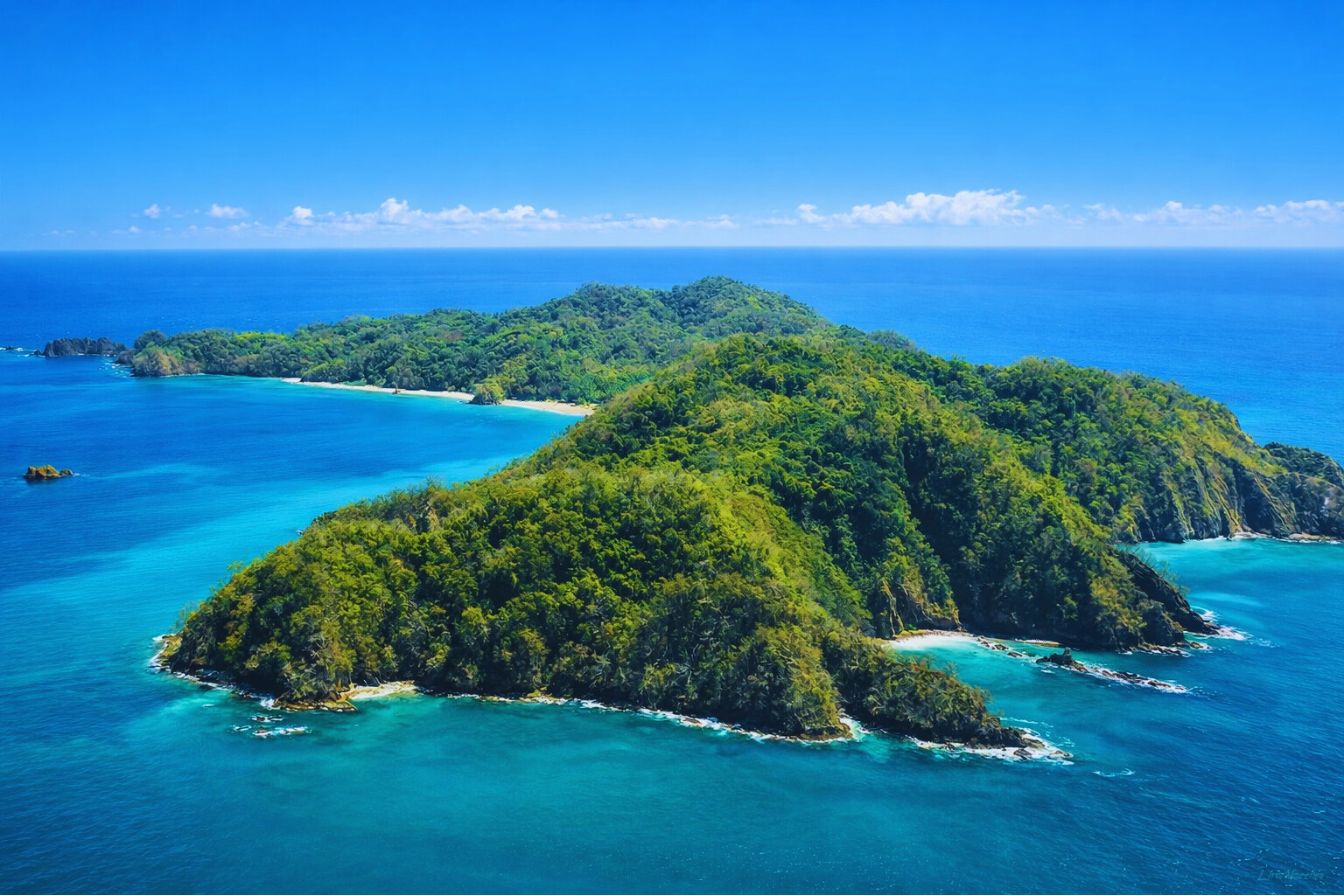
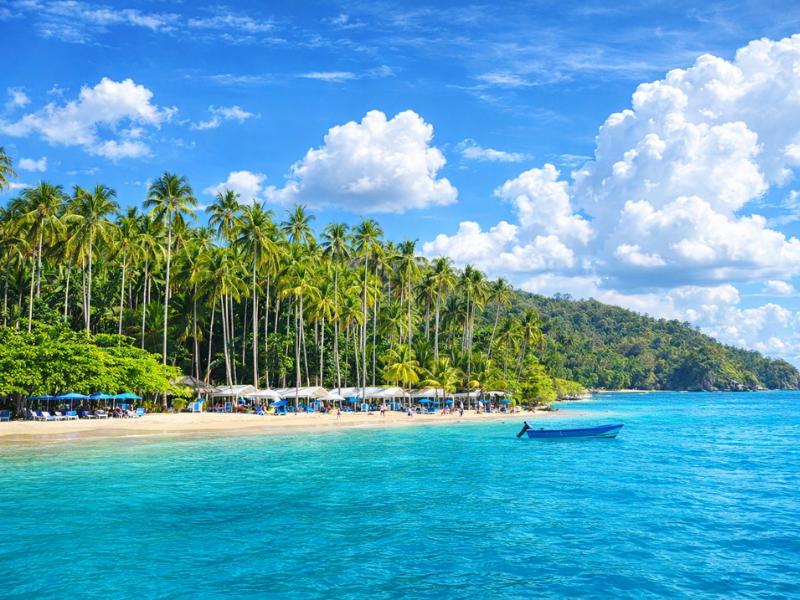
Isla Tortuga is known for Playa Tortuga, a curve of powdery white sand with unusually calm turquoise water on Costa Rica's Pacific coast, for snorkelling over volcanic reef, and for being uninhabited and car-free. It is reachable only by boat, so every visit is a day trip and nobody sleeps there.
Isla Tortuga and the Negritos islands are separate places in the Gulf of Nicoya. Some tours pass Negritos for wildlife viewing before visiting Tortuga. The excursions recommended here return the same day and do not include accommodation. Related reading: Nicoya Peninsula · Gulf of Nicoya · SINAC
Check the departure and cancellation terms for your actual travel date before arranging connecting transport. The product listings do not establish a guaranteed early landing, a fixed island-wide boat cap or how often a departure sells out.
The reputation splits into things you will get on any trip, things that depend on weather, and things that only happen in certain months or on certain tours. Sorting those three piles is the whole point of this page.
| What it is known for | What that actually means on the day | How dependable |
|---|---|---|
| Playa Tortuga white sand | Soft pale sand, palms leaning over the water, shade you can claim | Every trip |
| Calm turquoise water | Gulf-side water, shallow entry, no surf break to fight | Almost every trip, calmest December to April |
| Volcanic reef snorkelling | Guided session over rock and coral, gear handed out on the boat | Weather permitting |
| Uninhabited and car-free | No roads, no vehicles, no vendors beyond the boat crews | Permanent |
| Stone arch formation | A rock arch viewpoint reached on the water, not on foot from the beach | Tour-dependent |
| Spider monkeys at Negritos | A short stop at the neighbouring islands before landing | On tours that route past Negritos |
| Humpback whales | Sightings on the crossing during the migration window | July to November only |
| Bioluminescent water | Night swim in glowing plankton off a private beach | Evening tour from Curu only |
Why does Playa Tortuga look different from mainland Costa Rican beaches?
Most Pacific beaches in Costa Rica face open ocean with real surf and darker volcanic sand. Playa Tortuga faces into the sheltered Gulf of Nicoya, so the water arrives flat and clear, and the sand is pale and fine. The contrast against turquoise shallows is what makes the photographs look unreal.
Geography does most of the work here. The Nicoya Peninsula curls around the gulf like a breakwater, and the island sits inside that shelter rather than out on the swell-exposed coast. Jaco, Santa Teresa and the surf towns get waves because they face the open Pacific. Tortuga does not.
The practical consequence matters more than the aesthetic one. You can walk into the water carrying a mask without being knocked over, children can stand in the shallows, and a snorkel session does not turn into a swim against chop. Anyone who has tried to snorkel off a surf beach knows how rare that combination is.
Colour is a function of depth and clarity. Shallow water over pale sand reads turquoise; the same water over reef reads deeper blue-green. In the dry season, visibility around the reef runs high enough that you can see fish from the surface before you put your face in. After heavy rain, runoff and stirred sediment mute it. The island is still lovely in September, it just photographs differently.
How good is the snorkelling around Tortuga Island?
Good rather than world-class, and unusually easy. The reefs are volcanic rock and coral in shallow, calm water close to shore, so beginners manage without difficulty. Expect parrotfish, angelfish, sergeant majors, moray eels, eagle rays, occasional manta rays and sea turtles. Gear is included on every snorkel-focused tour.
Set expectations against the right benchmark. This is not Bonaire or the Great Barrier Reef, and any operator claiming otherwise is selling. What Tortuga offers is a reef you can reach without a long boat transfer to a remote site, in water calm enough that you spend your energy looking rather than swimming.
There are two distinct formats. Some tours run a beach-entry snorkel in the shallows straight off the sand. Others, including the Santa Teresa departure, take you to an open-water volcanic rock reef with the guide in the water alongside you. The second is better snorkelling and worse for nervous swimmers, which is a genuine trade-off rather than a marketing line.
| What you may see | Where it usually turns up | Frequency |
|---|---|---|
| Parrotfish, sergeant majors, angelfish | Shallow reef and rock edges | Routine on any snorkel stop |
| Moray eels | Crevices in the volcanic rock | Common if a guide points them out |
| Eagle rays | Sandy bottom between reef patches | Regular, not promised |
| Sea turtles | Grazing near the reef, seen from the surface | Occasional |
| Manta rays | Deeper water off the reef edge | Uncommon |
| Dolphins | On the crossing, not while snorkelling | Common on the boat leg |
Timing beats gear. The morning session, before several boats have landed and stirred the sand, is measurably clearer than the same reef at one in the afternoon. If your operator offers an 8:00 or 8:30 AM departure, that is the snorkelling you want.
What is the stone arch, and can you actually reach it?
The stone arch is a natural rock formation on the island's shoreline, viewed from the water as a photo stop rather than climbed. It is a genuine feature of the island's coast and appears on the private Puntarenas charter, which routes past it. Most large group tours skip it and head straight for the main beach.
This is one of those details that separates products more than the marketing copy suggests. A shared boat carrying thirty people on a fixed schedule has no slack to detour. A private charter with your own captain does, which is why the arch shows up as a listed highlight there and nowhere else.
If seeing it matters to you, ask before booking rather than on the morning. Sea state affects whether a captain will hold position near a rock formation, and a choppy day makes the approach pointless. On a flat dry-season morning it is a five-minute stop that gives you a photograph nobody else on the beach has.
Which wildlife will you realistically see, and which is luck?
Spider monkeys at the neighbouring Negritos islands are the most reliable wildlife on a Tortuga day, because tours stop specifically to look for them. Dolphins on the crossing are common. Humpback whales appear July to November. Land animals on the island itself hide during the busy midday hours, so treat those as luck.
The Negritos stop is the underrated part of the day. It runs roughly 25 minutes from the Puntarenas side and puts the boat close enough to the shoreline vegetation that a resident family of spider monkeys is often visible from the deck. That is a wildlife sighting with a much higher hit rate than anything you get by wandering the beach.
Whales are the seasonal headline. Humpbacks move through the gulf between July and November, and the Santa Teresa crossing along the peninsula coast is the route most likely to intersect them. Honest operators call it possible, not scheduled. Anyone guaranteeing a whale is guaranteeing something no captain controls.
| Animal | Where | Realistic odds | Best conditions |
|---|---|---|---|
| Spider monkeys | Negritos islands stop | High on tours that stop there | Morning, calm water |
| Dolphins | Gulf crossing, either direction | Common | Flat sea, boat slows for pods |
| Humpback whales | Peninsula and gulf crossings | Possible | July to November |
| Howler monkeys | Jungle edge behind the beach | Heard more often than seen | Early morning |
| Iguanas and seabirds | Rocks and palms along the sand | High | Any sunny day |
| Monkeys, deer, coatis, iguanas | Curu Wildlife Refuge on the mainland | High | Late afternoon walk before the evening boat |
What is Tortuga Island known for after dark?
Glowing water. The gulf around the islands carries bioluminescent plankton that light up when disturbed, and one evening tour from Curu Wildlife Refuge exists to swim in it. The boat crosses at sunset, lands on a private beach, then puts you in dark water where every movement leaves a trail of light.
The mechanism is simple enough. Certain marine microorganisms emit light when agitated, a phenomenon documented across many ocean environments and explained plainly on the bioluminescence reference pages. In practice the effect is stronger on darker nights, which means the moon phase matters more than the weather forecast.
Two honest caveats. First, this is not an overnight stay: the tour goes out in the evening and comes back the same night, because nobody sleeps on these islands. Second, the display varies. Plankton concentrations move with currents and season, and a crew that has run the route since 2000 will tell you when it is weak rather than pretend otherwise. It is the cheapest tour on this site at around $60, and it is the only one that shows you the water in the dark.
What is Isla Tortuga NOT known for?
It is not a resort island. There are no hotels, no villas, no roads, no town, no ATM and no permanent residents. You cannot stay overnight, you cannot drive there, and you cannot book a room with a sea view. Everything on the island arrives by boat in the morning and leaves by boat in the afternoon.
Three misconceptions come up constantly, and all three are worth clearing before you book.
- It is not Tortuguero. Tortuguero is a national park and village on the Caribbean coast, on the other side of the country, reached without road access and normally visited over several days. Similar name, opposite coast, completely different trip. If you were picturing freshwater canals and turtles coming ashore, you were picturing that place, not this one.
- It is not the Dry Tortugas. Those are in Florida, off Key West. Isla Tortuga in Venezuela is another separate island entirely.
- It is not an adventure day. There is no zipline, no volcano hike, no waterfall rappel. The pacing is beach, reef, lunch, hammock. Travellers who need constant activity tend to find it slow, and the honest advice is to book something else.
One more practical absence: facilities are minimal and some of them cost money. Restrooms on the beach run about $1 per use on several tours, WiFi and device charging around $5 each where offered, and beach chairs are a paid rental on the Puntarenas speedboat. None of that is a scandal, but arriving with no small notes in your pocket is an avoidable annoyance.
Which tour gets you the version of the island you came for?
Match the boat to the reputation you are chasing. Snorkelling and whales point to the Santa Teresa departure. Value and a simple beach day point to the Puntarenas speedboat. Wildlife variety points to Jaco. The stone arch and an early quiet beach point to the private charter. Glowing water points to Curu.
All six tours land on the same sand, so the choice is really about which of the island's reputations you want served, and how much road time you are willing to absorb to get there. The San Jose full day carries the highest booking volume on the site by a wide margin, with more than 6,000 bookings, because it solves a logistics problem for visitors based in the capital rather than because the island is better from that boat.
| If you came for | Book from | Price | Why |
|---|---|---|---|
| Reef snorkelling and whales in season | Santa Teresa or Montezuma | $152 | 45-minute coastal crossing, open-water volcanic reef, optional scuba |
| A cheap, direct beach day | Puntarenas speedboat | $80 | Private dock at Las Playitas, showers on return, five hours on the island |
| Wildlife variety on the way | Jaco | $115 | Tarcoles crocodile bridge stop plus the Negritos monkey stop |
| The stone arch and an empty beach | Puntarenas private charter | $125 | 8:30 AM start, your own boat, highest rating on the site at 4.8 |
| Glowing water at night | Curu Wildlife Refuge | $60 | Refuge walk, sunset landing, bioluminescent night swim |
| Zero logistics from the capital | San Jose | $115 | Hotel pickup, road and boat handled, but an 18-hour door-to-door day |
Check the departure and cancellation terms for your actual travel date before arranging connecting transport. The product listings do not establish a guaranteed early landing, a fixed island-wide boat cap or how often a departure sells out. Related reading: visitcostarica.com