Isla Tortuga vs Tortuguero: Two Different Places, Opposite Coasts
Two Costa Rican destinations, similar names, opposite coasts and almost nothing in common. Sorting out which one you actually had in mind takes about two minutes, and it saves a badly wasted travel day.
Booking Choice: An island lunch, snorkeling equipment and a Negritos wildlife stop. Explore Puntarenas Island Day: Shared Or Private
Start: Puntarenas. Confirm age rules and extras before booking.
Price note: fixed dollar amounts and totals in the editorial examples below are planning illustrations, not current quotes. Prices, child rates and private/shared options must be checked for your date and full party. The provider calendars and booking pages carry current offers.
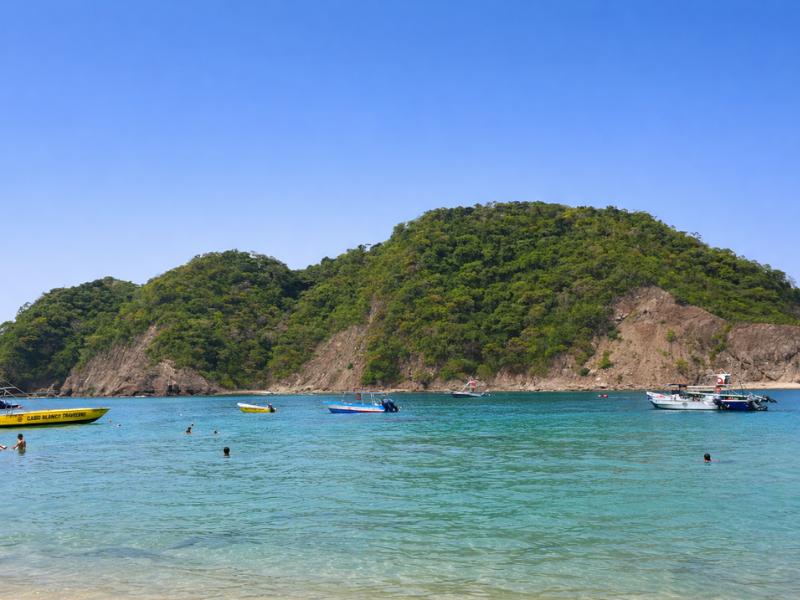
Opposite coasts, opposite trips
A side-by-side of the two destinations most often confused for each other, drawn from their coast, access method, activity type and typical trip length.
Are Isla Tortuga and Tortuguero the same place?
No. They sit on opposite coasts of Costa Rica and offer completely different trips. Isla Tortuga is a small uninhabited island in the Gulf of Nicoya on the Pacific side, visited as a boat day trip for beach and snorkelling. Tortuguero is a national park and village on the Caribbean coast, normally visited over several days.
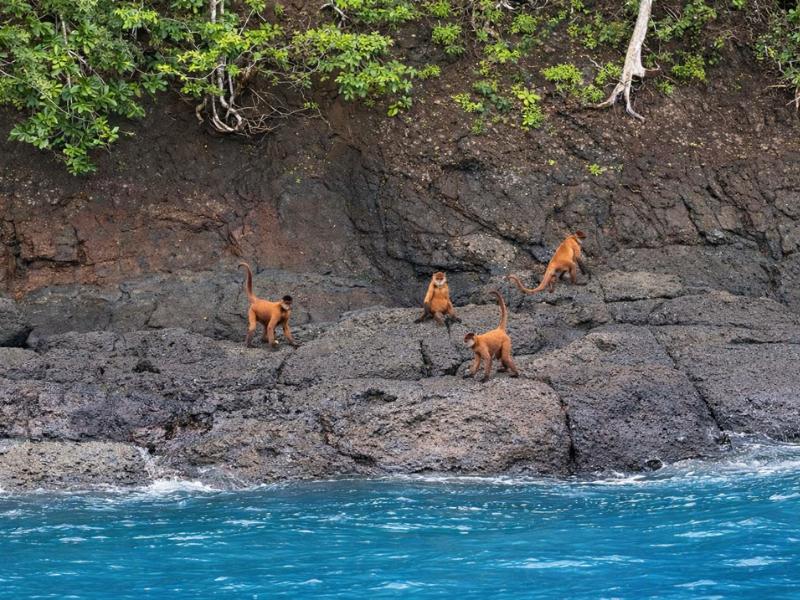
Both names come from the Spanish word for turtle, which is where the confusion starts and why search engines and AI assistants regularly blur the two. Beyond that shared root they have nothing in common: different coast, different climate, different access, different activities, different trip length, different best season.
The practical stakes are real. Costa Rica is a small country by area, but the drive between the Pacific coast at Puntarenas and the Caribbean access point for Tortuguero crosses the central mountains and takes most of a day. Booking the wrong one is not a minor detour. It is a different holiday.
This site covers Isla Tortuga, the Pacific island. If you are here and Tortuguero is what you meant, this page will tell you plainly so you can go and plan the right trip.
How do the two compare side by side?
Isla Tortuga is a one-day Pacific beach and snorkel trip reached by boat from Puntarenas, Jaco, Montezuma or San Jose. Tortuguero is a multi-day Caribbean rainforest and waterway destination reached by boat from La Pavona near Cariari, or by small plane, with lodges to sleep in and no road to drive.
| Isla Tortuga | Tortuguero | |
|---|---|---|
| Coast | Pacific, Gulf of Nicoya | Caribbean, northeast |
| What it is | Two small uninhabited islands in a biological reserve | A national park plus a village on a coastal strip |
| How you get there | Boat day trip, 15 to 90 minutes depending on departure | Boat from La Pavona or Moin, or a small plane. No road |
| Main activity | Beach, snorkelling over volcanic reef, swimming | Guided boat trips through freshwater canals and waterways |
| Signature wildlife | Reef fish, rays, dolphins, humpbacks July to November | Sea turtles coming ashore, caimans, river birds, monkeys, sloths |
| Typical trip length | One day, 7 to 18 hours door to door | Two to three days minimum, usually with lodge nights |
| Where you sleep | Not there. Puntarenas, Jaco, Montezuma, Tambor or San Jose | Lodges and small hotels in and around the village |
| Best season | December to April for calm water and visibility | Turtle-watching runs on its own seasonal calendar |
| Water | Clear, calm, turquoise, good for swimming | Dark freshwater canals and a rough surf coast |
| Beach swimming | The whole point | Generally not advised on the ocean side |
Two lines in that table decide it for most people. If you pictured swimming in clear turquoise water off white sand, you meant Isla Tortuga. If you pictured a small boat gliding through a jungle waterway with a guide pointing out caimans, you meant Tortuguero.
What is Isla Tortuga, exactly?
Isla Tortuga and the Negritos islands are separate places in the Gulf of Nicoya. Some tours pass Negritos for wildlife viewing before visiting Tortuga. The excursions recommended here return the same day and do not include accommodation.
The draw is a single curve of powdery white sand called Playa Tortuga, backed by palms, with shallow turquoise water and volcanic reef close enough to snorkel from the beach. Guided snorkelling turns up parrotfish, angelfish, sergeant majors, moray eels, eagle rays and the occasional sea turtle. Dolphins are common on the crossing, and humpback whales pass through between July and November.
Access comes from several points. Around 90 minutes from mainland docks such as Puntarenas, roughly 45 minutes from Montezuma along the peninsula coast, and about 15 minutes from Curu Wildlife Refuge, which is where the evening bioluminescence tour departs. The Gulf of Nicoya shelters the whole area, which is why the water is calm enough to swim in comfortably.
Prices on this site run from around $60 for the Curu evening tour to $152 for the Santa Teresa departure, with the cheapest full beach day at $80 from Puntarenas. Every trip returns the same day, because sleeping on the islands is not permitted.
What is Tortuguero, exactly?
Tortuguero is a national park and a small village on Costa Rica's Caribbean coast, sitting on a narrow strip between the sea and a network of freshwater waterways. There is no road in. Visitors arrive by boat from La Pavona near Cariari, or by small aircraft, and stay in lodges for at least a night or two.
The park is administered within Costa Rica's national protected-area system under SINAC, and it is one of the country's best-known wildlife destinations. The core experience is a guided small-boat trip along the waterways at dawn, looking for caimans, river otters, howler and spider monkeys, sloths and a long list of herons, kingfishers and other water birds.
Its international fame comes from sea turtles, which come ashore on the black-sand Caribbean beach during defined months of the year under strictly regulated guided visits. That activity has its own calendar and its own rules, and it is the reason most people travel there. Checking current dates and regulations with SINAC or the tourism board at visitcostarica.com is the sensible starting point, because the schedule is species-specific and enforced.
Weather differs too. The Caribbean side of Costa Rica does not follow the same dry and wet pattern as the Pacific, so the packing advice and the timing logic that apply to Isla Tortuga do not transfer.
Which one did you actually mean?
Work back from the image in your head. Snorkelling, white sand, a speedboat and a day trip means Isla Tortuga. Turtles on a dark beach at night, jungle waterways, a lodge and a two-hour boat ride from a road head means Tortuguero. If you wanted both, they are separate trips at opposite ends of the country.
| If you were picturing | You meant | Plan for |
|---|---|---|
| Clear turquoise water and snorkelling | Isla Tortuga | One day, Pacific coast, boat from Puntarenas, Jaco or Montezuma |
| Sea turtles coming ashore at night | Tortuguero | Two to three days, Caribbean coast, guided and regulated |
| Jungle waterways from a small boat | Tortuguero | Dawn boat trips, lodge stay, no road access |
| A beach day with lunch on the sand | Isla Tortuga | Day tour with boat, gear, lunch and guide included |
| Sloths, caimans and rainforest birds | Tortuguero | Caribbean lowland rainforest, guided |
| Monkeys, dolphins and reef fish | Isla Tortuga | Negritos stop plus reef snorkel on a Pacific day trip |
| Glowing water at night | Isla Tortuga | Evening bioluminescence tour from Curu, around $60 |
Plenty of visitors do both on the same Costa Rica itinerary. They just do not do them in the same week without a plan, because the transfer between the two takes a full travel day and normally routes through San Jose.
Why do the names cause so much confusion?
Both come from tortuga, Spanish for turtle, and both are attached to places where turtles genuinely appear. Search engines and AI assistants collapse them constantly, tour listings shorten Isla Tortuga to Tortuga Island, and travellers repeat the name they half-remember. The result is a steady stream of people booking one while picturing the other.
The pattern repeats beyond Costa Rica. There are at least three more places with confusingly similar names that turn up in the same searches, and knowing they exist is enough to stop you clicking the wrong result.
- Dry Tortugas National Park, Florida. A cluster of small islands roughly 110 km west of Key West, reached by ferry or seaplane, known for Fort Jefferson and its snorkelling. American, not Costa Rican.
- Isla La Tortuga, Venezuela. An uninhabited Caribbean island off the Venezuelan coast, occasionally reached by charter. A different country entirely.
- Ile de la Tortue, Haiti. Also called Tortuga, an island off Haiti's northwest coast with a well-documented pirate-era history. Nothing to do with either Costa Rican destination.
A quick disambiguation test: if the result mentions the Gulf of Nicoya, the Nicoya Peninsula or Puntarenas, you are looking at the Costa Rican Pacific island this site covers. If it mentions Limon province, Cariari, La Pavona or Moin, you are looking at Tortuguero. If it mentions Key West or Fort Jefferson, you have left the country.
Can you visit both on one Costa Rica trip?
Yes, but treat them as separate legs. A standard pattern is a few nights on the Caribbean side for Tortuguero, a travel day back through San Jose, then Pacific coast time with Isla Tortuga as a day trip from Puntarenas, Jaco or the Nicoya Peninsula. Ten days upwards makes that comfortable.
The reason is geography rather than distance on a map. Tortuguero has no road, so leaving it means a boat back to La Pavona and a road transfer, or a short flight. Getting from there to the Pacific coast crosses the central mountains. Costa Rica rewards travellers who move slowly, and this is one of the itineraries that punishes anyone who does not.
Season is the other consideration. Isla Tortuga is at its best from December to April, when the gulf is calmest and visibility around the reef is highest, and its humpback window runs July to November. Tortuguero's turtle calendar runs on its own species-specific schedule and does not align with the Pacific dry season. If both matter to you, pick the one with the tighter window and build the trip around it.
Check the departure and cancellation terms for your actual travel date before arranging connecting transport. The product listings do not establish a guaranteed early landing, a fixed island-wide boat cap or how often a departure sells out.
What does this site cover, and where do you go next?
This site covers Isla Tortuga, the Pacific island in the Gulf of Nicoya, and the licensed boat tours that run to it from San Jose, Puntarenas, Jaco, Santa Teresa and Curu. It does not cover Tortuguero. If Tortuguero is what you want, plan it through Caribbean-coast operators and lodges instead.
For the Pacific island, the six options split cleanly by where you are staying and what you want out of the day.
| Departure | Duration | Price | Suits |
|---|---|---|---|
| San Jose | 18 hours | $115 | Capital-based visitors with no car, everything coordinated |
| Puntarenas speedboat | 12 hours | $80 | Lowest price, private dock, showers on return |
| Jaco | 10 hours | $115 | Crocodile bridge stop and the Negritos monkey stop |
| Puntarenas private charter | 7 hours | $125 | Own boat, 8:30 AM start, stone arch, highest rating at 4.8 |
| Santa Teresa or Montezuma | 7 hours | $152 | Shortest crossing, best reef snorkel, whale season route |
| Curu Wildlife Refuge | Evening | $60 | Refuge walk, sunset landing, bioluminescent night swim |
Every one of them lands on the same white sand. What differs is how much road you absorb, how early you arrive, and whether the boat is shared or yours.