Can You Stay Overnight on Tortuga Island? No, and Here Is What to Do Instead
The short answer is no. Isla Tortuga has no hotels, no campsites and no permission to sleep there. The useful answer is where to base yourself instead, and which evening tour gets closest to a night on the island.
Booking Choice: A coastal boat ride from Montezuma, snorkeling equipment and a choice of island lunch. Explore Santa Teresa Island And Snorkel Day
Start: Santa Teresa. Confirm age rules and extras before booking.
Price note: fixed dollar amounts and totals in the editorial examples below are planning illustrations, not current quotes. Prices, child rates and private/shared options must be checked for your date and full party. The provider calendars and booking pages carry current offers.
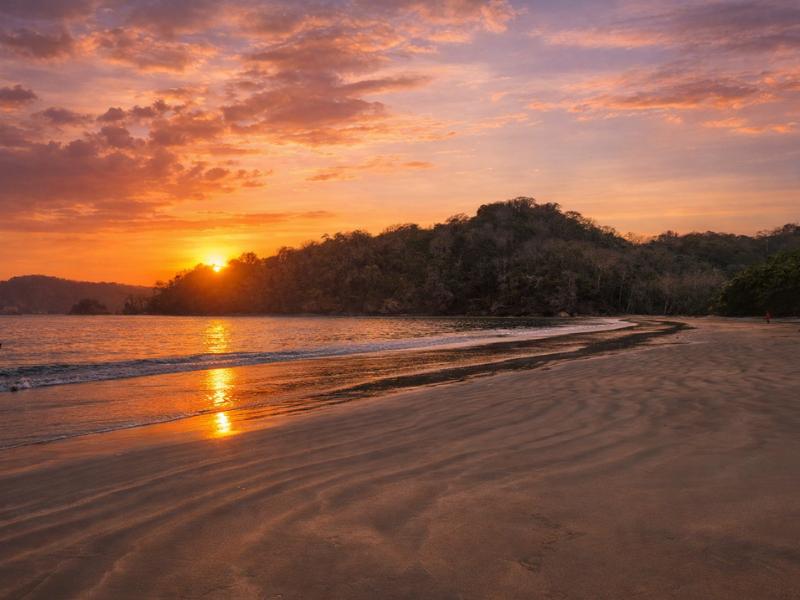
The closest thing to a night on the island
The timeline follows the published running order of the Curu evening tour, the only listed trip that reaches the Tortuga Islands after sunset and still returns the same night.
Can you stay overnight on Isla Tortuga?
Isla Tortuga and the Negritos islands are separate places in the Gulf of Nicoya. Some tours pass Negritos for wildlife viewing before visiting Tortuga. The excursions recommended here return the same day and do not include accommodation.
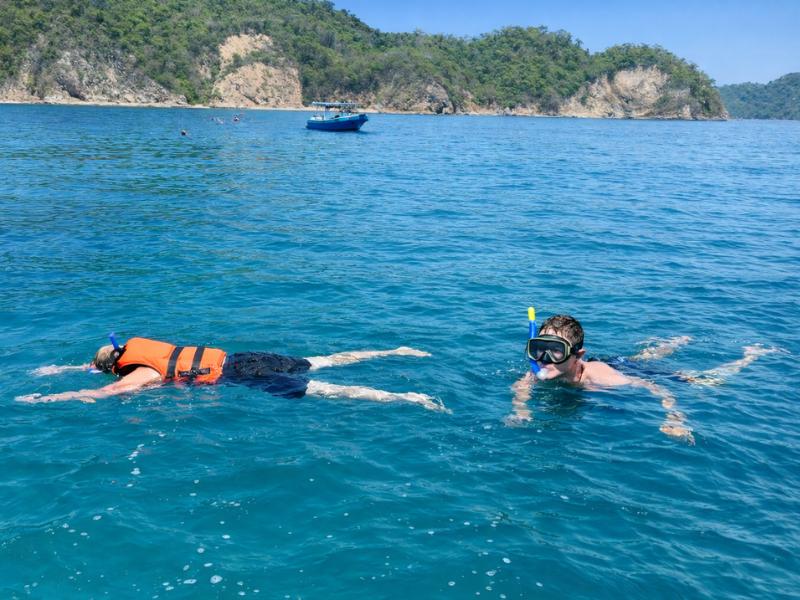
This surprises people because the photographs look like a resort island. They are not. There is no hotel, no cabin, no ranger station taking bookings, no restaurant that stays open, no electricity grid, no fresh water supply and no road. The lunch you eat on the sand arrived on your boat that morning and the kitchen crew take the equipment home again.
The legal side is the part that will not bend. Protected areas in Costa Rica sit under the national system administered by SINAC, and the Islas Negritos reserve is managed for conservation rather than tourism infrastructure. Day visits under licensed operators are the format that exists. Sleeping there is not on the menu at any price, and asking a boat captain to leave you behind is not a negotiation, it is a request to break the terms he operates under.
What that absence buys you is the island itself. No hotels means no seawall, no jetty lights, no waste outflow and no permanent pressure on the reef. It is the reason the water still reads the way it does.
This section concerns an overnight or independent plan. The verified shortlist does not provide that service; the daytime tour options below are a separate choice.
Is camping allowed on Tortuga Island?
Check the departure and cancellation terms for your actual travel date before arranging connecting transport. The product listings do not establish a guaranteed early landing, a fixed island-wide boat cap or how often a departure sells out.
People occasionally ask about anchoring a private boat overnight nearby and going ashore. That is a question for the maritime authorities and the reserve's managers rather than for a tour desk, and the honest answer for a normal traveller is that it is not a practical plan. Every operator on this site runs a same-day return.
If sleeping close to the water in a wild setting is the actual goal, the mainland side of the Nicoya Peninsula delivers it far better. Tambor, Montezuma and Santa Teresa all have accommodation within walking distance of a beach, and Curu Wildlife Refuge on the same coast has monkeys, deer, coatis and iguanas moving through the grounds in the late afternoon.
This section concerns an overnight or independent plan. The verified shortlist does not provide that service; the daytime tour options below are a separate choice.
Where should you stay instead, and what does each base cost you in travel time?
Base yourself in Puntarenas, Jaco or Herradura on the mainland, or in Montezuma, Santa Teresa, Tambor or Paquera on the Nicoya Peninsula. The peninsula towns give the shortest boat rides, roughly 45 minutes from Montezuma. Puntarenas gives the cheapest departure. San Jose gives the longest day by far.
Choosing a base is really choosing how much of your day gets spent in transit. The island is the same from every boat, so the differences live entirely in road time, crossing time and price.
| Where you sleep | Boat crossing | Door-to-door tour | Price | Best for |
|---|---|---|---|---|
| Montezuma or Santa Teresa | About 45 minutes | 7 hours | $152 | Shortest crossing, best snorkelling, whale season route |
| Puntarenas | Roughly 90 minutes | 12 hours | $80 | Lowest price, private dock, showers on return |
| Puntarenas (private charter) | Roughly 90 minutes | 7 hours | $125 | 8:30 AM start, own boat, stone arch, Negritos stop |
| Jaco or Herradura | Road transfer plus crossing | 10 hours | $115 | Crocodile bridge stop, surf-town nightlife, family base |
| Paquera or Tambor | Short, peninsula side | Varies by operator | Varies | Quiet bases close to the departure docks |
| San Jose | Roughly 90 minutes | 18 hours | $115 | No car needed, everything coordinated, very long day |
One caution on the peninsula towns. Reaching Montezuma, Santa Teresa or Tambor from the mainland normally means the Puntarenas to Paquera ferry, which adds a crossing of its own plus a road leg on the far side. That is a good use of a travel day if you are staying two or three nights. It is a poor use of one if you plan to bounce straight back.
Which base gives you the shortest boat ride?
Curu is closest at about 15 minutes, but it is a wildlife refuge rather than a town with hotels. Among places you can actually sleep, Montezuma is the winner at roughly 45 minutes by boat. Tambor and Paquera sit in the same bracket. Mainland departures all run near 90 minutes across the gulf.
The gap is bigger than it sounds. A 45-minute crossing from the peninsula means you can leave after breakfast and be on the sand before the mainland boats have finished loading. A 90-minute crossing from the mainland means an earlier alarm for the same arrival time.
Curu deserves its own note. It sits about 15 minutes from the islands, which is the shortest ride anyone offers, and it is the departure point for the evening bioluminescence trip. You do not stay at Curu, you drive or transfer in for the afternoon, and the usual bases for it are Paquera, Tambor or Montezuma.
- Montezuma: small, walkable, good beach, easy to arrange a boat through your hotel. The relaxed choice.
- Tambor: quieter bay, more resort-shaped, calm water, works well for families.
- Santa Teresa: surf town with the best food scene on that coast, slightly further round the point.
- Paquera: functional rather than charming, but it is the ferry terminal and the closest thing to a transport hub on that side.
- Puntarenas: a working port city on a sand spit, covered in detail on the Puntarenas reference page. Not a beach holiday, but the docks and the price are unbeatable.
What is the closest thing to spending a night on the island?
The evening bioluminescence tour from Curu Wildlife Refuge. It runs in the late afternoon and evening, crosses in about 15 minutes, lands on a private white-sand beach for sunset with fruit and soft drinks, then puts you in dark water to swim among glowing plankton before returning the same night. Around $60.
This is the only product that shows you the islands after the day boats have gone. The sequence is worth understanding before you book, because it is not a beach day with a swim tacked on the end. It is a wildlife walk, a sunset crossing and a night swim, and the whole thing runs roughly two and a half hours on the water side.
- Arrive at Curu Wildlife Refuge in the early afternoon. Monkeys, deer, coatis and iguanas are routine sightings on the walk.
- Board the motorboat around 5 pm for the 15-minute crossing.
- Land on a private beach for sunset with fresh fruit and soft drinks.
- Wait for full dark, then swim in the bioluminescent water. Movement is what triggers the light, so the display responds to you.
- Return the same evening. Nobody sleeps ashore.
Two honest limitations. The glow varies with plankton concentration and moon phase, so a bright full moon washes it out; the physics behind the effect is summarised on the bioluminescence reference page. And the tour runs in small groups by design, because a crowded swim diffuses the light and the experience degrades. Evening slots in the dry season go early.
| Standard day tour | Curu evening tour | |
|---|---|---|
| When it runs | Morning departure, afternoon return | Afternoon refuge walk, boat at 5 pm, back after dark |
| Crossing | 45 to 90 minutes depending on departure | About 15 minutes |
| Main activity | Reef snorkelling, swimming, beach time | Wildlife walk, sunset landing, bioluminescent swim |
| Food | Full beach lunch with grilled fish or chicken | Fresh fruit and soft drinks, no dinner |
| Group size | Shared boats, up to several dozen on the beach | Small by design, the light diffuses in a crowd |
| Price | $80 to $152 | Around $60 |
| Do you sleep there? | No | No |
The evening trip is also the only one that gives you the mainland wildlife first. Curu Wildlife Refuge has monkeys, deer, coatis and iguanas moving through in the late afternoon, which is the calmest part of the day for spotting them and the reason the walk is scheduled before the boat rather than after.
How do you get the empty-island feeling without sleeping there?
Take the first boat. Departures around 8 to 9 am from Paquera, Montezuma or Tambor reach the beach before the midday convergence. Crowds peak between 11 am and 2 pm, when boats from several departure points land together. Arriving at 11 can mean four other tour boats are already on the sand.
The morning slot costs the same as the midday one and produces a different day. The water is calmer, the light is better, the reef has not been stirred by other groups, and the stretch of beach in front of you is genuinely quiet for the first hour. Operators who offer an early departure are handing you the best version of their own product.
| Arrival time | Beach | Snorkelling | Verdict |
|---|---|---|---|
| Before 9:30 am | Near empty, first boat on the sand | Clearest water, undisturbed sediment | Book this |
| 10:00 to 10:30 am | Filling, still comfortable | Good | Acceptable |
| 11:00 am to 2:00 pm | Peak, several boats landed | Stirred sand, busier reef | Avoid if you have a choice |
| After 3:00 pm | Thinning as morning groups leave | Limited time before departure | Only on afternoon formats |
| Evening (Curu tour) | Private beach, small group | Night swim rather than reef | The quiet option |
Check the departure and cancellation terms for your actual travel date before arranging connecting transport. The product listings do not establish a guaranteed early landing, a fixed island-wide boat cap or how often a departure sells out. Related reading: IMN
What should you book if you only have one night on the coast?
Sleep in Montezuma or Tambor and take the morning boat. That combination gives the shortest crossing, an early arrival and enough of the afternoon left to enjoy the mainland. If you are stuck in San Jose, the full-day tour handles everything, but budget an 18-hour door-to-door day and set an alarm for around 4 to 6 am.
The San Jose departure is the most-booked tour on this site by a wide margin, with more than 6,000 bookings, and the reason is convenience rather than quality. It removes the need for a car, a ferry timetable and a hotel change. What it costs you is time: pickup between 4 and 6 am, a two-hour road transfer to the coast, the crossing, roughly five hours on the island, then the whole chain in reverse.
If your itinerary already has you on the Pacific coast, skip that. Puntarenas at $80 is the cheapest full day and leaves from a private dock at Las Playitas with showers and changing rooms on return. Jaco at $115 folds in the Tarcoles River bridge crocodile stop on the way. The private Puntarenas charter at $125 starts at 8:30 AM from Guima Frost marina and holds the highest rating on the site at 4.8.
Check the departure and cancellation terms for your actual travel date before arranging connecting transport. The product listings do not establish a guaranteed early landing, a fixed island-wide boat cap or how often a departure sells out.